
Contents — 9 parts
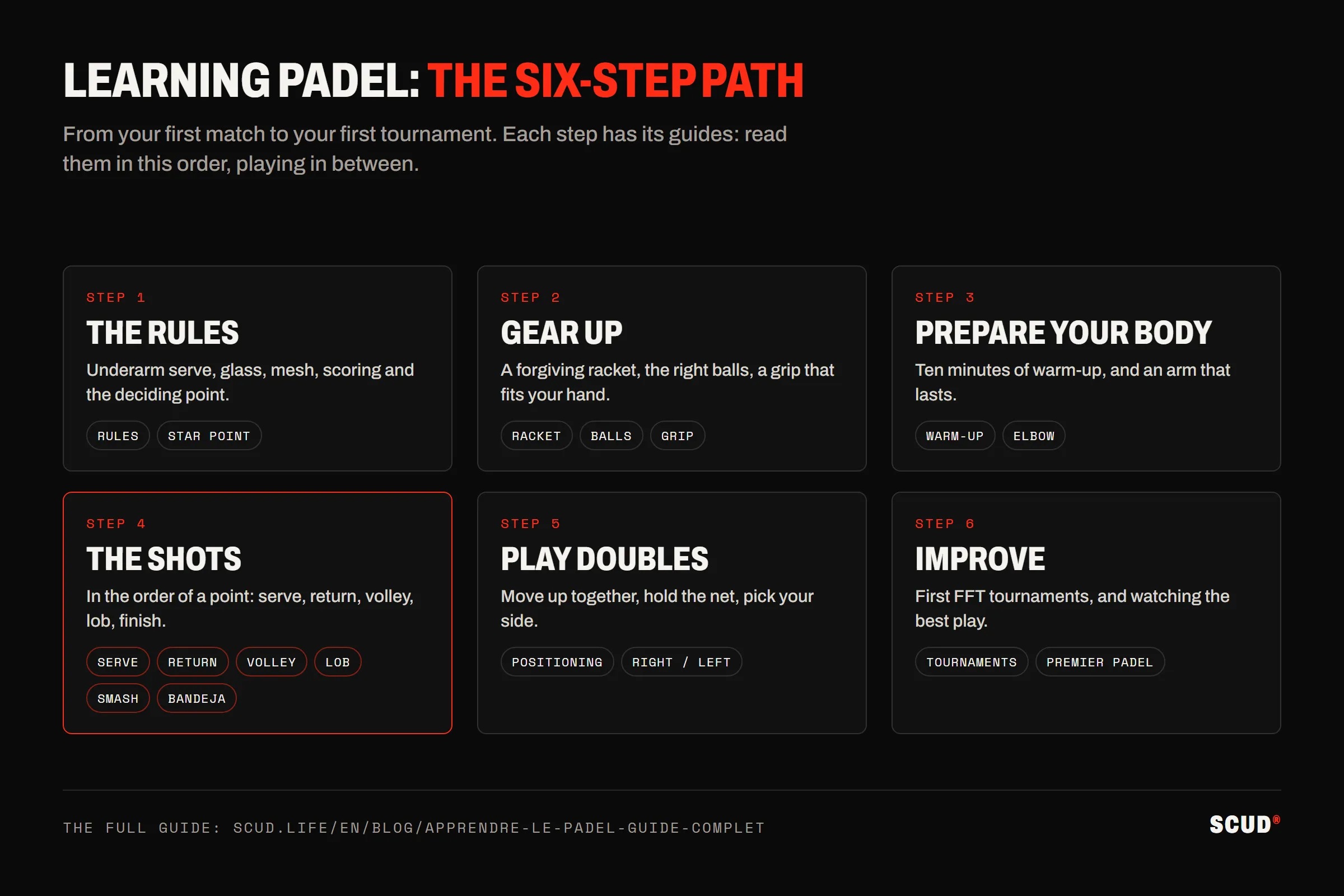
Padel is quick to learn: in one session you are hitting rallies; within a few weeks you are playing real points. But it takes a long time to master, because everything that makes it unique — the glass, playing four at a time, the battle for the net — means unlearning part of what you know from other racket sports. This guide brings together everything we have written to help you improve, in the order in which it is useful to read it: six steps, from your first match to your first tournament.
Each step links to detailed guides. Read them between sessions: padel is understood on court, and every read makes the most sense after you have played.
Padel in two minutes
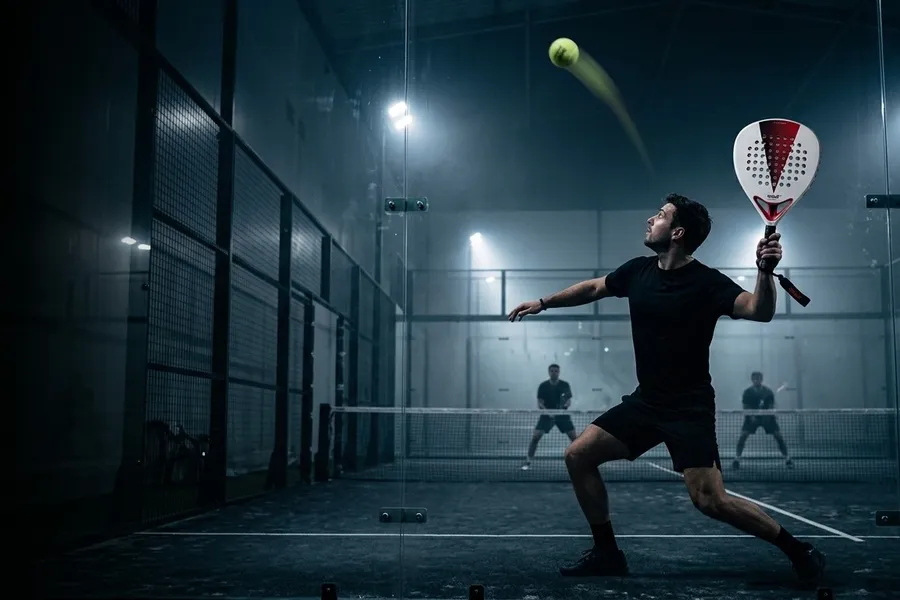
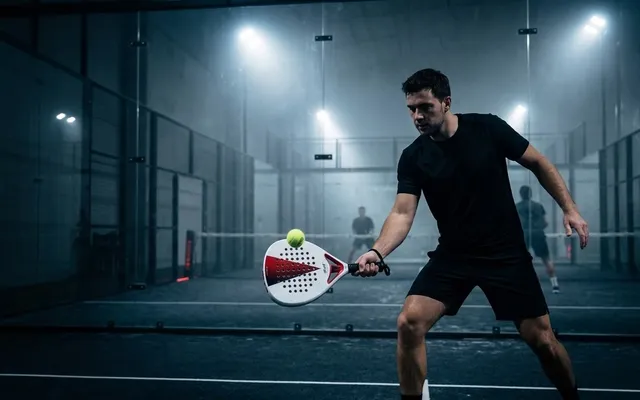
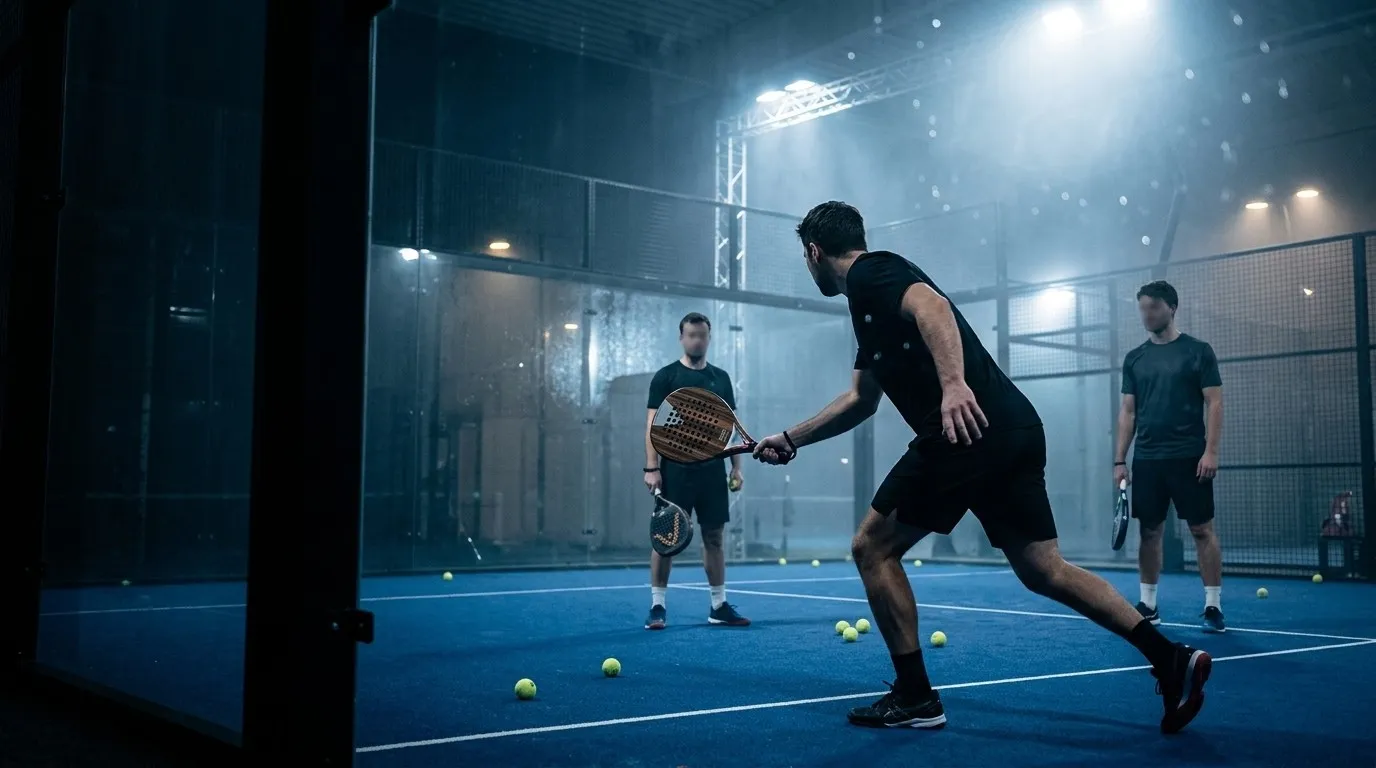
Padel is played by four people, in doubles, on a 20 by 10 metre court fully enclosed by glass and wire mesh. The ball looks like a slightly less pressurised tennis ball, the racket is solid and perforated, with no strings, and the serve is underarm. The scoring is the same as tennis: 15, 30, 40, game.
What changes everything is the walls. A ball that has bounced on your side can hit the glass and stay in play: you get a second chance to return it. That is what makes padel accessible to beginners, and what makes it tactical at the highest level.
The sport is growing spectacularly in France: according to figures from the FFT (French Tennis Federation), which runs padel, the country had around 850,000 players, 150,500 licence holders and 4,520 courts across more than 1,300 clubs in 2026. We go through these figures in our article on padel in France.
Step 1: understand the rules
There is no need to know the rulebook by heart to play a first match. Three rules are enough: the underarm serve after a bounce, the ball that can hit the glass after bouncing on the ground, and the wire mesh, which does not play like the glass. The rest comes with playing.
- Padel rules for beginnersThe court, the serve, the glass and the mesh, the score, faults
- The Star PointThe new deuce rule on the pro tour, and what applies at club level
- Regulation racket dimensionsWhat the FIP allows, so you can play in competition without nasty surprises
- The safety cordWhy it is compulsory, and how to wear it
Step 2: gear up without getting it wrong
A beginner’s kit comes down to three things: a racket, balls, and shoes suited to padel surfaces. The racket is the most important choice, and the one most often got wrong: many players buy their favourite pro’s racket, powerful and demanding, and improve more slowly than they would with a forgiving one.
- Which racket for beginners?The criteria that matter in the first year, the mistakes, the budget
- How to choose a padel racketShape, weight, balance: the complete method
- Padel racket pricesWhat you are really paying for, range by range
- Padel ballsPressure, approval, lifespan
- Grip, overgrip and handle sizeFitting the racket to your hand
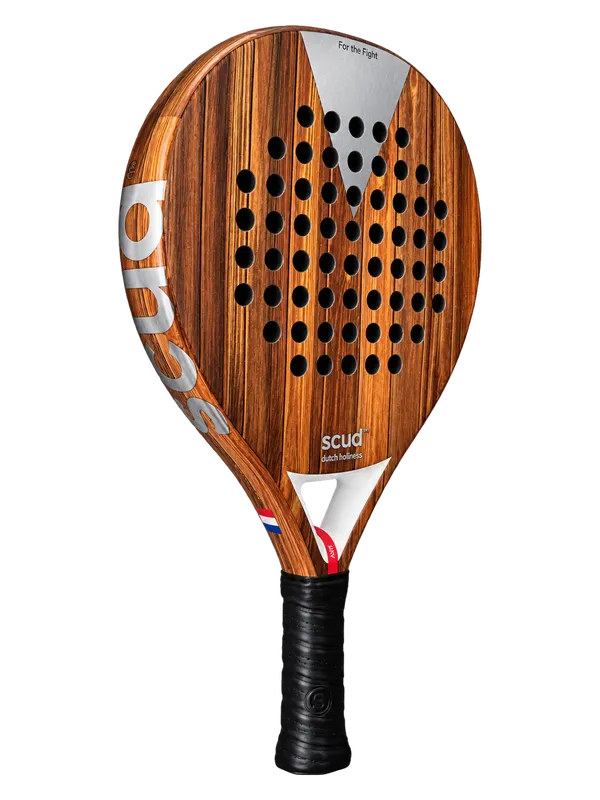
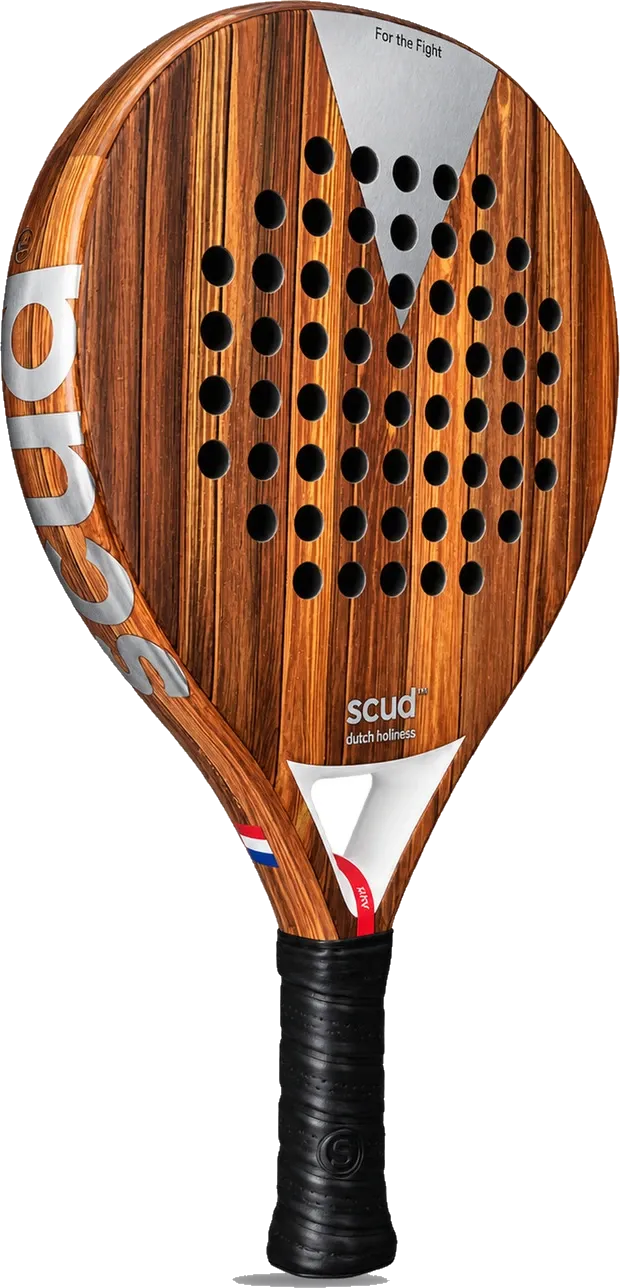
For a first racket, we recommend a round or teardrop shape, a moderate weight and a centred balance. At SCUD, that is the profile of the Wood W1: teardrop shape, 350 g, soft EVA foam.
Step 3: prepare your body
Padel is a sport of short steps, changes of direction and overhead movements. The most common injuries — calf, shoulder, elbow — often come down to a rushed warm-up or unsuitable equipment.
- Warming up for padelA ten-minute routine before every match
- Tennis elbow in padelThe racket’s role, and how to prevent elbow pain
Step 4: learn the shots, in the order of a point
This is the heart of the path. We wrote our technique guides in the order in which shots follow one another in a rally: you serve, the opponent returns, you move up to volley, they lob, you finish. Reading them in that order means understanding how a point is built.
- 01The serveThe underarm action, the three targets, spin
- 02The return of serveWhere to stand, when to play before or after the glass, the four returns
- 03The volleyHolding the net: distance, short swing, targets
- 04The lobThe shot that reverses the roles, and how to defend it
- 05The smashSmash to the fence, por 3, por 4: finishing so the ball doesn’t come back
- 06Bandeja, víbora, chiquitaThe shots unique to padel, and what they ask of the racket
If you remember only one idea from this step: in padel, the team that holds the net wins most of the points. The serve, the lob and the volley are first and foremost about taking it or keeping it.
Step 5: play doubles
Padel is almost always played four at a time, and the pair matters as much as each player. Three principles are enough to start:
- Move together. Both partners move up and back at the same depth, as if tied together by a rope. One player at the net and the other at the back opens a diagonal that every opponent will aim for.
- Move up after every successful lob. A lob is pointless if your team stays at the back.
- Choose your side. The right-side player builds, the left-side player usually finishes; we go through this division of roles in our guide to the return of serve and in the one for the advanced player.
Our guide to the volley shows where to stand as a pair at the net, and where to volley.
Step 6: improve and move into competition
Once the basics are in place, two things make you improve faster than anything else: playing against slightly better players, and playing matches that count. In France, FFT-sanctioned tournaments are open to all licence holders, from P25 for beginners up to the highest categories. The match format is announced by the tournament referee: with advantage or with a deciding point.
Watching the best play helps too. In 2026, the Premier Padel professional tour came to France twice, in Bordeaux and at Roland-Garros, and it can be followed on television for the rest of the year.
- Premier Padel 2026 calendarEvery tournament, the winners, how to watch in France
- Paris Major 2026 at Roland-GarrosThe finals, and what you can take from them for your own game
- 2026 French championshipsThe pinnacle of French padel, and the circuit that leads there
- Testing a racketThe protocol for comparing two rackets before switching
In short
- Padel is quick to learn thanks to the glass, but slow to master: learn in order.
- Step 1, the rules; step 2, a forgiving racket; step 3, the warm-up.
- Step 4, the shots in the order of a point: serve, return, volley, lob, smash.
- Step 5, playing as a pair: move together and take the net.
- Step 6, your first FFT tournaments and the professional tour for inspiration.
Frequently asked questions
Where should you start as a padel beginner?
With a match, before any reading. Then the basic rules and a suitable racket: round or teardrop shape, moderate weight, centred balance. Our guide to the racket for beginners goes through these choices.
Which shot should you learn first in padel?
The serve and the volley. The serve starts every point you serve, and the volley lets you hold the net, the position from which the most points are won.
Do you need lessons to learn padel?
It is not compulsory, but a few lessons at the start stop you picking up bad habits, especially when it comes to playing off the glass and how you hold the racket. Many clubs offer group lessons for beginners.
Can you play padel without having played tennis?
Yes. Padel is often easier to pick up without tennis habits: the serve is underarm, the swings are shorter, and the glass gives you a second chance on a lot of balls.
When can you play your first tournament?
As soon as you hold a licence and can sustain a rally. The FFT’s P25 tournaments are made for exactly that. The most important thing is to know the rules for playing off the glass and the wire mesh.
Enjoy the journey, and see you on court. To find the racket that will go with you, browse our rackets or download our free guide to choosing a racket.