Padel has its own vocabulary, largely inherited from Spanish: bandeja, víbora, chiquita, remate, salida de pared. Behind these words lie five very different game situations, and each one loads the racket in its own way. Understanding what every shot asks for — grip on the ball, mass in the head, forgiveness, manoeuvrability — is the surest way to read a spec sheet with a player’s eyes rather than a shopper’s.
The bandeja: the shot that keeps the net
The bandeja (“tray” in Spanish) is a high shot played at the net, on an opponent’s lob, with a sliced action and the racket almost flat, as if you were holding a tray. The aim is not to finish the point but to keep it: the ball is struck with a slice that keeps it low after the bounce, which stops the opponents attacking and gives you time to recover your position at the net.
What the bandeja asks of the racket is fairly clear. First, grip on the ball, since the whole shot relies on slice: this is where the hitting surface makes the difference, and we explain why in our article on hand sanding. Then manoeuvrability, because the shot is often played slightly off balance, moving backwards, and a racket that is too head-heavy arrives late. Finally control: a bandeja that leaves too fast or too long becomes an attacking ball for the opponent.
The víbora: the bandeja that bites
The víbora (“viper”) is the bandeja’s aggressive sister. The swing starts from the same contact point, high and to the side, but the racket wraps around the ball with pronounced sidespin and more speed. After the bounce, the ball darts towards the side glass on a trajectory that “snakes”, hence the name. It is a transition shot between defending the net and finishing the point.
The víbora demands even more grip than the bandeja, since the sidespin does all the work, but also a firmer response: foam that is too soft absorbs part of your arm speed. A teardrop or diamond shape, which raises the impact point, helps find the right contact. It is a shot for intermediate to advanced players, and assumes a technique that is already clean.
The chiquita: the short ball that makes you move forward
The chiquita is a ball played from the back of the court, slowly, that drops at the feet of the opponents stationed at the net. It is not looking for a winner: it forces the attackers to volley downwards, below net height, which makes them lift the ball and gives you the chance to move in or lob.
It is the touch shot par excellence. It calls for a racket that gives feel on the ball, in other words a slightly longer contact time, which a softer foam or a more forgiving carbon provides. A very stiff racket, which returns the ball sharply, makes the chiquita hard to dose: the ball goes a little too far and becomes an easy volley. We go through that difference in 12K or 18K carbon: what changes on court?.
The remate: the smash that finishes
The remate is padel’s smash. Depending on the situation, it is played flat to send the ball out over the back glass (the “por tres”), with topspin so it bounces high and exits over the side (the “por cuatro”), or with raw power into the mesh. It is the shot you finish points with, and the only one where brute power is the main variable.
The remate needs mass in the head: a high balance and a diamond shape produce a lever effect that accelerates the ball without straining the arm. It needs firm foam, which returns energy instead of absorbing it, and a stiff frame that does not deform on impact. The price is well known: less forgiveness and more vibration, hence the value of a system that filters it.
The salida de pared: the off-the-wall return
The return off the glass is the shot that makes padel both accessible and disconcerting. The ball has bounced on the floor and then on the back glass; you take it after that second rebound, often in a defensive position, to send it back over the net. Well executed, it is a safe return, a lob or a chiquita. Badly executed, it is a ball that loops into the middle of the court.
The shot calls for a forgiving racket, because the contact point is rarely ideal: the ball comes off the glass on a trajectory that varies with speed, spin and the condition of the wall. A wide sweet spot and foam that forgives off-centre hits win a lot of balls in this position. It is the shot for which a “control” racket fully justifies itself.
What each shot asks of the racket
| Shot | Purpose | What matters most | What gets in the way |
|---|---|---|---|
| Bandeja | Keep the net | Grip, manoeuvrability, control | Too much mass in the head |
| Víbora | Transition to attack | Grip, firm response, high impact point | Foam that is too soft |
| Chiquita | Bring the attackers down | Touch, contact time | Very stiff frame |
| Remate | Finish the point | High balance, firm foam, stiffness | Lack of power |
| Off-the-wall return | Return safely | Forgiveness, wide sweet spot | Small sweet spot |
As you can see, no racket can be the best at all five shots. A power racket excels on the remate and is demanding off the glass; a control racket shines on the chiquita and the off-the-wall return but asks more of the arm on the smash. The choice therefore depends on the shot you win your points with, not the shot you wish you had. Our guide on power or control is written precisely to answer that question.
How our rackets share out these shots
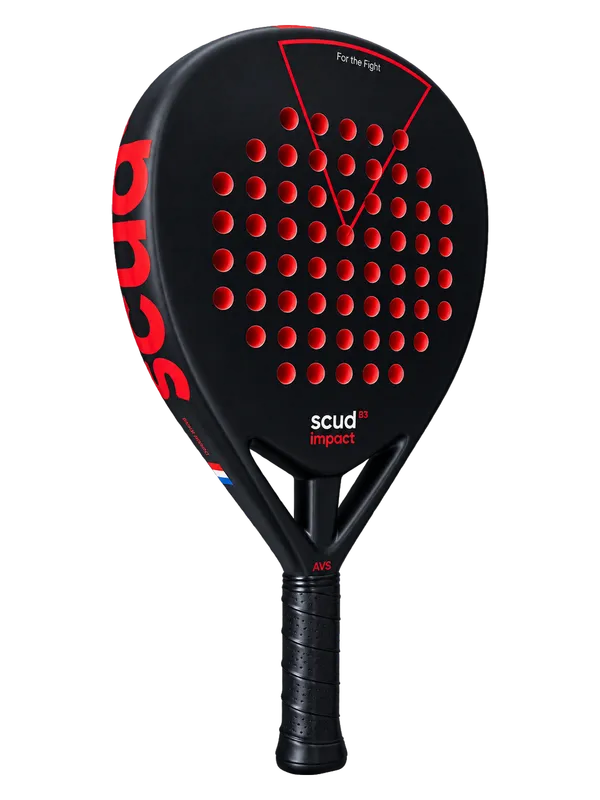
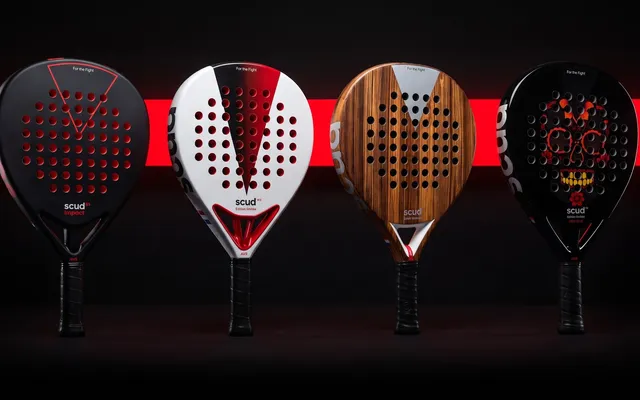
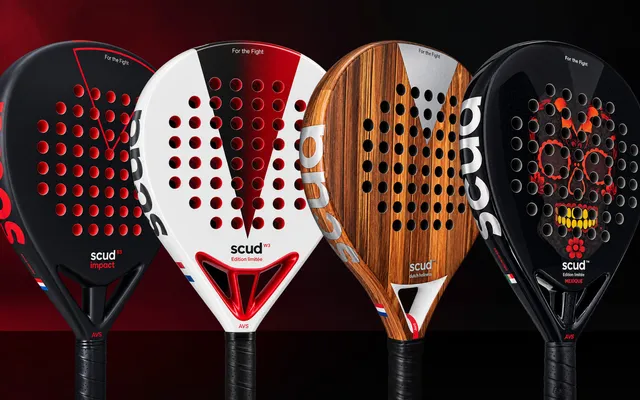
The SCUD Black Impact B3 is built for the remate and the víbora: 18K carbon, EVA Hard Power foam, diamond shape and high balance, 365 g. It is the racket of the player who finishes points at the net, and its AVS anti-vibration system filters the jolts that such a direct frame usually sends up the arm.
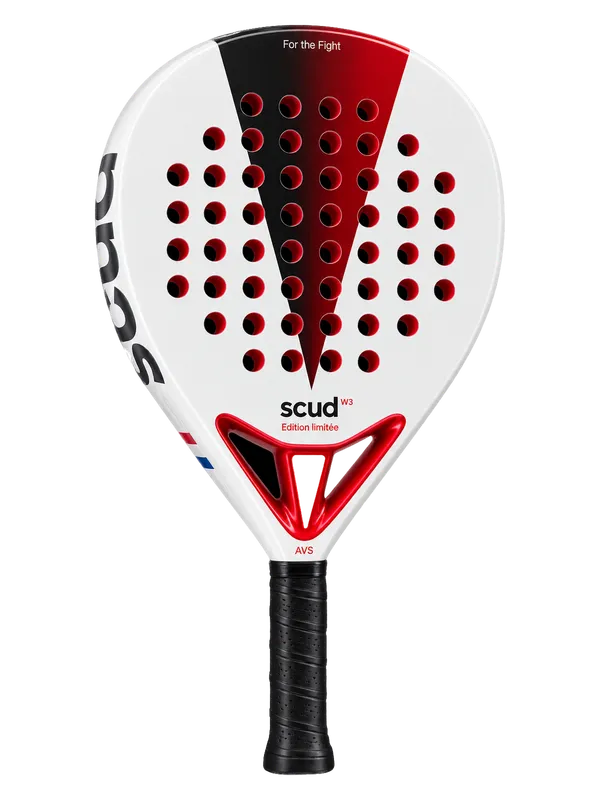
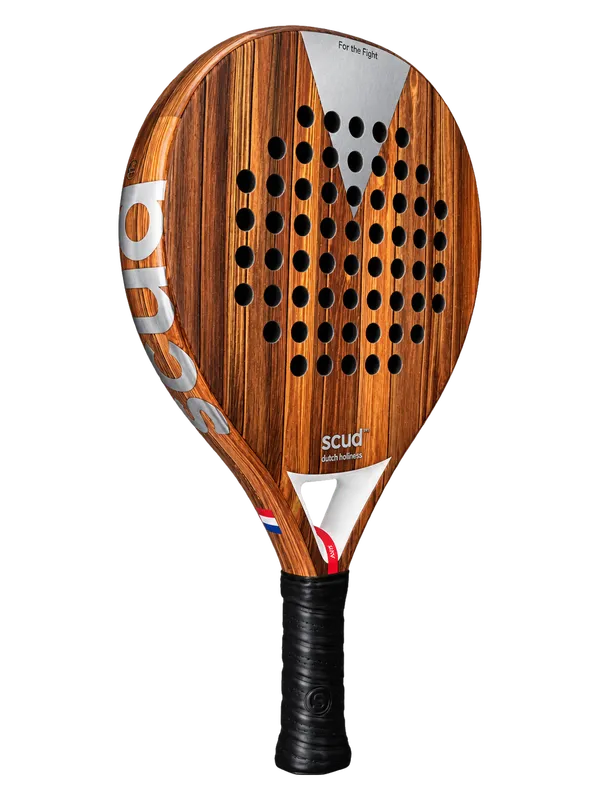
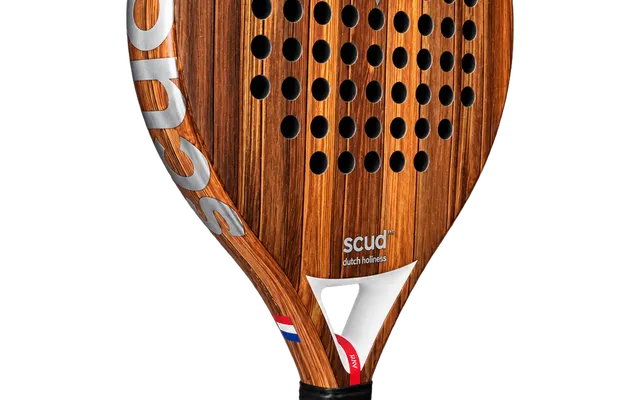
The SCUD White S3 keeps the same foam and the same diamond shape, but its more forgiving 12K carbon gives it more touch on the chiquita and off the glass, without losing power on the smash. For a game built on the bandeja and defence above all, the Wood S1, with its teardrop shape, 350 g and soft EVA foam, is the most manoeuvrable in the range. All of them receive the hand sanding that provides the grip sliced shots need, and you will find each profile in our free guide to choosing a racket.
In short
- Bandeja and víbora rely on spin: the grip of the surface is decisive.
- Chiquita and off-the-wall return rely on touch and forgiveness: soft foam, 12K carbon.
- The remate is the only shot where power comes first: high balance, firm foam, diamond shape.
- No racket excels everywhere; choose according to the shot that wins you points.
- The anti-vibration system matters all the more as the racket gets stiffer.
Frequently asked questions
What is the difference between a bandeja and a víbora?
The bandeja is a sliced shot, played flat, to keep the net. The víbora adds sidespin and speed to push the opponent towards the glass. Same starting point, different intention.
Do you need a diamond racket to smash?
No, but it helps: the high balance produces a lever effect that accelerates the ball. A player with good arm speed smashes very well with a teardrop; they will simply need a little more swing.
Why do my chiquitas go too long?
Often because the racket returns the ball too sharply. Softer foam or a more forgiving carbon lengthens contact time and makes dosing easier. Technique, of course, counts as much as equipment.
Is the off-the-wall return easier with a heavy racket?
Not necessarily. What helps is a wide sweet spot and good forgiveness on off-centre hits. Weight mostly affects stability, but a racket that is too heavy arrives late on fast balls.
Does sanding really matter on these shots?
Yes, on every sliced shot: bandeja, víbora, sliced serve, drop shot. The roughness of the surface determines how much spin you can generate with the same swing.
Every shot has its ideal racket, and every player has a favourite shot: browse our rackets with yours in mind.