
Contents — 9 parts
In tennis, the serve is a weapon. In padel, it is first and foremost a way of putting the ball in play: hit underarm, below the waist, after a bounce, it almost never wins the point on its own. But it shapes what follows. A well-placed serve gives you time to get to the net, and the team that holds the net wins most of the points. A soft or predictable serve, on the other hand, hands the receiver an attacking return before you have taken three steps.
This guide deals with the action, the targets and what happens straight afterwards. The full rules — bounce, glass, wire mesh, let — are covered in our article on padel rules for beginners; here we only go over what affects technique.
What the rules require of the action
The rules of the International Padel Federation (FIP) set out the framework for the serve in a few points, and each one has a technical consequence:
- Feet behind the service line, between the centre line and the side glass, without touching the lines, until the ball is struck.
- A bounce first: the ball is dropped and bounces in your own box, behind the service line.
- Contact at waist height or below, with at least one foot on the ground. No jump serves, no smashed serves.
- Diagonally, into the opponents’ box; the lines are in.
- Two attempts. A ball that touches the net and then lands in the correct box is replayed, unless it then hits the wire mesh.
After bouncing in the opponents’ box, the ball may hit the glass: the serve is still good. If it hits the wire mesh before bouncing a second time, it is a fault. This difference between glass and mesh alone defines the most interesting target for the serve, as we will see below.
The action, step by step
The grip
Hold the racket with a continental grip, the hammer grip: the edge of the frame perpendicular to the ground, the “V” formed by thumb and index finger on the top ridge of the handle. It is the grip for the volley and the bandeja; serving with it means you don’t have to change grip as you move up to the net. Above all, it lets you put a little slice on the ball without effort. A grip that is too closed, a forehand grip, pushes you to hit flat and without control.
The stance
Stand side-on, with the shoulder opposite your hitting arm turned towards the net, about a metre from the centre line. This position gives you two possible paths — towards the centre or towards the side glass — from the same starting action, which stops the receiver reading your intention.
The drop and the bounce
Drop the ball in front of you, slightly to the side of your hitting arm, at a distance that will let you hit with your arm almost straight. Simply letting it fall from your hand is enough; there is no need to throw it at the ground, which makes the bounce irregular. The aim is a bounce that rises to between knee and hip. That is the height at which you will strike it, below the waist, at the top of its bounce or just after.
The strike
The movement starts from the shoulder, not the wrist. The racket goes back at hip height, then comes forward, following the ball towards the target, with the face slightly open. Shifting your weight from the back leg to the front leg gives you length. Finish with the racket in front of you, at chest height, ready for the volley: a follow-through that rises above your head costs you half a second when it is time to move forward.
Moving off
As soon as you have struck the ball, move forward. The serve is only the first beat of a sequence: serve, take two or three steps forward, pause as the receiver strikes the ball (the split step), then volley. A player who serves and stays at the back gives the net to the opponents without a fight.
Where to aim: the three targets
| Target | What it does | When to choose it |
|---|---|---|
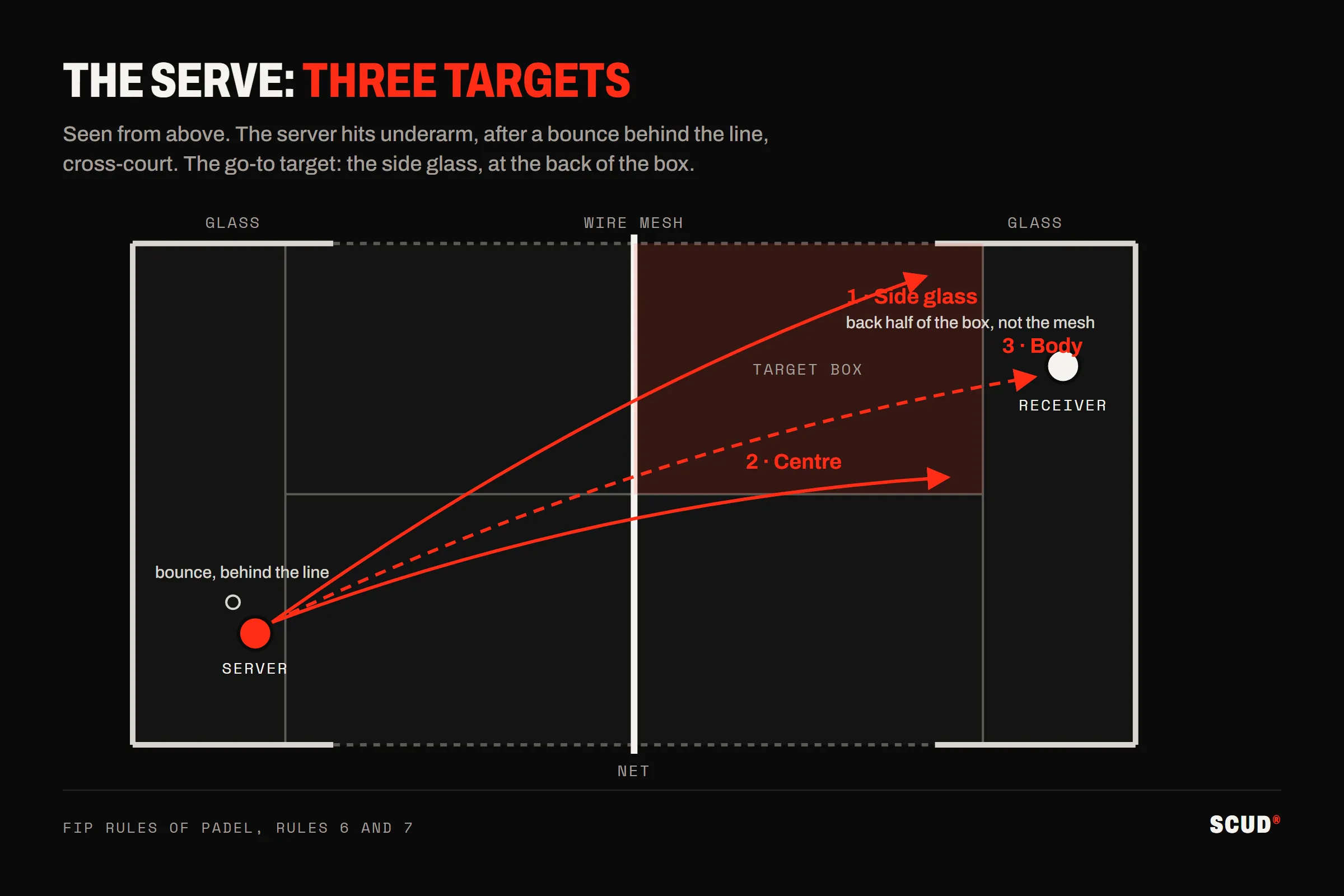
| The side glass (the “corner”) | The ball bounces, then hits the glass and comes back towards the receiver, who has to wait or hit while turning | The standard serve, especially when both opponents are at the back |
| The centre (towards the centre line, the “T”) | Reduces the angles of the return, makes cross-court returns awkward | Against a receiver who opens up wide angles |
| The receiver’s body | They lack room to wind up, the return comes back short | Against a player who hits hard but moves little |
The most commonly played target is the side glass. The principle: make the ball bounce close enough to the glass for it to hit it just after the bounce, without reaching the wire mesh that extends it towards the net. The ball then comes back into the court, often low, and the receiver has to choose between a rushed shot before the glass and playing it off the glass, which forces them back a metre. Either way, you gain time to take the net. Aim for the back half of the box: too close to the service line and the ball goes into the side mesh, and the serve is a fault.
The centre is the target that reduces the angles. A serve down the centre denies the receiver the long diagonal that would send you running towards the side glass. It is a good second serve, because there is more margin to the side.
The serve into the body is the most underrated. Against a powerful player who likes to free their arms, a ball that comes into the hip on their forehand side forces them to step back or to hit while contorting themselves.
Spin: slice, topspin, flat
The slice serve
This is the basic padel serve. By bringing the face slightly under the ball, from high to low, you give it backspin: it bounces low, skids, and comes off the glass without height. The receiver has to bend down and lift the ball, which stops them attacking. A rough racket surface grips the ball more and makes the spin more pronounced for the same action; we explain this in our article on rough racket surfaces.
The topspin serve
The face travels from low to high, brushing the back of the ball. It bounces higher and faster after the glass. It is a surprise serve, effective against a receiver who has got used to low balls, but riskier: a ball that comes high off the glass is an easy ball to attack for a confident player.
The flat serve
Fast and direct, it goes for pace rather than trajectory. Below the waist, that pace remains limited, and the ball comes back quickly off the glass. Keep it for variety, particularly down the centre, where the ball doesn’t hit the side glass.
First and second serve
In padel, the difference between first and second serve is small. Since the serve is not a winning shot, there is no reason to take big risks on the first one. A very high first-serve percentage is better than an ambitious first serve that forces you into a cautious second. Keep the same action, and play only with the target and the spin.
A double fault costs a whole point before the rally has even begun. On the deciding point of a game — the golden point, or the Star Point on the pro tour — serve to the target you hit most reliably, not the most spectacular one.
The most common mistakes
- Hitting above the waist. It is a fault, and it is the mistake of players coming from tennis, who let the ball rise too high.
- Throwing the ball instead of dropping it. The bounce becomes irregular, and so does the action.
- Staying at the back after serving. The serve is only worthwhile if it wins you the net.
- Aiming for the glass too close to the service line. The ball ends up in the mesh: fault.
- Always serving to the same spot. A receiver who knows where the ball is going gets there before you strike it.
- Going for pace. Below the waist, pace does little; placement and spin do a lot.
Which racket for a good serve?
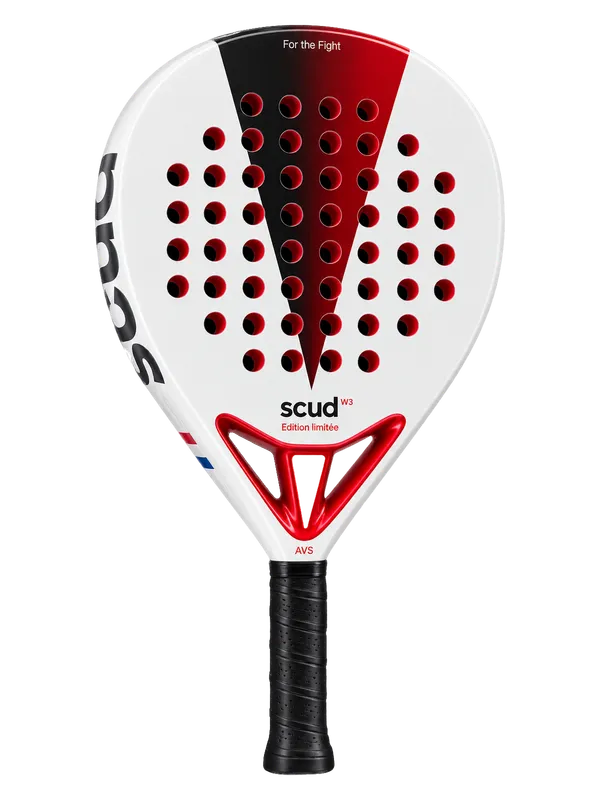
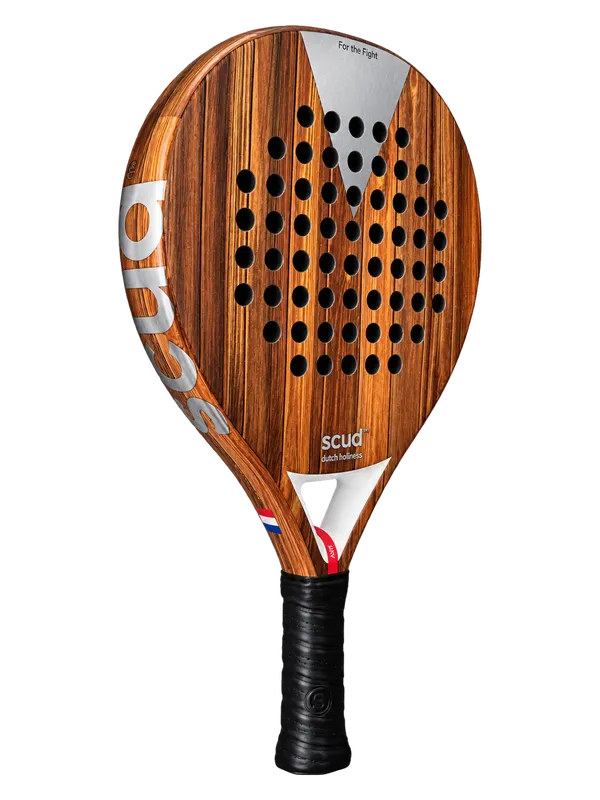
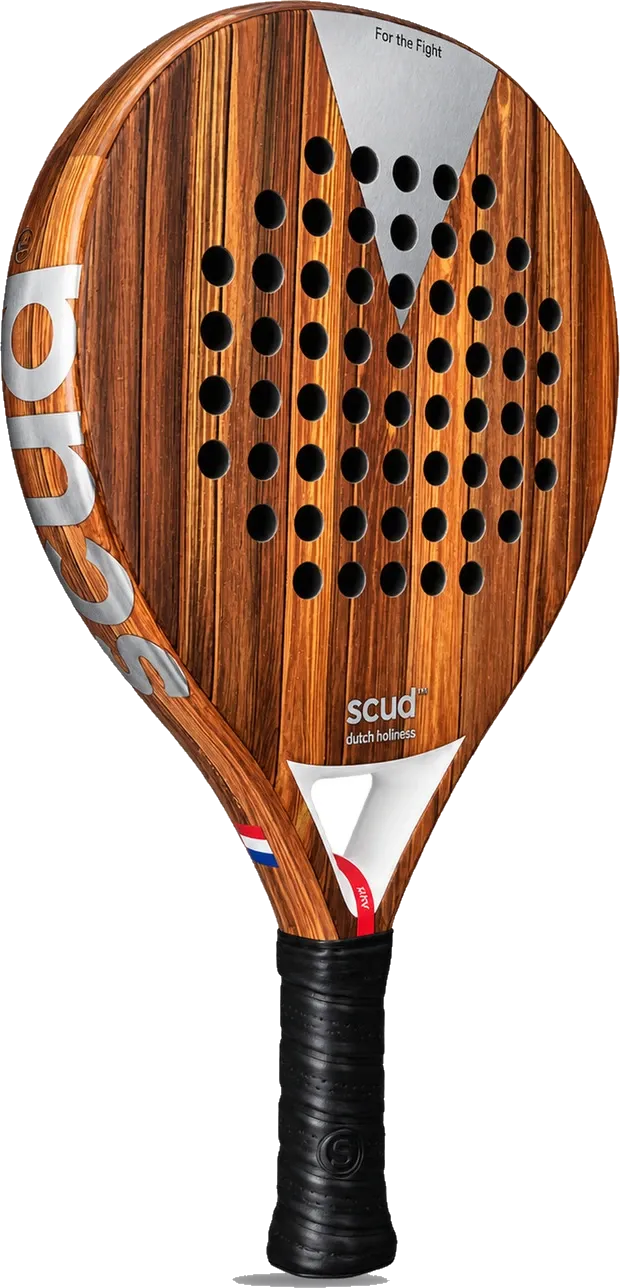
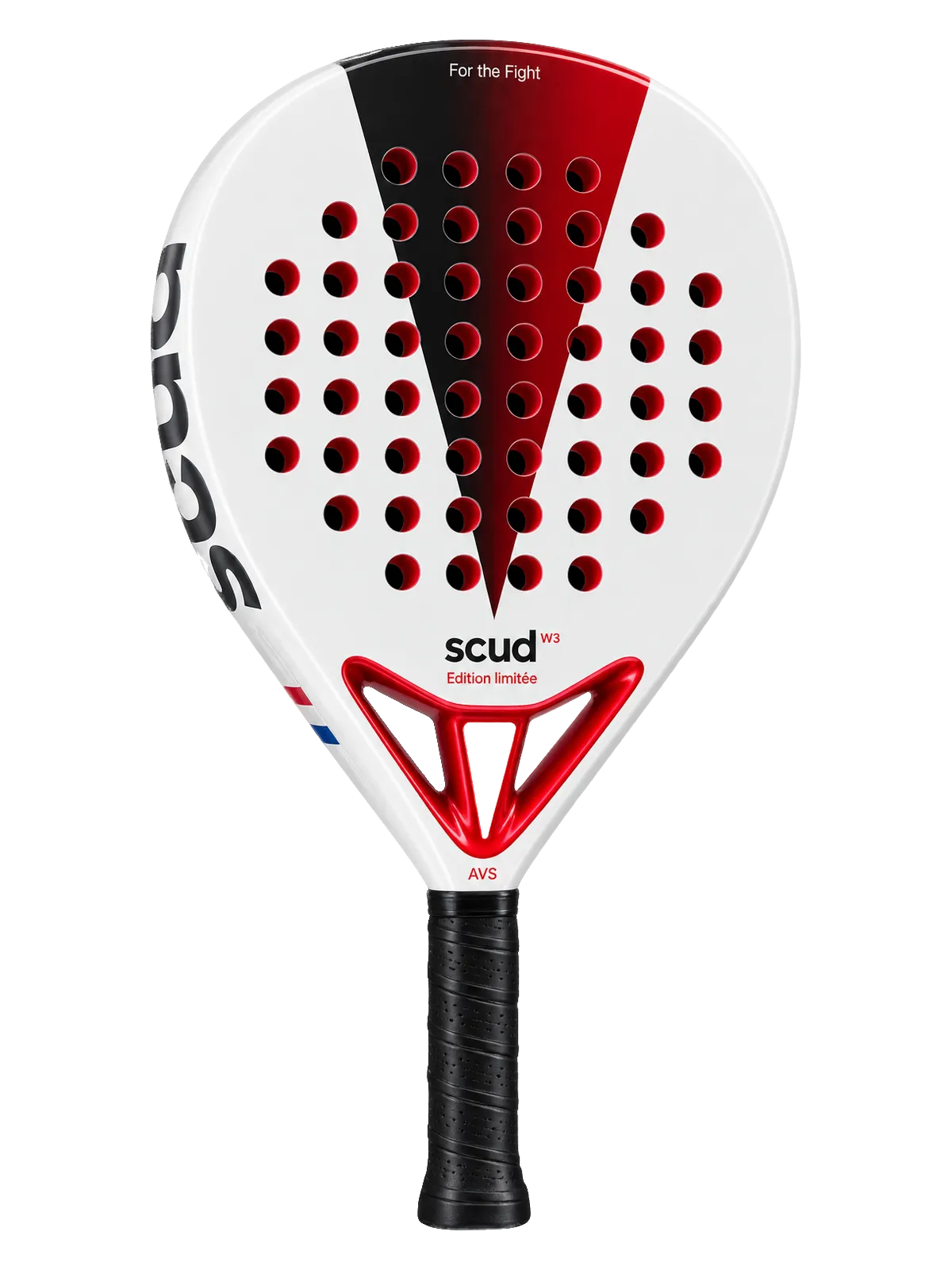
The serve demands little of a racket’s power and a lot of its feel and manoeuvrability. A forgiving, manoeuvrable racket helps you judge length and move straight on to the volley. The SCUD White S3, with its 12K carbon and hand-applied sanding, gives plenty of grip for the slice serve; the SCUD Wood W1, a 350 g teardrop, is the most manoeuvrable in the range for getting to the net quickly. To find out which one suits your game, our free guide to choosing a racket goes through the player profiles one by one.
In short
- The padel serve is hit underarm, below the waist, after a bounce, with two attempts.
- Continental grip, side-on stance, a simple ball drop, a stroke that starts from the shoulder.
- The standard target is the side glass, in the back half of the box.
- Slice is the foundation: the ball stays low and the receiver can’t attack.
- Serve, move forward, pause, volley: the serve sets up your move to the net.
Frequently asked questions
Can you serve overhead in padel?
No. The FIP rules require contact at waist height or below, with at least one foot on the ground. An overhead serve, as in tennis, is a fault.
Is a serve that hits the glass good?
Yes, provided the ball has first bounced in the opponents’ service box. If it then hits the wire mesh before the second bounce, the serve is a fault.
Should you serve forehand or backhand?
Forehand, like almost all players. A backhand serve is allowed, but it gives less control over length and offers no tactical advantage.
How many attempts do you get on serve?
Two, as in tennis. A ball that touches the net and then lands in the correct box is replayed without counting as a fault, unless it hits the wire mesh before bouncing a second time.
How can you make your serve harder to return?
Vary the target with the same starting action, work on slice to keep the ball low after the glass, and move up to the net without waiting. An average serve followed by a good move forward is better than a good serve followed by waiting at the back.
The serve opens every point: take the time to get it right, then move on to the return of serve, its mirror image on the other side of the net.