The safety cord, or wrist strap, is the only part of a padel racket that you are required to wear: the rules demand that it be fixed to the handle and worn on the wrist during play. The reason fits in one sentence: on an enclosed court of twenty metres by ten, a racket that slips out of the hand at the end of a smash becomes a projectile for three other people. Here is exactly what the rule says, how to wear the cord so that it protects without getting in the way, and how to look after or replace it.
What the rules say
The International Padel Federation rules, available on padelfip.com, describe the cord as a full part of the racket. It must be:
- compulsory: a racket without a cord does not comply;
- non-elastic: a strap that stretches does not hold the racket back, it springs it towards the player;
- fixed to the handle, at its base;
- no longer than 35 cm.
To this description is added a behavioural obligation: the player must wear the cord on the wrist during play. In competition, the umpire may refuse to let a match start or continue with a player whose racket is not attached. In France, the rules of the game published by the French Tennis Federation, on fft.fr, adopt these provisions.
The cord is thus one of the few points in the rules that concerns not equipment performance but other players’ safety, just like the ban on any protruding element on the racket. We detail the rest of the regulatory framework, dimensions and holes, in our guide to regulation padel racket dimensions.
Why this rule exists
Padel is played four-a-side in an enclosed space, with glass and fencing less than two metres from the players. Three shots in particular send the racket away from the hand:
- the smash, where the arm is thrown at full speed above the head and the racket finishes its path forwards;
- the reflex volley, where a fast ball at the body can tear the racket from a loosely closed hand;
- the stretched glass exit, where the player is off balance, arm extended, grip relaxed.
Add the sweat that makes the grip slippery from the second set onwards, and a 350 to 390 g racket launched at smash speed becomes a real danger for the partner at the net or the opponent across the court. The cord turns that projectile into an object that falls back at the end of the wrist.
How to wear the cord
The cord only protects if it is worn correctly. Three mistakes are common.
The cord wrapped around the grip. Many players wind the strap around the handle so as not to feel it. It then serves no purpose at all, and the racket does not comply in a match.
The cord too loose. Simply slipped around the wrist, without adjustment, it lets the racket fly thirty centimetres from the hand before catching it: already enough to hit a nearby partner.
The cord too tight. Conversely, a cord that locks the wrist hinders the rotation needed for the smash and the bandeja, and cuts off circulation late in a match.
The right method: pass your hand through the loop, slide it up onto the wrist, then take hold of the handle. The cord should sit on the wrist without squeezing, and leave the hand free to rotate. If your cord has a slider, adjust it once and for all; if not, a simple slip knot does the job, provided you leave a little play.
A good test: deliberately let go of the racket, arm by your side. It should drop a few centimetres from your hand, without tugging at the wrist.
Looking after and replacing the cord
The cord lives under the grip, in sweat, and rubs against the handle at every hit. It wears.
| Sign | What to do |
|---|---|
| Frayed fibres where the cord exits the handle | Replace without delay: this is where cords break |
| Cord hardened or stiff from sweat | Rinse in clean water, air dry; replace if it stays brittle |
| Loop that no longer holds on the wrist | Retie the knot or change the cord |
| Anchor point on the handle that moves | Check the anchor under the grip |
Replacing a cord takes five minutes. Most rackets have an anchor point at the base of the handle, under the butt cap or the grip: remove the overgrip if necessary, thread the new cord through the anchor, tie a tight flat knot, and refit the grip. Choose a non-elastic cord, in polyester or braided nylon, rather than a stretchy fabric strap.
Take the opportunity to change the overgrip, as we recommend in looking after your padel racket: a fresh grip reduces the risk of the racket slipping, and the cord then only has to act as a safety net.
The cord and your grip on the racket
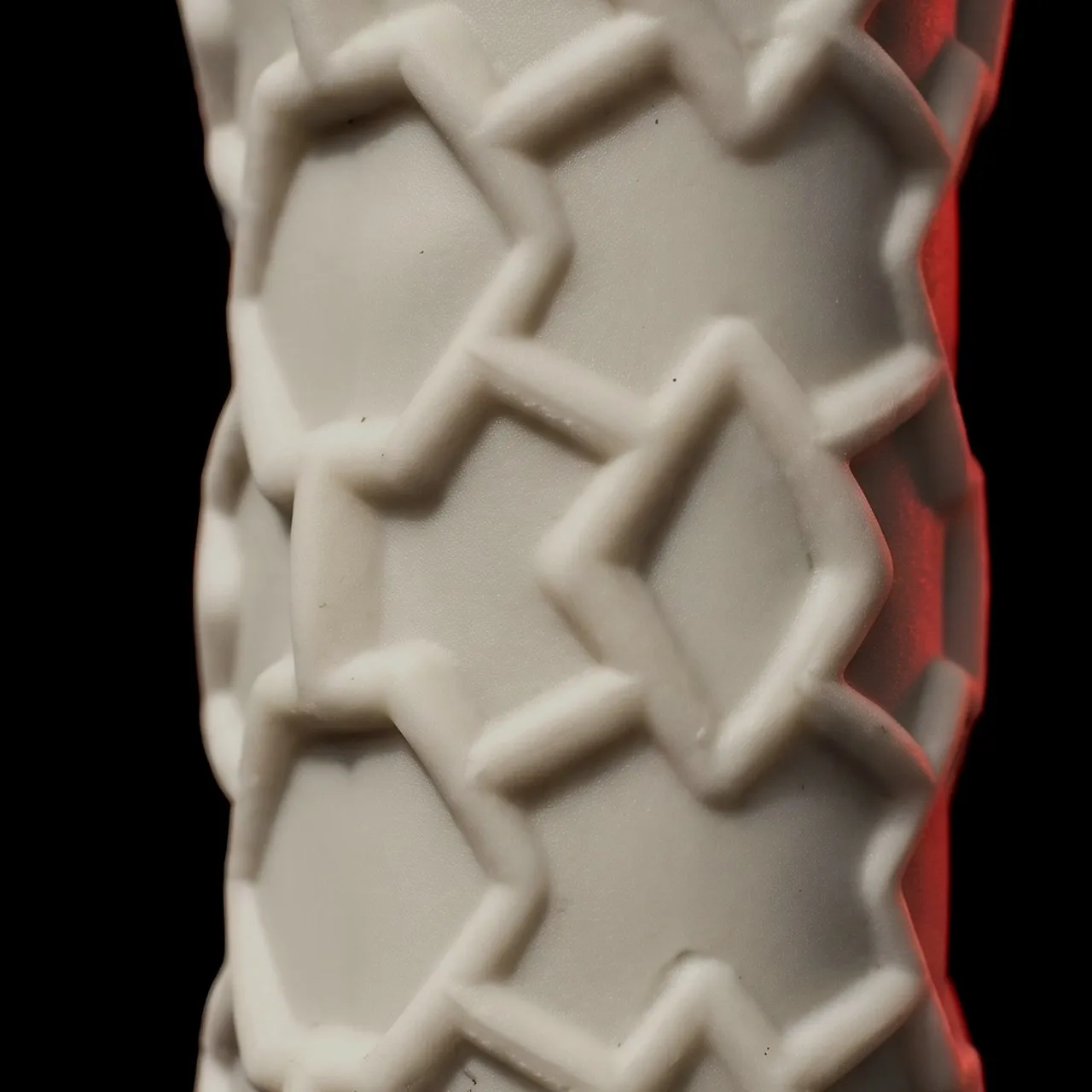
The cord is no substitute for a good hold. A handle that sits well in the palm reduces the risk of the racket flying in the first place. That is one of the reasons all our rackets have a honeycomb silicone handle under the grip: the relief of stars and diamonds holds in the hand without you having to squeeze, which limits tension over three sets and forearm fatigue.
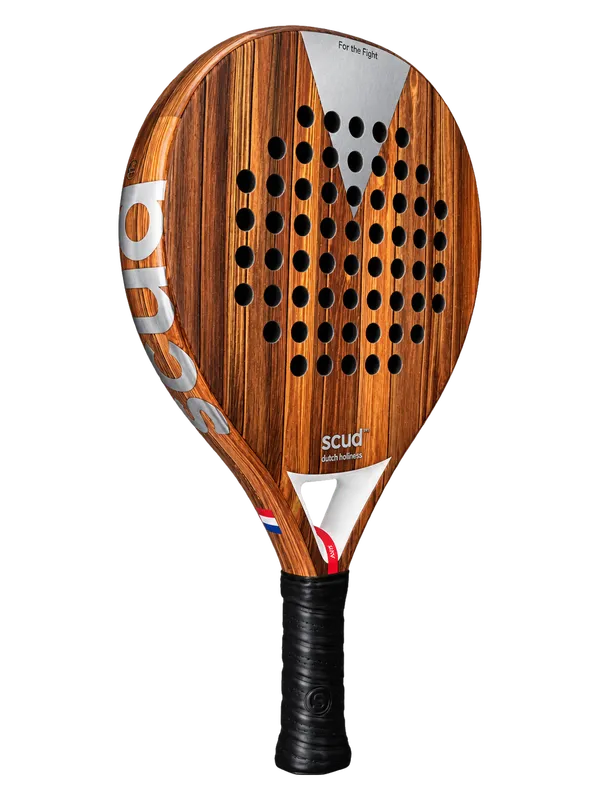
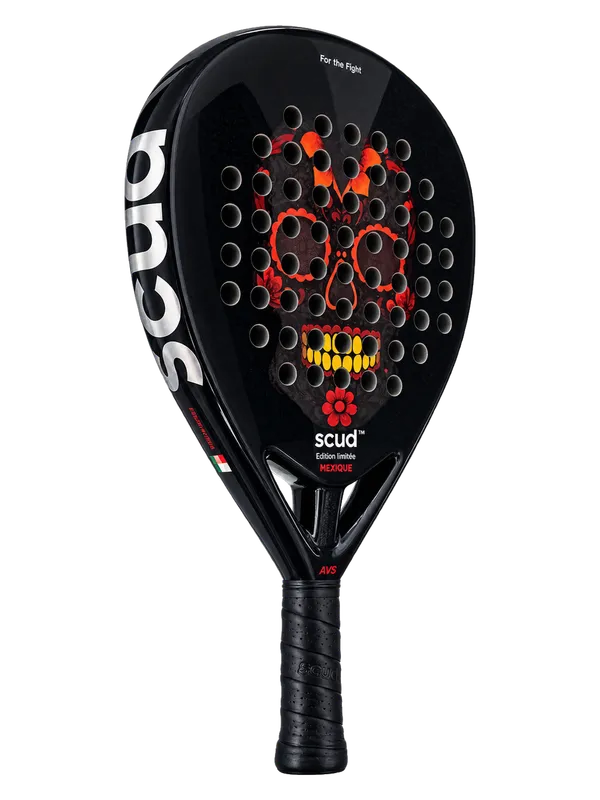
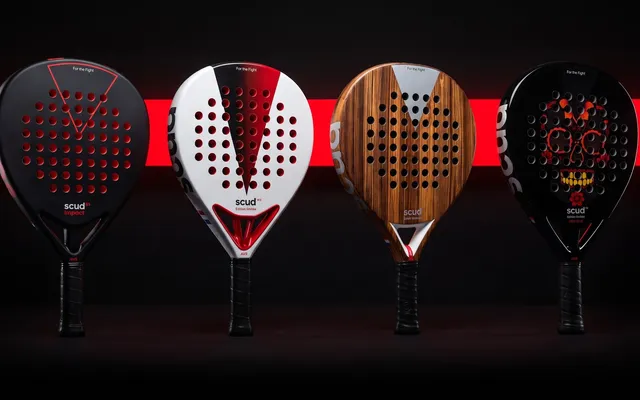
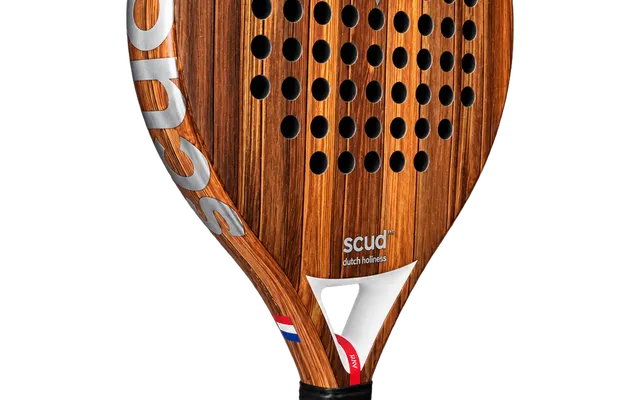
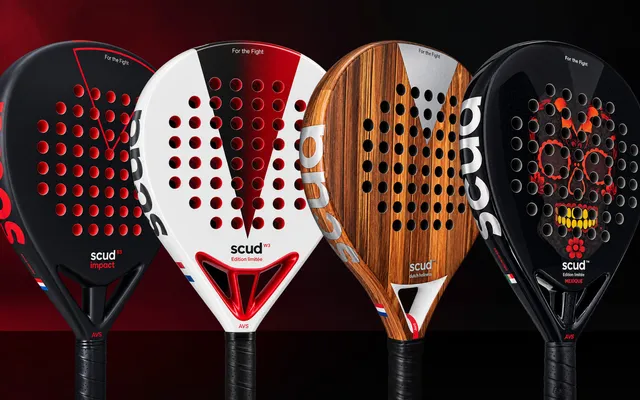
Every SCUD racket ships with its cord fixed to the handle. On the SCUD Wood S1, 350 g and medium balance, manoeuvrability makes reflex volleys easier to control. On the SCUD Mexique M1, 365 g and head-heavy balance, available from January 2027, the cord comes into its own on smashes where the racket head pulls the arm through. See the whole range on the padel rackets page.
In short
- The cord is compulsory: non-elastic, fixed to the handle, 35 cm maximum, worn on the wrist in a match.
- It protects the other three players, not the racket: it is a safety rule.
- Wrapped around the grip it is useless; too loose it catches too late; too tight it hinders the stroke.
- Replace it as soon as the fibres fray where it exits the handle.
- A good hold reduces the risk upstream; the cord remains the safety net.
Frequently asked questions
Is the cord also compulsory in training and recreational play?
The rules apply to competitions, but the cord’s purpose, protecting other players, holds at every session. We recommend wearing it systematically, and many clubs require it.
Can you play with an elastic cord?
No, the rules require a non-elastic cord. A strap that stretches lets the racket fly far and then springs it back towards you, which is worse than no cord at all.
What if the cord breaks mid-match?
Stop playing and replace it, or switch rackets. The umpire is entitled to require this interruption before play resumes.
Does the cord get in the way of the smash?
Properly adjusted, no: it should leave the wrist free to rotate. If it gets in the way, it is too short or too tight, not a reason to do without it.
To choose a racket that will sit well in your hand, our free guide to choosing your racket reviews weight, balance and grip, and our models all ship with the cord fitted.