Tennis elbow, or lateral epicondylitis, is pain on the outside of the elbow, and padel players get it too, especially those who come back hard after a break or play with a racket that asks more than their arm can give. The racket is never the whole story, but it does count: weight, balance, frame stiffness, foam density, vibration and grip are all settings you can act on. This article walks through those factors, suggests concrete adjustments and says plainly when to stop tinkering with equipment and see a health professional.
What “tennis elbow” actually is
Lateral epicondylitis is an overload of the tendons of the wrist extensor muscles, where they attach to the small bony bump on the outside of the elbow, the lateral epicondyle. Those muscles lift the hand and stabilise the wrist, which is exactly what a player does at every impact while holding the handle firmly.
The pain usually creeps in: first a dull ache after the match, then tenderness when gripping an object, turning a door handle or lifting a cup, and eventually pain during play itself. In padel it tends to flare on backhands, blocked backhand volleys and smashes hit with a straight arm.
Let us be clear once and for all: we make rackets, we are not doctors. What follows is an equipment-and-practice reading of the problem, not individual medical advice. Nobody gets diagnosed or treated by reading a blog post.
The racket-related factors
A padel racket sends into your arm all the energy the ball does not take back. The more abruptly that energy arrives, the more the elbow tendons absorb. Six characteristics matter.
Weight
Between 340 and 385 g the range looks narrow, but every gram is multiplied by the number of strokes in a match. A heavy racket needs more effort to be held steady at impact and slowed down at the end of the swing, above all on volleys where preparation time is short. We go into detail in our article on padel racket weight and balance.
Head-heavy balance
At equal weight, a racket whose mass sits in the head asks more of the forearm muscles at every change of direction. That is the price of the leverage that makes the smash powerful. A medium or low balance brings the mass back towards the hand and eases the elbow.
Frame stiffness and foam density
A very stiff face in dense carbon, paired with a hard EVA foam, returns energy crisply. That produces a fast ball, but also a sharper shock travelling up the arm. A softer foam and a more forgiving weave lengthen contact time slightly and absorb part of the impact.
Vibration
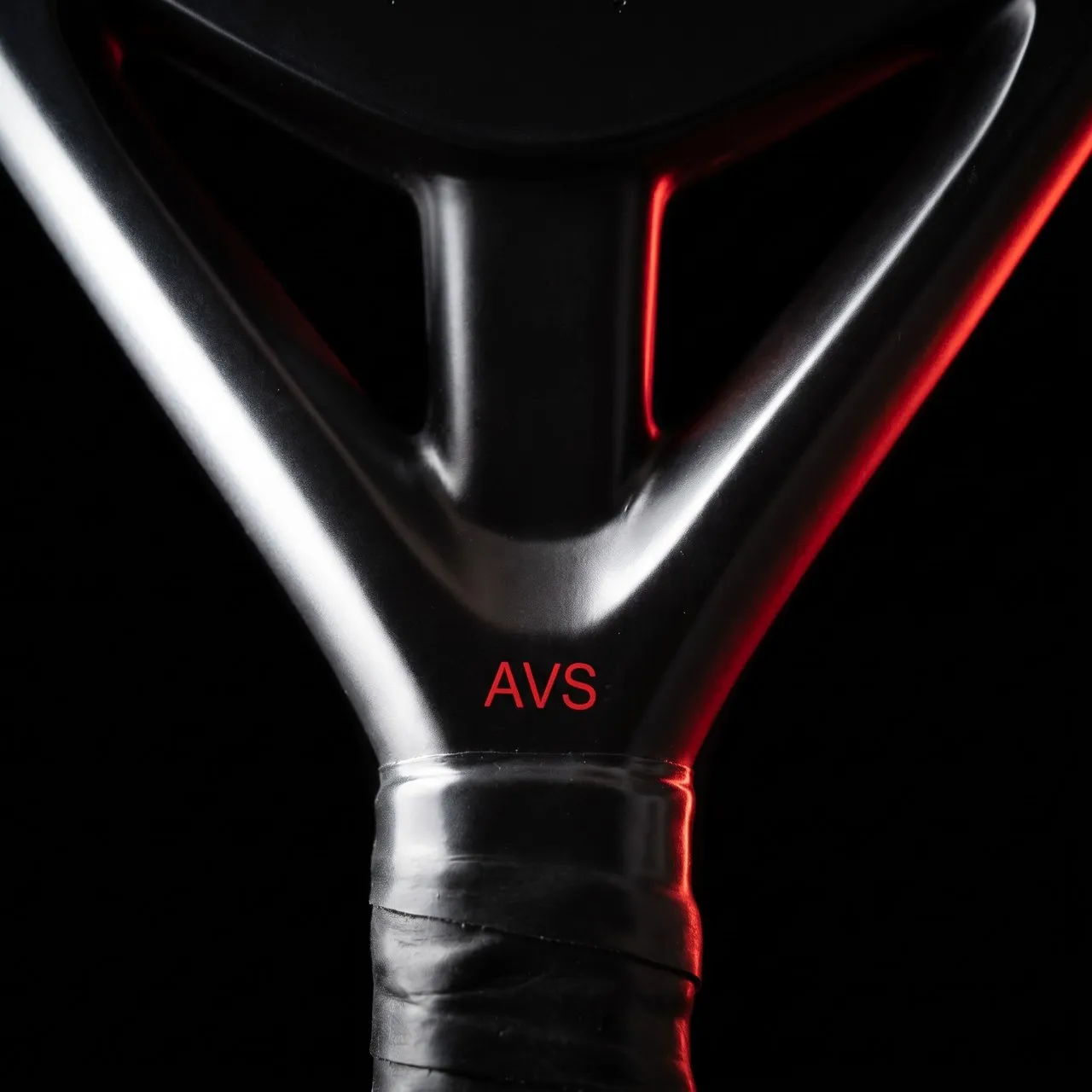
After impact the frame oscillates. Those oscillations pass into the handle, then the hand, then the elbow. Some rackets build a damping system into the junction between face and handle; that is what the AVS system does on our models. It filters part of the vibration; it does not cancel the main shock of an off-centre hit.
The sweet spot
The smaller and higher the sweet spot, the more an off-centre ball twists the wrist. A round or teardrop shape, with a wide, central sweet spot, reduces those twisting hits.
Handle and grip
A handle that is too thin forces you to squeeze to hold the racket, which keeps the wrist extensors permanently contracted. A worn, slippery grip does the same. We cover this in our guide on grip, overgrip and handle size.
The factors that have nothing to do with the racket
Changing equipment does not fix everything, and it would be dishonest to suggest otherwise.
- Playing volume. Going from one match a week to four because a club just opened nearby is the most common scenario. Tendons adapt far more slowly than muscles.
- Technique. A backhand hit from the wrist rather than the shoulder, a straight-arm smash with no trunk rotation, a “blocked” volley with no footwork: all of these load the elbow instead of the body.
- Balls. Dead, heavy or wet balls demand more force on every stroke.
- Warm-up. Opening the match with smashes after three minutes of mini-tennis does not help.
- The rest of life. Mouse work at a desk, DIY, carrying loads: the elbow does not distinguish between the court and the office.
Prevention: what to adjust, and in what order
| Factor | Warning sign | Adjustment to try |
|---|---|---|
| Weight | Forearm fatigue before the end of the match | Move down towards 350-360 g |
| Balance | Racket “pulling” towards the head on volleys | Switch to a medium or low balance |
| Foam | Dry, jarring impact, ball that “cracks” off the face | Soft or medium EVA rather than hard |
| Frame | Clear vibration in the hand after impact | More forgiving weave, anti-vibration system |
| Shape | Many off-centre hits that hurt | Teardrop or round rather than diamond |
| Grip | Needing to squeeze to hold the handle | One or two overgrips, a fresh, dry grip |
| Volume | Sudden return to play, pain the next day | Increase frequency in steps |
Three principles complete the table. First, change one thing at a time, otherwise you will never know what helped. Second, forearm and shoulder strengthening, supervised by a professional, prepares the arm better than any damping system. Third, if you are starting out or coming back from pain, stay on the forgiving side of the range even if your technical level would allow otherwise. We explain why in power or control: which one for your game?.
When to see someone
Equipment gets adjusted; pain gets treated. See a doctor or a physiotherapist, without waiting for the next tournament to pass, if any of these applies:
- the pain lasts more than a few days despite rest;
- it is present at rest or wakes you at night;
- you lose strength when gripping, carrying a bag or turning a key;
- the pain comes back every time you return to play, even after several weeks off;
- the elbow is swollen or warm, or the pain came on suddenly.
Playing through it “with gritted teeth” and a lighter racket is not a strategy. Adjusting the equipment supports treatment; it does not replace it.
And at SCUD?
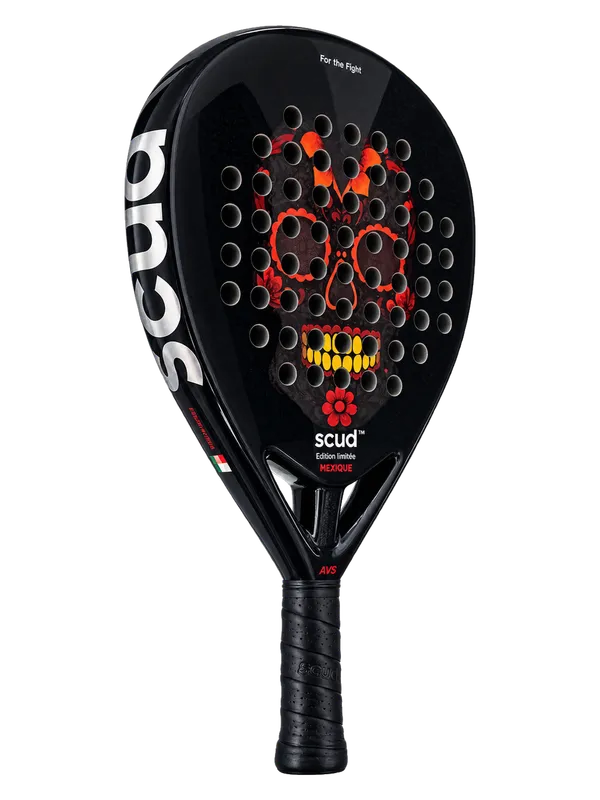
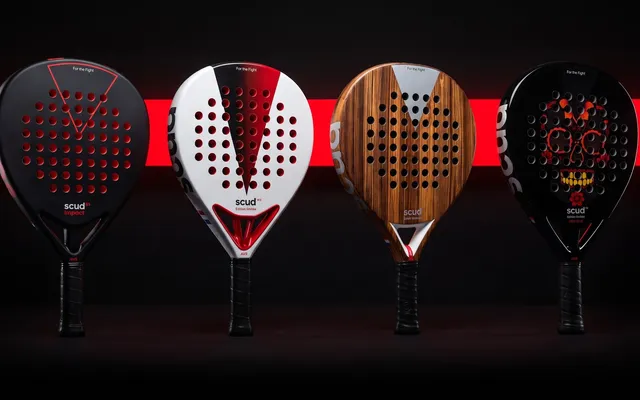
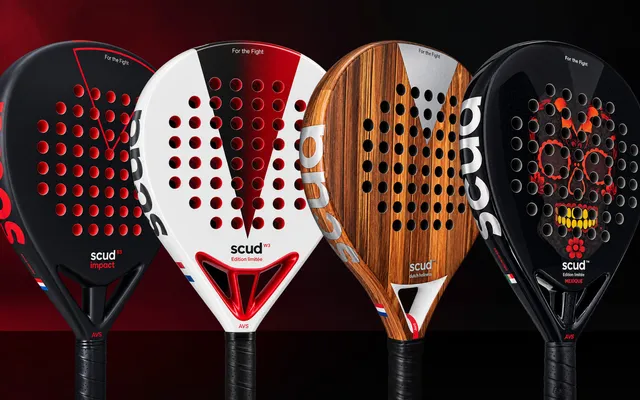
Our whole range carries the AVS anti-vibration system and a honeycomb silicone handle under the grip, which lets you hold the racket without squeezing. But our four models do not load the arm the same way, and we would rather say so plainly.
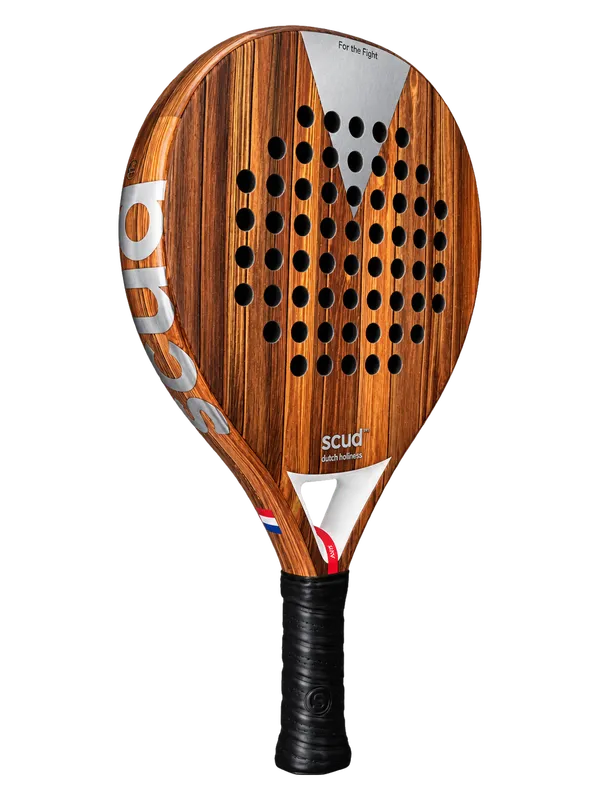
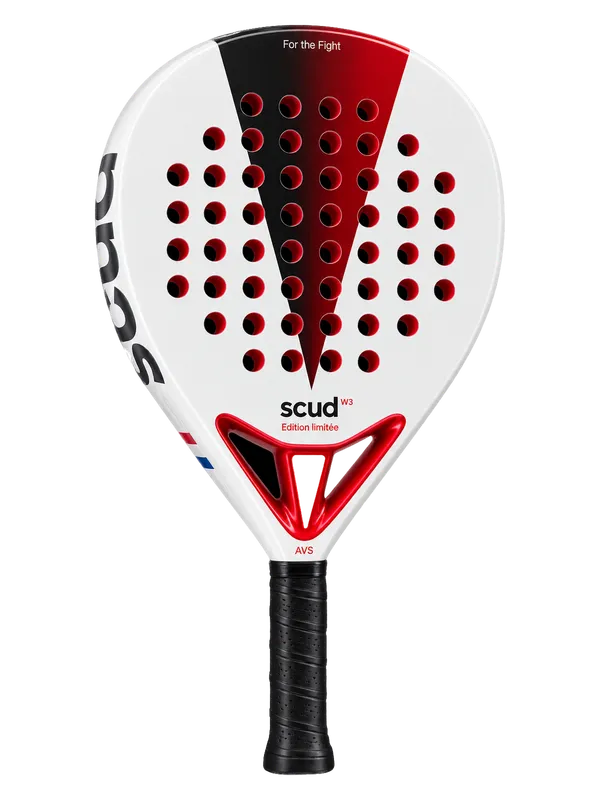
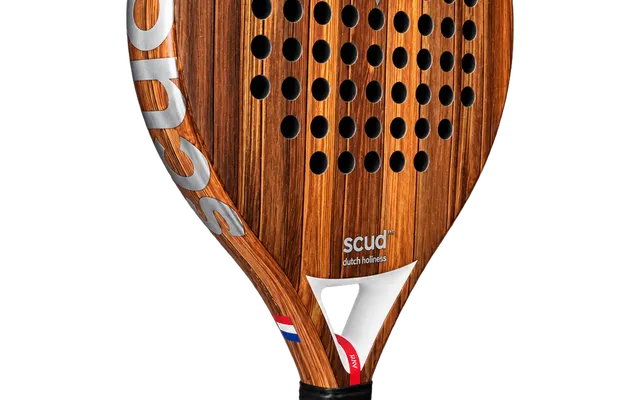
The SCUD Wood S1 is our gentlest model: a teardrop shape with a wide sweet spot, 350 g, medium balance, a 12K carbon and fibreglass face over a soft EVA foam. It is the racket we recommend to a player coming back from elbow trouble, or who simply wants to stay clear of it. The SCUD White S3, in 12K carbon, stays forgiving on off-centre hits while keeping a responsive EVA Hard Power foam.
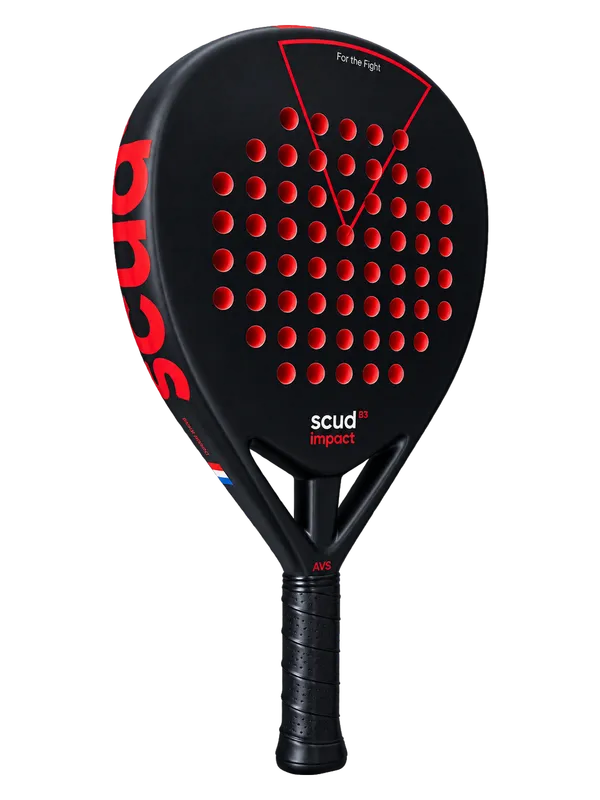
At the other end, the SCUD Black Impact B3 is our most demanding racket: 18K carbon, EVA Hard Power, diamond shape, high balance. It is built for a prepared arm and stable technique. No damping system, AVS included, turns a power racket into a comfort racket: if your elbow is talking, the control collection is where to look.
In short
- Tennis elbow affects the wrist extensor tendons on the outside of the elbow; in padel it flares mostly on backhands and smashes.
- The racket matters through its weight, balance, stiffness, foam, vibration and handle, but playing volume and technique matter just as much.
- To spare the arm: 350-360 g, medium or low balance, soft or medium EVA, a wide sweet spot, a suitable grip and an anti-vibration system.
- Change one parameter at a time and increase playing volume in steps.
- Persistent or night-time pain, or loss of strength: see a health professional; equipment alone will not fix it.
Frequently asked questions
Is a lighter racket enough to make tennis elbow go away?
No. It reduces the load on the elbow, which helps prevention and supports recovery, but established pain needs medical or physiotherapy care.
Does an anti-vibration system really protect the elbow?
It filters part of the vibration that travels up the handle after impact, which makes striking more comfortable. It does not make up for a racket that is too heavy, a balance that is too high or a stroke that loads the elbow.
Should I choose a soft foam if my elbow hurts?
It is usually the first setting to try: a soft or medium EVA absorbs more of the shock than a hard one. The comfort gained costs a little response on hard hits.
Does an overgrip do anything for tennis elbow?
Indirectly, yes. A slightly thicker handle and a dry surface let you hold the racket without squeezing, which relaxes the forearm muscles the elbow depends on.
Can I keep playing with mild pain?
A passing ache after a heavy week of play is not unusual, but if it returns every match or lasts more than a few days, the right call is to get it checked before playing again.
To choose the model that will be kindest to your arm, browse all our padel rackets or download our free guide to choosing your racket.