Padel is played by four people on a 20-metre by 10-metre court enclosed by glass and wire mesh, with an underarm serve and the same point count as tennis. That is roughly all you need to know to play a first match. The rest — what you may do with the glass, what counts as a fault off the mesh, how a set ends — fits in this guide, written for anyone stepping onto a court for the first time.
The court: 20 metres by 10, fully enclosed
A padel court measures 20 m long by 10 m wide, split in two by a net. Each half is therefore 10 m by 10 m. The back of each side is closed by a glass wall topped with wire mesh, and the sides alternate between glass and mesh. This enclosure is not decoration: the walls are part of the game, as in squash, with one difference — the ball must touch the ground before it touches a wall.
On each half, a line parallel to the net marks the service zone. A centre line perpendicular to it splits that zone into two service boxes, left and right. The net is slightly lower at the centre than at the posts. These dimensions are set by the rules of the International Padel Federation, available at padelfip.com.
Padel is played almost exclusively as doubles. Singles exists, on narrower courts, but it remains marginal: when people talk about padel, they mean two against two.
The serve: underarm, diagonal, after a bounce
This is the first rule that surprises players coming from tennis. In padel the serve must be underarm:
- the server stands behind the service line, both feet on the ground;
- they bounce the ball once behind that line;
- they hit it at waist height or below, never above;
- the ball must clear the net and bounce in the diagonally opposite service box.
After that bounce, the ball may touch the side glass and the serve still counts. If it touches the mesh after bouncing, the serve is a fault. If it clips the net and lands in the correct box, it is a let: the serve is replayed. As in tennis, the server has two attempts, and the serve alternates between the two boxes on every point. The receiver must let the ball bounce before playing it.
Service then rotates between players: each game is served by a different player, and the order chosen at the start of a set does not change until that set is over.
The glass: your best ally, once you understand the order
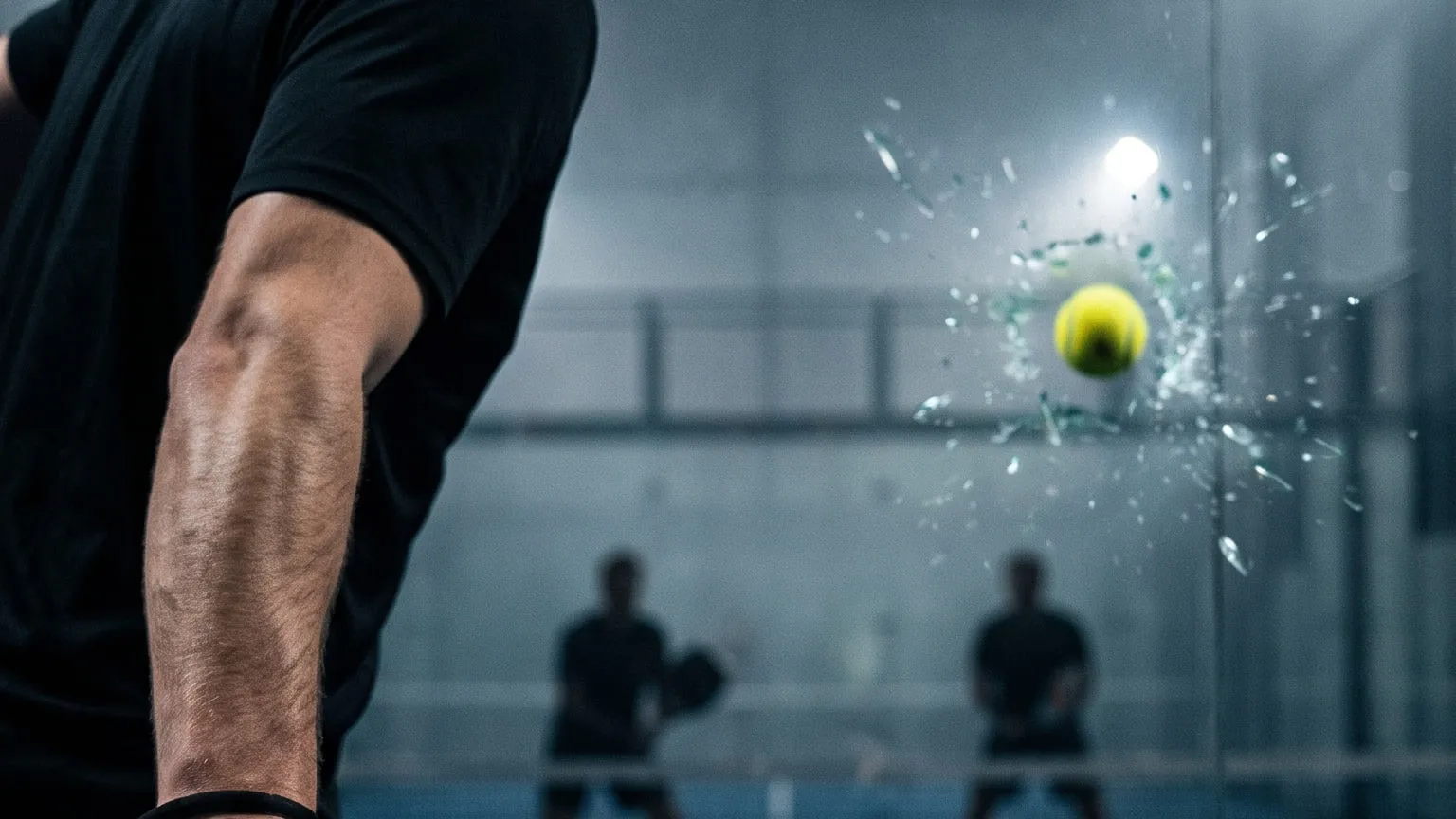
The basic rule is easy to state: on your half of the court, the ball must touch the ground before it touches a wall. A ball that bounces on the ground and then hits the back glass is still in play. You may play it after that rebound off the glass, and this is in fact the most characteristic shot in padel: the off-the-wall return.
In the other direction, when you hit the ball into your opponents’ half, it must bounce on their floor before touching any wall. A ball that hits the opponents’ glass or mesh directly, without bouncing on the ground, is a fault. On the other hand, nothing stops you deliberately bouncing the ball off your own glass to send it back over the net: it is allowed, difficult, and it is what makes the sport so entertaining to watch.
A ball may touch several walls in succession after its bounce: back glass then side glass, for instance. It remains playable as long as it has not bounced a second time on the ground.
The mesh: the difference that changes everything
The wire mesh follows a different logic from the glass, and this is where most beginners go wrong.
| Situation | Glass | Mesh |
|---|---|---|
| The ball touches the wall after bouncing on your side | In play | In play |
| The ball touches the opponents’ wall without bouncing first | Fault | Fault |
| You deliberately return the ball via your own wall | Allowed | Not allowed |
| On the serve, the ball touches the wall after bouncing in the box | Valid serve | Fault |
In short: the mesh is for defending, never for attacking. A ball that bounces on your side and then touches your mesh is playable, but you cannot use the mesh as a springboard to send the ball back over. And on the serve, it is better to aim squarely at the middle of the box than to flirt with the side mesh.
Scoring: like tennis, with one nuance
Points are counted as in tennis: 15, 30, 40, game. At 40-40 it is deuce, and two clear points are needed to win the game — except on circuits that apply the golden point (punto de oro): at 40-40, a single point decides, and the receiving pair chooses which side the serve is played to. Ask your club: at recreational level, the classic advantage rule is still very common.
A set is won at six games with a two-game margin. At six games all, a tie-break is played to seven points, two clear. A match is the best of three sets. On club courts, with slots of an hour or ninety minutes, many players shorten the format: a single set, or two sets and a super tie-break. Nothing stops you agreeing on a format before you start.
The faults to know before you play
A few situations come up again and again in early matches. The point is lost if:
- the ball bounces twice on your side;
- a player touches the net, the posts or the opponents’ side with their racket or body while the ball is in play;
- the ball touches you, your partner or your clothing;
- you hit the ball twice in a row, or at the same time as your partner;
- the ball passes under the net or through the mesh.
In padel you may leave the court to play a ball that has gone over the enclosure, provided the court is open at the sides and the ball bounced on your side before leaving. It is spectacular and rare: do not worry about it in your first few weeks.
The equipment the rules impose
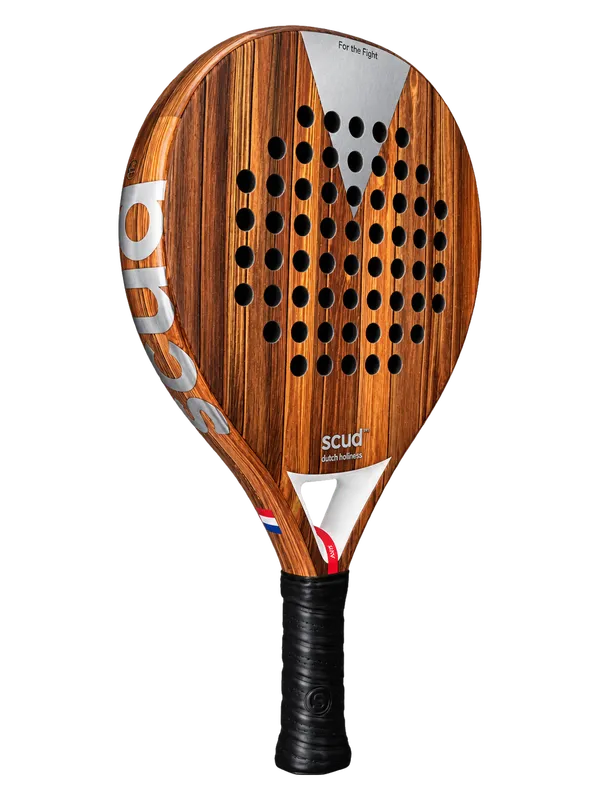
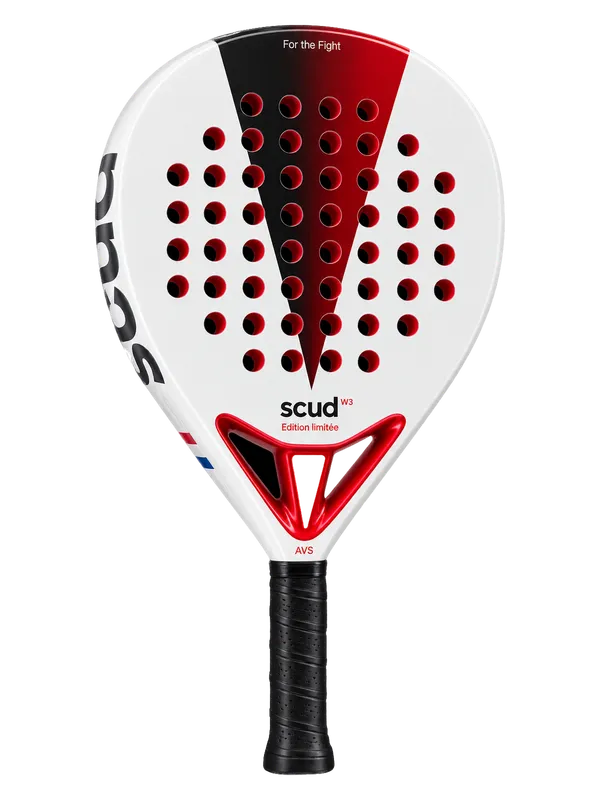
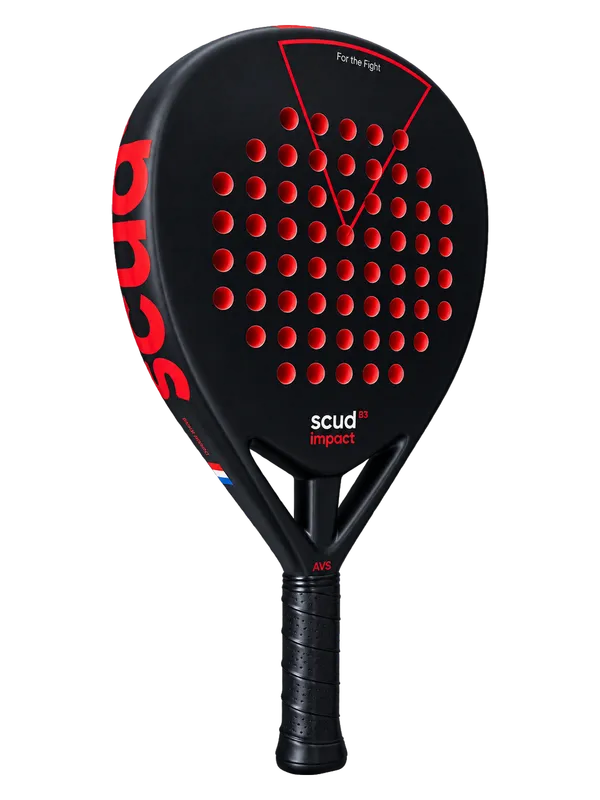
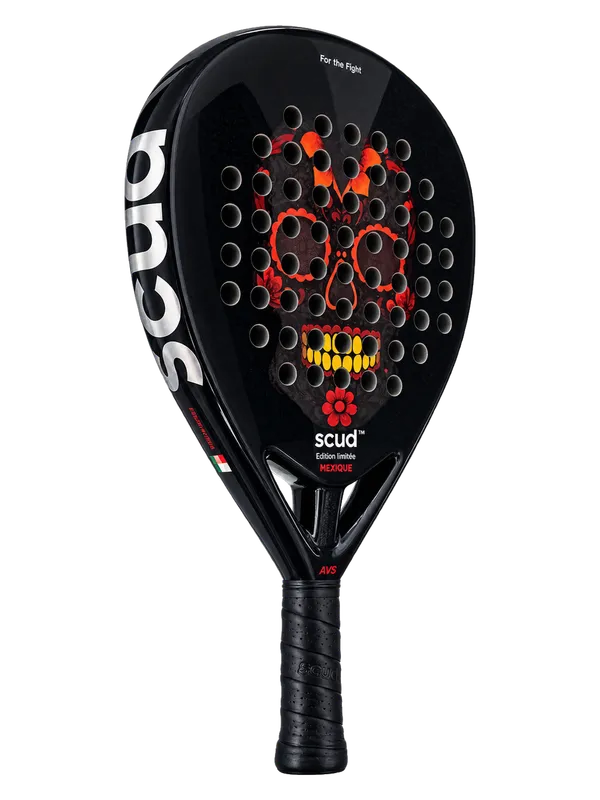
The rules also cover what you hold in your hand. An approved padel racket is no longer than 45.5 cm, no wider than 26 cm and no thicker than 38 mm; its face is perforated and a wrist strap is compulsory in competition, so that a racket never flies towards a partner or a wall. We go through this framework, and what manufacturers do within it, in our guide on how to choose a padel racket.
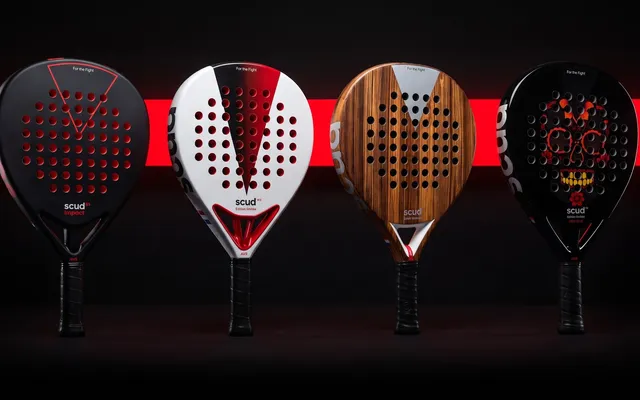
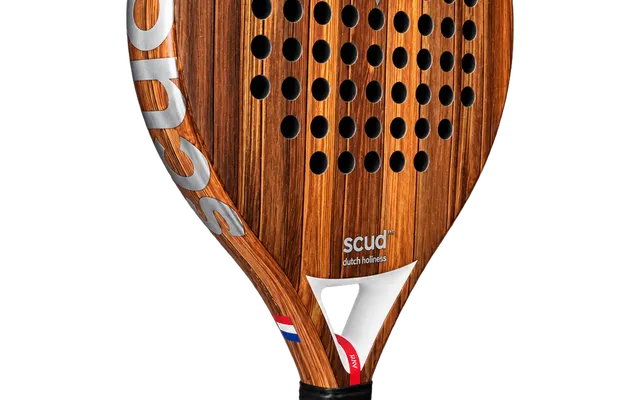
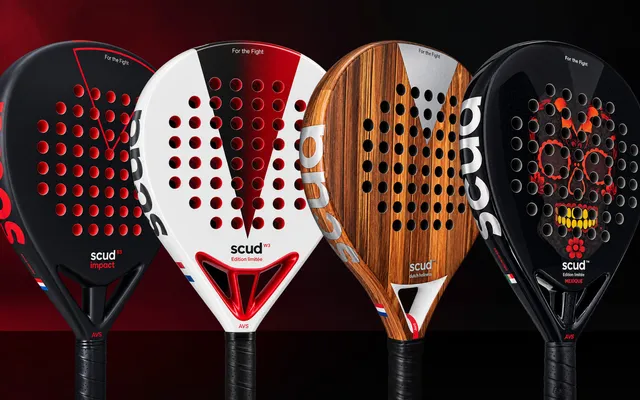
For a first purchase, a forgiving racket makes learning the walls far more enjoyable: teardrop shape, moderate weight, soft foam. In our range that profile is the SCUD Wood S1: teardrop shape, 350 g, medium balance and soft EVA foam. Players who prefer to build the point rather than accelerate will also look at the control collection. If you are still hesitating, our free guide to choosing a racket walks through these criteria step by step.
In short
- The court is 20 × 10 m, enclosed by glass and mesh that are part of the game.
- The serve is underarm, after a bounce, diagonal, with two attempts.
- The ball must touch the ground before a wall; the glass lets you return, the mesh never does.
- Scoring is as in tennis: 15, 30, 40, game; six games per set, tie-break at 6-6.
- A wrist strap and a racket within approved dimensions are compulsory in competition.
Frequently asked questions
Can you play the ball off the glass if it has not bounced on the ground?
No. On your half, the ball must bounce on the ground first, then it may touch one or more walls. A ball that hits your glass directly before the ground is a point lost by the opposing pair, not by you.
Is an overhead serve allowed?
No. The serve is struck at waist height at most, after a bounce behind the service line. It is the rule that most clearly separates padel from tennis.
Do you have to play every point with advantage?
It depends on the circuit. Professional competitions apply the golden point at 40-40; in clubs and at recreational level, the classic advantage rule is still common. Agree on it before the match.
Can padel be played as singles?
Yes, on dedicated narrower courts, but the practice is marginal. Padel is a doubles sport, and that is how it is best learned.
Which racket should a beginner choose?
A forgiving, fairly light racket with soft foam. All our padel rackets list shape, weight and core so you can compare.
Once the rules are in your head, all that remains is to choose the racket that will accompany your first returns off the glass: our range is there for that.