
Contents — 10 parts
Since 2026, a professional padel game can no longer drag on at 40-40. The International Padel Federation (FIP) has adopted the Star Point: two advantages, and if the score returns to deuce a third time, a single point decides the game. The rule applies on the Premier Padel tour, on the FIP Tour and on the FIP’s junior and amateur circuits. Here is how it works, why it was adopted, and what it changes, or doesn’t, for a club player in France.
The Star Point in one sentence
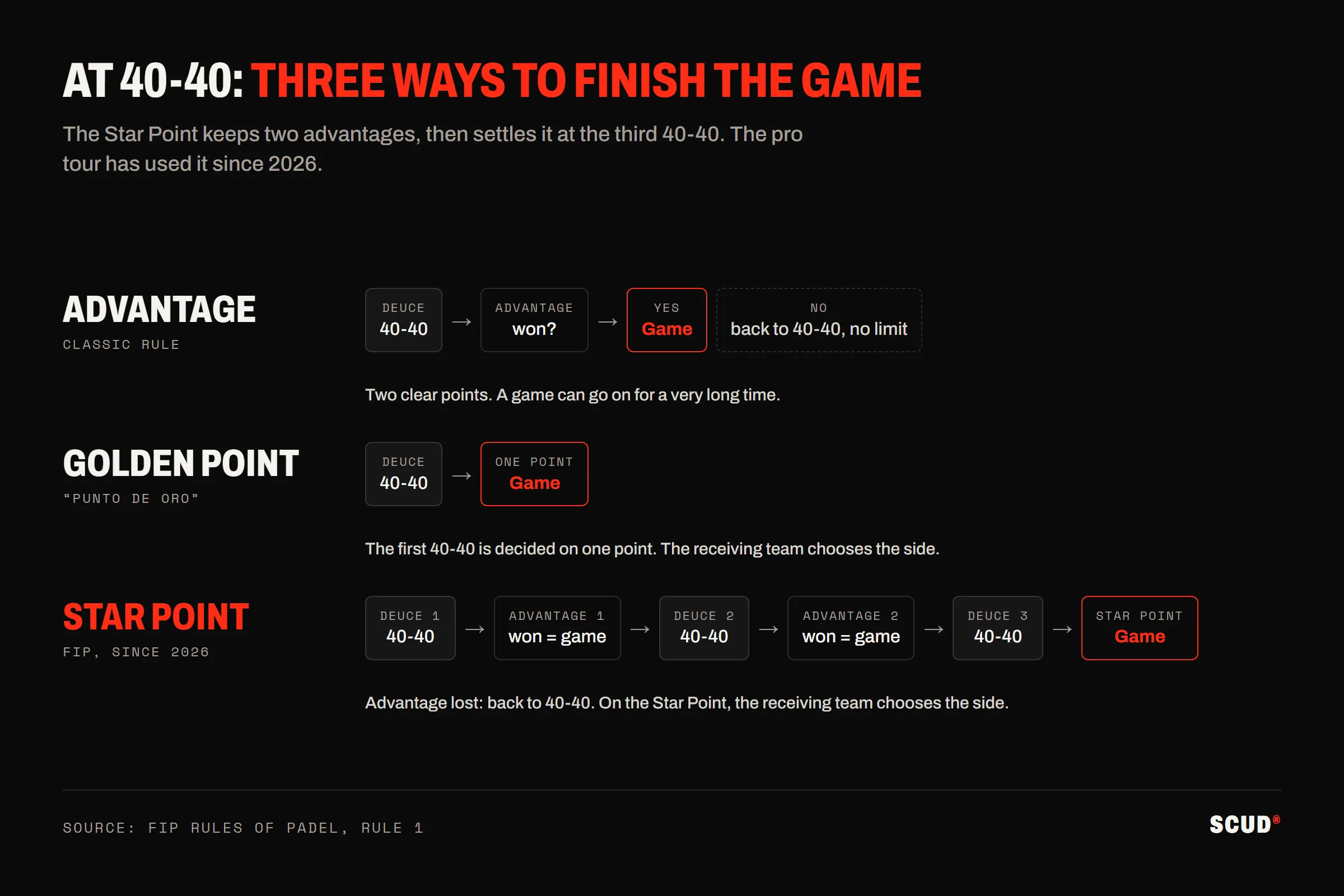
At 40-40, you play a first advantage; if it is lost, the score goes back to 40-40 and you play a second advantage; if that is lost too, the third 40-40 is played as a single point, the Star Point, and whoever wins it wins the game.
The rule, step by step
The official text appears in the FIP rules, under rule 1, as “Option 2: Star Point”. Points are still counted as in tennis: 15, 30, 40, game. Everything happens after the first deuce.
- Deuce 1 (40-40). The team that wins the next point takes advantage 1.
- If it also wins the following point, it wins the game. If it loses it, the score goes back to deuce 2.
- Same principle: the next point gives advantage 2. Converted, it wins the game; lost, it takes the score back to deuce 3.
- At deuce 3, the Star Point is played: a single point, and the team that wins it wins the game.
For this deciding point, the receiving team chooses the side on which it receives, right or left, and its two players cannot swap places. In mixed doubles, the receiving player must be the same sex as the server.
How it differs from advantage and the golden point
The FIP rules provide for three ways of settling deuce, which organisers choose depending on the competition.
| System | At 40-40 | Maximum length of a game | Where you find it |
|---|---|---|---|
| Classic advantage | You need a two-point lead | Unlimited | Option 1 of the FIP rules, many amateur tournaments |
| Golden point (punto de oro) | One point decides from the first deuce | The shortest | Option 3 of the rules, the former World Padel Tour, the FFT’s “deciding point” formats |
| Star Point | Two advantages, then a deciding point | Capped | Option 2 of the rules, pro tour since 2026 |
The Star Point is a compromise. It keeps what players like about advantage — the chance to come back, to save a first opposing advantage — while capping the length of a game. The golden point, by contrast, settles things at the first deuce, which shortens matches further but puts a lot of weight on a single rally.
Who decided it, and when
- 28 November 2025: the FIP general assembly, which brings together around a hundred national federations, adopts the Star Point unanimously.
- 11 December 2025: the Premier Padel board, meeting in Barcelona, decides to apply it on its tour, while presenting the 2026 calendar.
- January 2026: first use in official competition, at the FIP Bronze in Melbourne (FIP Tour), from 5 to 11 January.
- February 2026: debut on the Premier Padel tour, at the Riyadh P1, from 9 to 14 February.
Since then, it has applied on four FIP circuits: Premier Padel, the CUPRA FIP Tour, FIP Promises (juniors) and FIP Beyond (amateurs). Several media outlets present Riyadh as the big premiere; it was the first on Premier Padel, but the FIP Tour had already used it a month earlier.
Why this rule
The FIP gives three reasons in its December 2025 statement: limiting the maximum number of points a game can contain, protecting players, and making match length more predictable for spectators and television. It says it consulted players, coaches, organisers, broadcasters and partners during the 2025 season.
Luigi Carraro, president of the FIP, sums up the intention in one sentence: preserving the tradition of padel while improving player welfare and the predictability of broadcasts. To illustrate the problem, he cited, according to Padel Addict, the first game of a women’s quarter-final that had lasted eighteen and a half minutes, and which would have lasted barely more than four with the Star Point.
The debate was not new. The World Padel Tour had adopted the golden point in 2020 to shorten matches; Premier Padel, when it was launched in 2022, went back to classic advantage. The Star Point is the middle way the governing bodies eventually settled on.
What the players say
The reception has not been unanimous. Martín Di Nenno, one of the best players on the tour, pointed out a very practical problem at the end of January: “we often forget whether it’s the first advantage or the second”, which “can lead to mistakes, especially without an umpire”. He makes no secret of his preference: “The punto de oro, I love it.”
As for the real time saved, there is no official measurement yet. Padel Magazine has put forward an estimate — a few minutes per match, on only the games that reach deuce — while itself stating that no official study can confirm it. So treat the figures doing the rounds with caution.
What about club play in France?
This is the question most players care about, and the answer is simple: no, the Star Point does not apply in tournaments sanctioned by the FFT (French Tennis Federation, which governs padel in France) in 2026-2027.
Chapter I of the FFT’s 2027 general competition rules, in force since 1 September 2026, provides for match formats with advantage (formats A1, B1, C1, D1) and formats with a deciding point (A2, B2, C2, D2 and F), in other words the golden point. Junior competitions use only deciding-point formats, except format E. The Star Point is not among them.
In practice, in a P25, P100 or P250 (French tournament categories), the referee announces the format at the start of the tournament: either advantage or deciding point. For a friendly game, nothing stops you trying the Star Point; it is a good way of playing more games in a ninety-minute court booking without giving up advantage altogether.
How to play the deciding point
Whether it is the Star Point on the pro tour or the deciding point in an FFT tournament, the tactical principle is the same: a single point, and the receiving team chooses its side.
- When receiving, choose the player who is most reliable on the return, not the most spectacular. The most effective return is often still the lob or a low ball at the opponents’ feet, as we explain in our guide to the return of serve.
- When serving, go for your most reliable target. A double fault on a deciding point costs you the game. Our guide to the padel serve covers the targets and spins in detail.
- Move up to the net together. On a single point, the team that takes the net first keeps the upper hand; that is what our guide to the volley is all about.
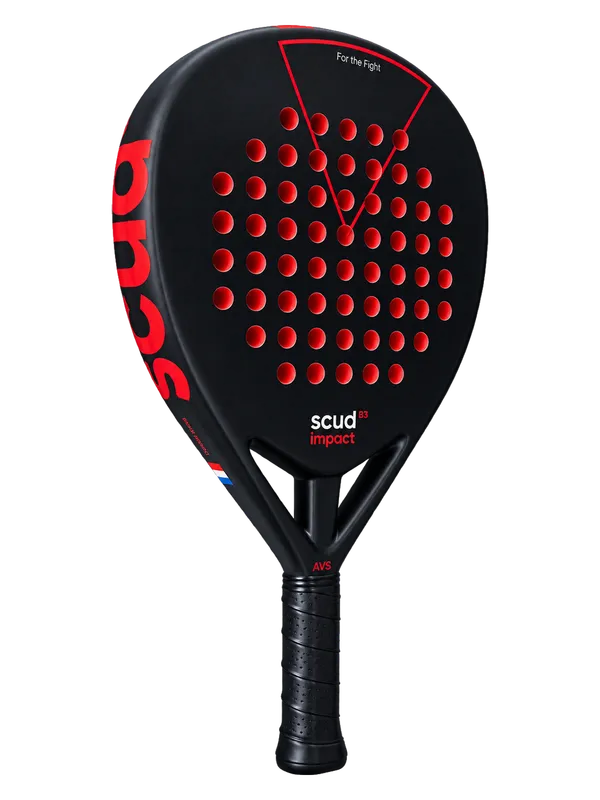
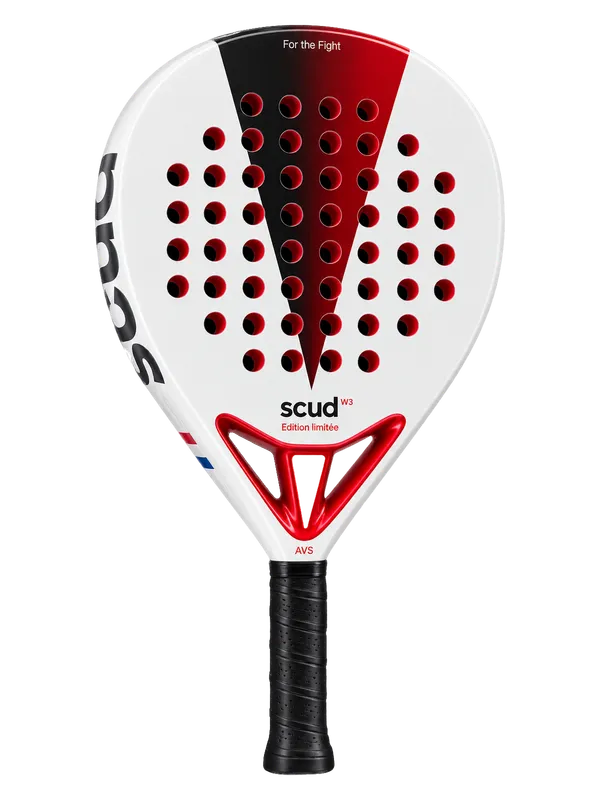
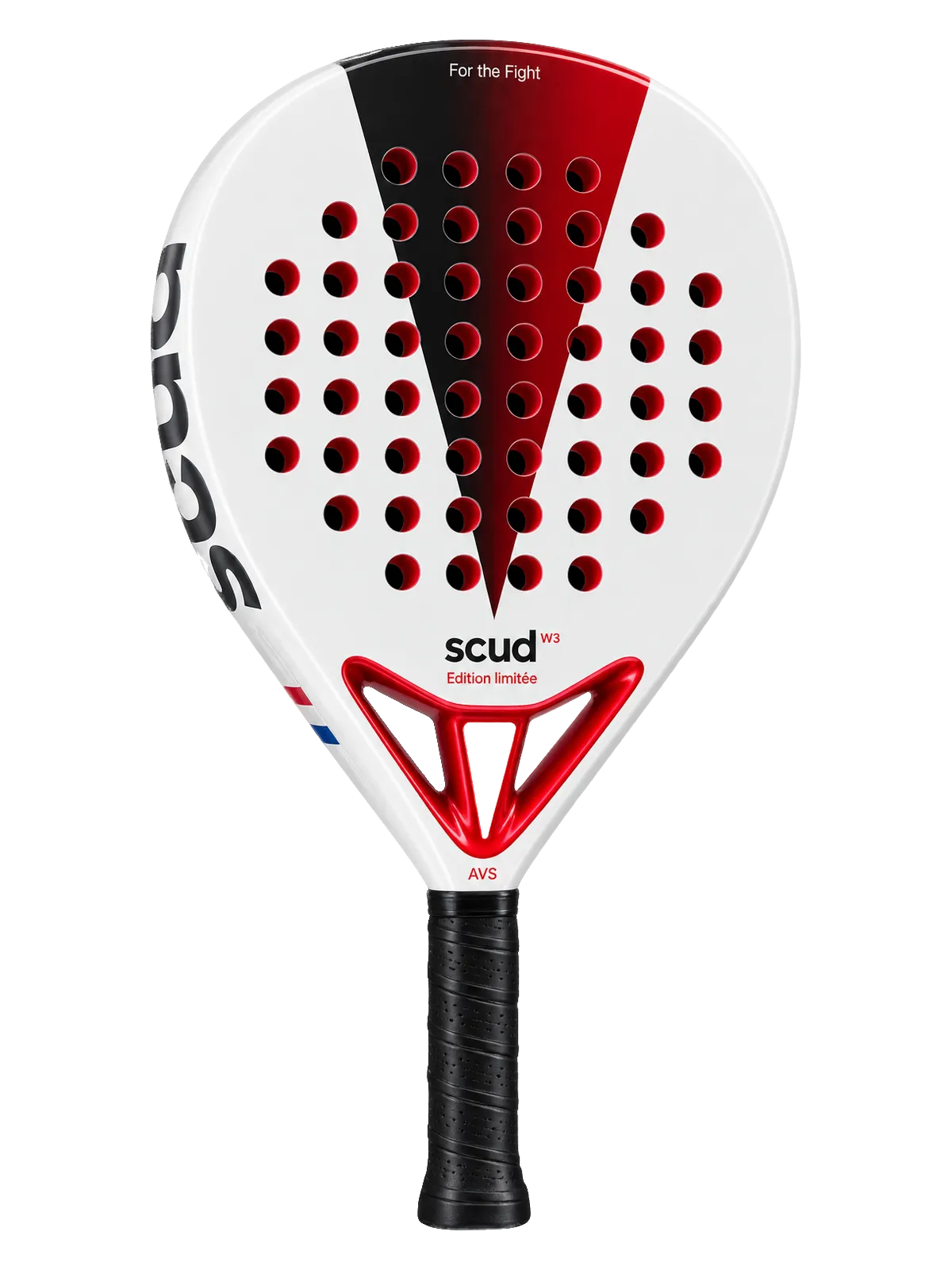
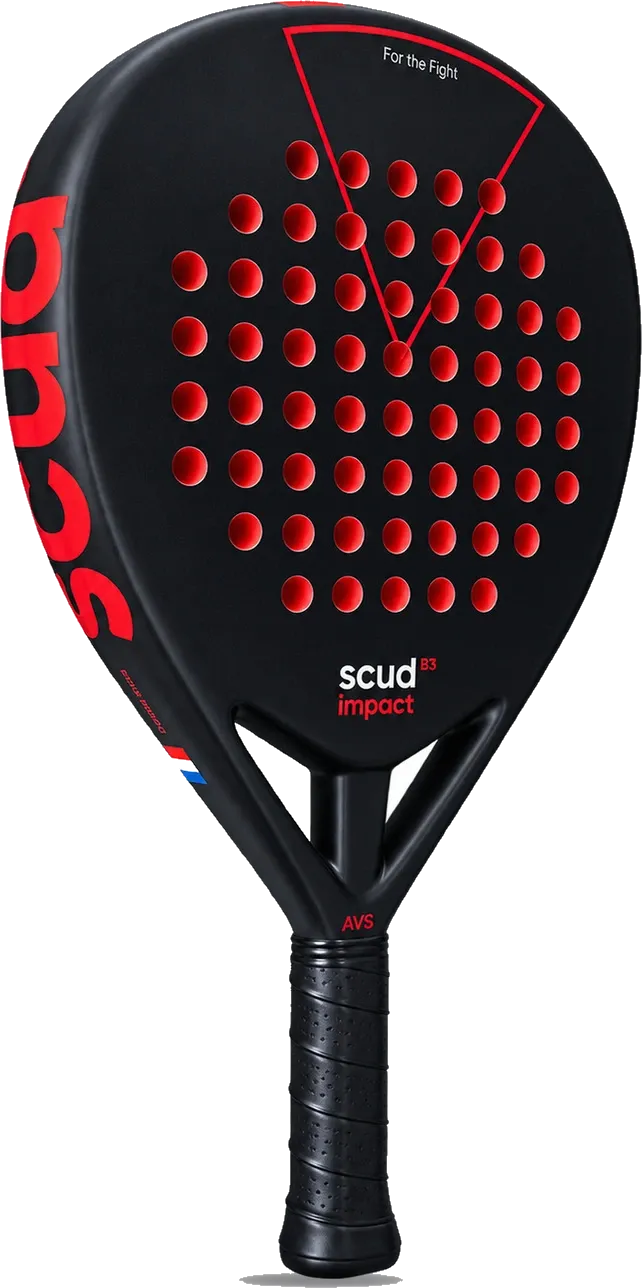
On these high-pressure points, a racket that forgives slightly off-centre hits is reassuring. The SCUD White S3, with its forgiving 12K carbon, keeps the power of a diamond shape; the SCUD Black Impact B3 is for players who want to finish the point with a smash. For the other rules of the game, see our article on padel rules for beginners.
In short
- The Star Point allows two advantages, then a deciding point at the third 40-40.
- On that point, the receiving team chooses its side; in mixed doubles, the receiver is the same sex as the server.
- Adopted unanimously by the FIP on 28 November 2025, applied since January 2026 (FIP Tour) and February 2026 (Premier Padel).
- Stated aim: cap the length of games, protect players, make matches more predictable for television.
- In France, FFT tournaments in 2026-2027 use advantage or the deciding point, not the Star Point.
Frequently asked questions
What is the Star Point in padel?
It is a way of settling deuce at 40-40, adopted by the FIP for 2026. Teams play two advantages; if deuce comes round a third time, a single point, the Star Point, decides the game.
What is the difference between the Star Point and the golden point?
The golden point is played from the first deuce: a single point decides. The Star Point first allows two advantages, and only imposes the deciding point at the third 40-40.
Since when has the Star Point been applied?
The FIP adopted it on 28 November 2025. It was used for the first time at the FIP Bronze in Melbourne in January 2026, then on the Premier Padel tour from the Riyadh P1 in February 2026.
Does the Star Point apply in FFT tournaments?
No. The FFT 2027 competition rules, in force since September 2026, provide for formats with advantage or with a deciding point. The Star Point is not one of them.
Who chooses the side on the Star Point?
The receiving team. It decides whether the return is played from the right or the left, and its players cannot swap positions for that point.
To follow the season in which this rule is making its debut, see our Premier Padel 2026 calendar.
Sources
- FIP Rules of Padel (règlement officiel, règle 1 « Star Point »)
- Between innovation and tradition: introducing the Star Point
- Star Point : communiqué officiel (PDF)
- Premier Padel and FIP unveil the 2026 calendar and the new Star Point system
- What is the Star Point? This is Premier Padel's new scoring system
- Star Point : la nouvelle règle qui secoue déjà le circuit, Di Nenno donne son avis
- Formats de scoring au padel : quel gain de temps réel avec le Star Point ?
- Règles générales des compétitions 2027, chapitre I