
Contents — 9 parts
Padel is won at the net. The team that settles there dictates play: it volleys downwards, chooses its angles and waits for the ball that will let it finish. The team at the back defends, lobs and tries to win that position back. The volley is therefore the shot that keeps you there, far more than a shot for ending the point. A volley that is too hard and badly placed sends the ball onto the back glass, from where the opponent plays it with all the time in the world.
This guide follows our guides to the serve and the return of serve: you are now at the net, and you need to stay there.
Where to stand at the net
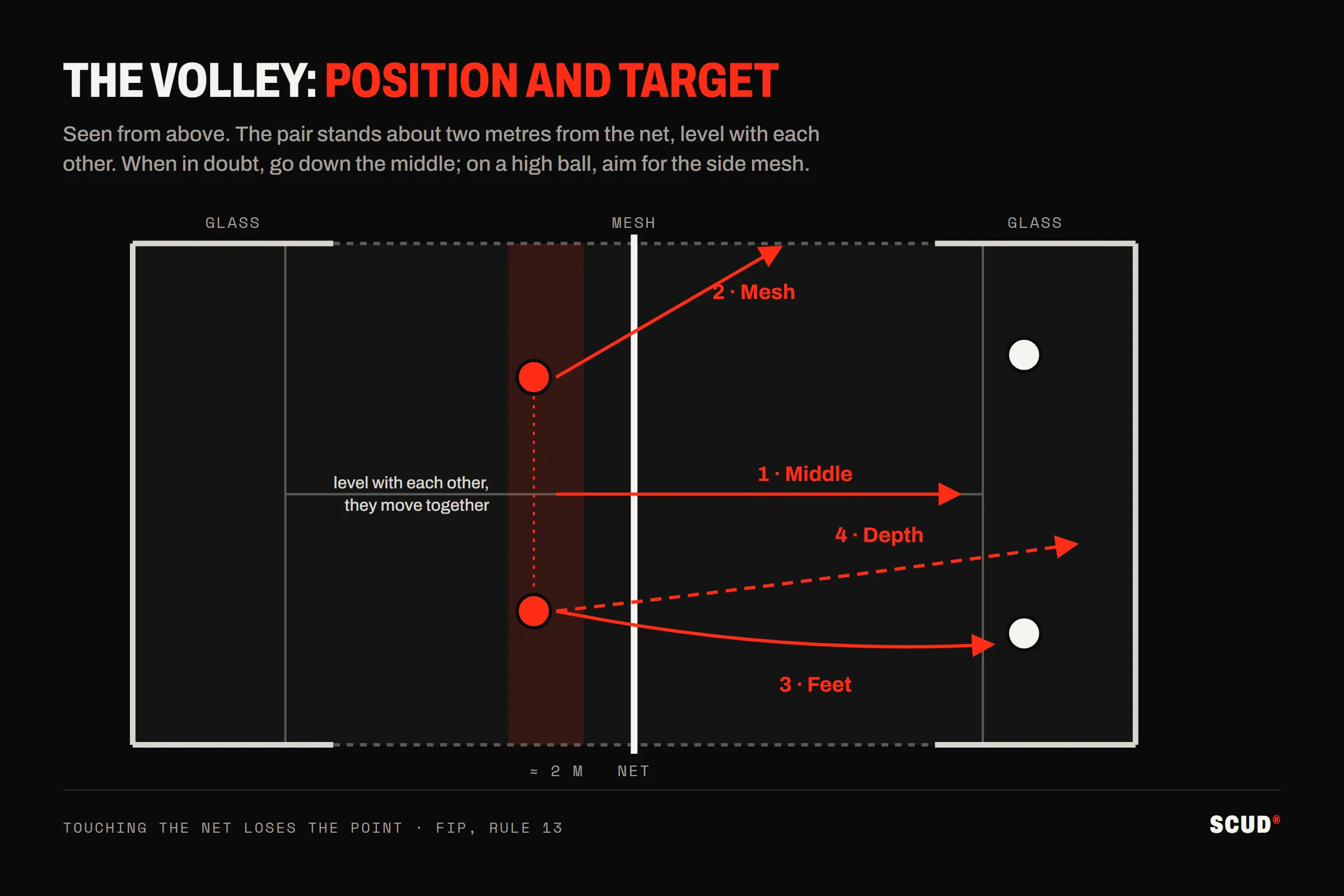
The volley position is about two metres from the net, a little further back than beginners imagine. Glued to the net, you volley higher balls, but the slightest lob goes over your head and you lose the net in one shot. Too far back, towards the service line, you face balls that dip at your feet.
The two players move forward and back together, level with each other, as if tied by a three-metre rope. When the ball goes right, the pair slides right; when the opponent lobs, it drops back together. A gap in depth between the two partners opens a diagonal lane that any good opponent will target.
The volley technique
The grip
The continental grip — the edge of the frame pointing at the ground, as if holding a hammer — is used for both forehand and backhand. At the net the ball arrives too fast to change grip between two volleys: keeping the same one is a necessity, not a preference.
The preparation
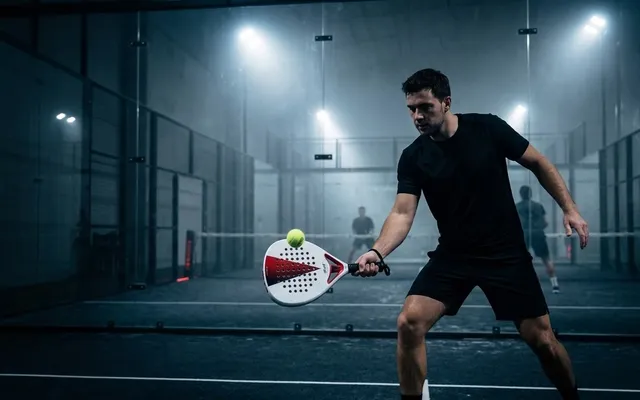
Racket in front of you, head above the wrist, at chest height. Preparation comes from turning the shoulders, not from pulling the arm back: the face must never go behind the line of your body. This is the first thing to correct in a player coming from tennis, who takes the racket back too far.
The strike
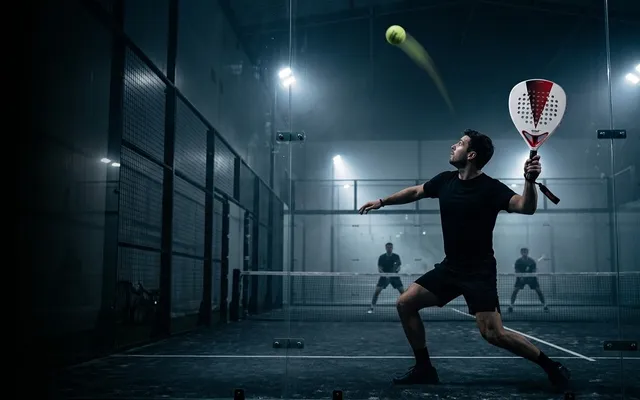
The volley is a short movement, from back to front and slightly from high to low. The face is slightly open, which gives the ball a little slice: it bounces low and skids instead of sitting up. The wrist stays firm; the power comes from stepping into the ball and turning the shoulders. Hit the ball in front of you, never beside or behind you.
The step
On a forehand volley, the opposite foot steps forward (the left foot for a right-hander); on a backhand volley, it is the foot on the hitting-arm side. This crossover step turns the body side-on, lines up the shoulders and gives direction without any effort from the arm.
The four volleys to master
The block volley
On a fast ball you have no time to swing: you hold out the racket and let the ball rebound off the face. The ball’s own energy is enough. The block is mostly played in the middle, on balls coming at your body, and it buys you time.
The deep volley
A firm volley that bounces in the back half of the opponents’ court, without going too far. The aim is to keep the opponent at the back, not to hand them a ball that comes high off the glass. The right length: a ball that bounces two or three metres from the back glass, with enough slice to come off it low.
The cross-court volley into the mesh
This is the volley that wins the most points at club level. Played diagonally, it bounces in the opponents’ court and finishes in the side mesh, near the net. Off the mesh the ball either dies or flies off unpredictably: the opponent, who was expecting a bounce off the glass, often has no answer.
The drop volley
A volley that lands just over the net, with minimal bounce. It is played when both opponents are at the back of the court, far from the net. It is a touch shot: the face opens and absorbs the ball’s speed instead of sending it back. Badly weighted, it turns into an easy ball for the opponent moving forward.
Where to aim
| Target | When | Why |
|---|---|---|
| The middle, between the two opponents | By default, on a neutral ball | Hesitation over who takes it, fewer angles for the reply |
| The feet of an opponent moving in | When they come up to the net | They have to volley upwards |
| The side glass or the mesh | On a high ball, from a good position | The ball leaves the court or dies in the mesh |
| Depth, onto the back glass | To buy time | Keeps the opponent away from the net |
The middle is the safest target. The ball passes over the lowest point of the net, and both opponents hesitate for a moment over who should take it. When in doubt, volley down the middle.
Low volley and high volley
A ball that arrives below the height of the net cannot be attacked. You have to lift it, which means it will clear the net on the way up: volley it long and slow, down the middle, to give yourself time for the next one. Bending your knees rather than dropping the racket keeps the face above the wrist and the swing stable.
A ball that arrives above the net, on the other hand, is an opportunity. You can play it downwards, harder and at an angle. This is where the cross-court volley into the mesh comes into its own.
To see these volleys played at the highest level, follow the Premier Padel tour: our 2026 calendar lists every tournament and its winners.
The most common mistakes
- Taking the racket back like in tennis. A face that goes behind the body arrives late on a fast ball.
- Hugging the net. The first lob costs you the position.
- Volleying too hard and too long. The ball comes back high off the back glass: you are handing over an easy ball.
- Letting the wrist break. A loose wrist scatters the ball; a firm wrist directs it.
- Going up alone. One player at the net and the other at the back opens the diagonal between them.
Which racket for good volleys?
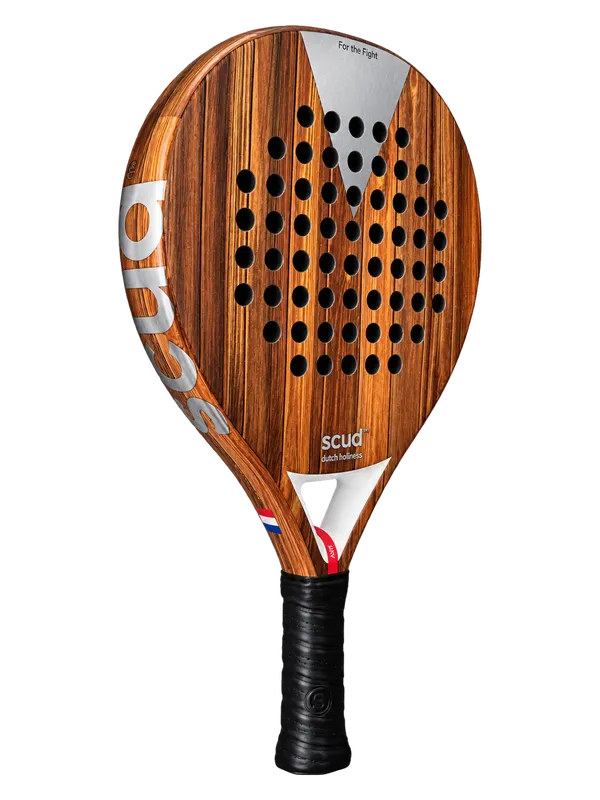
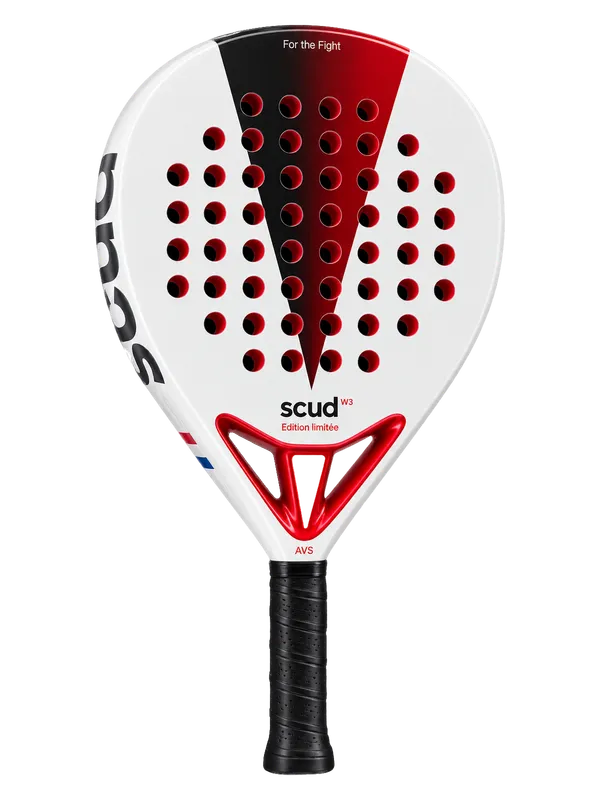
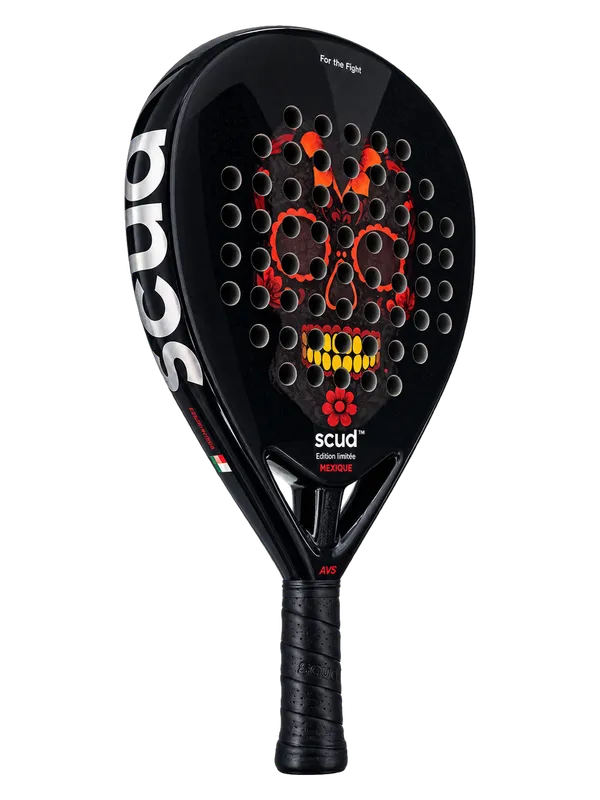
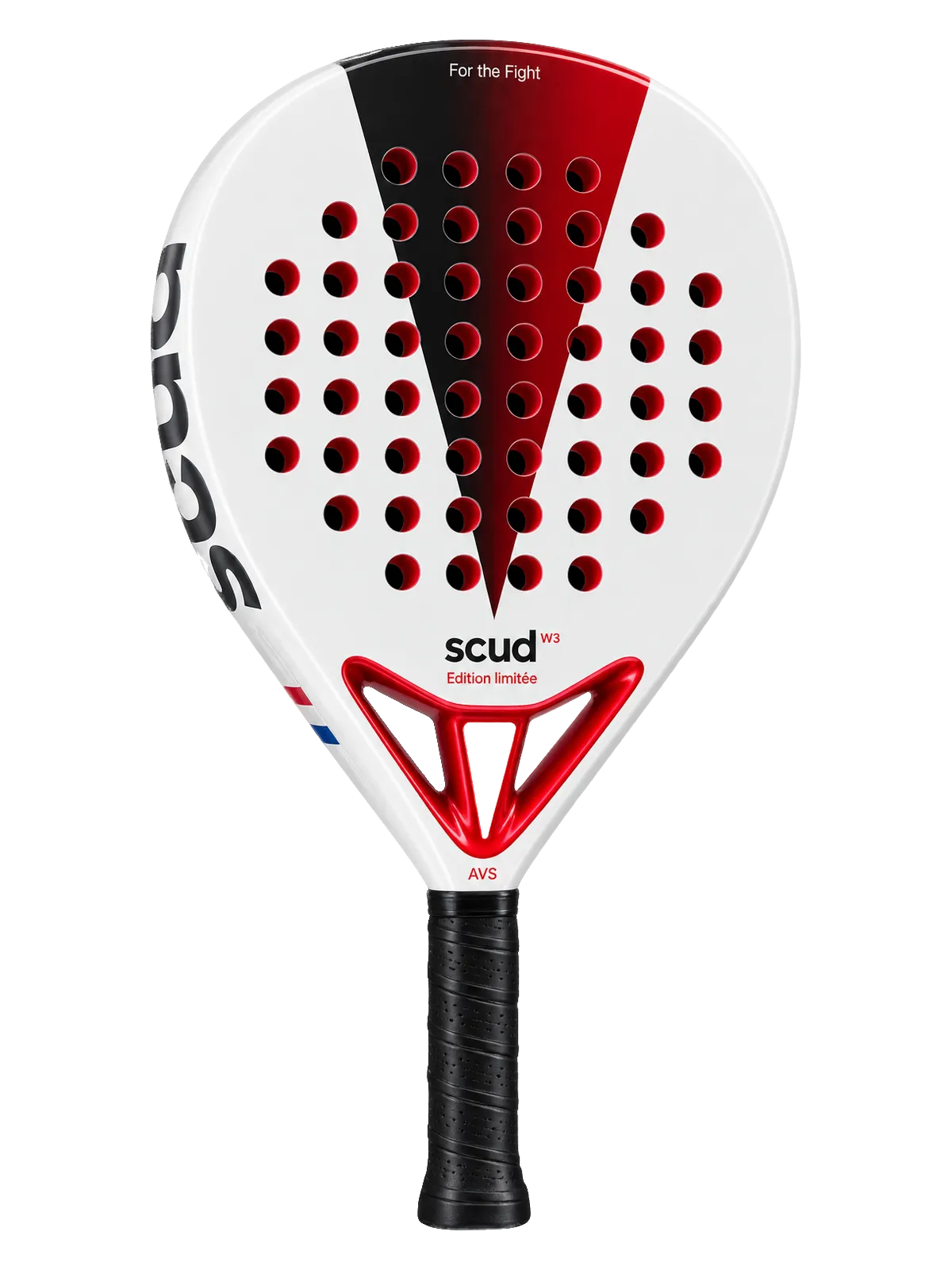
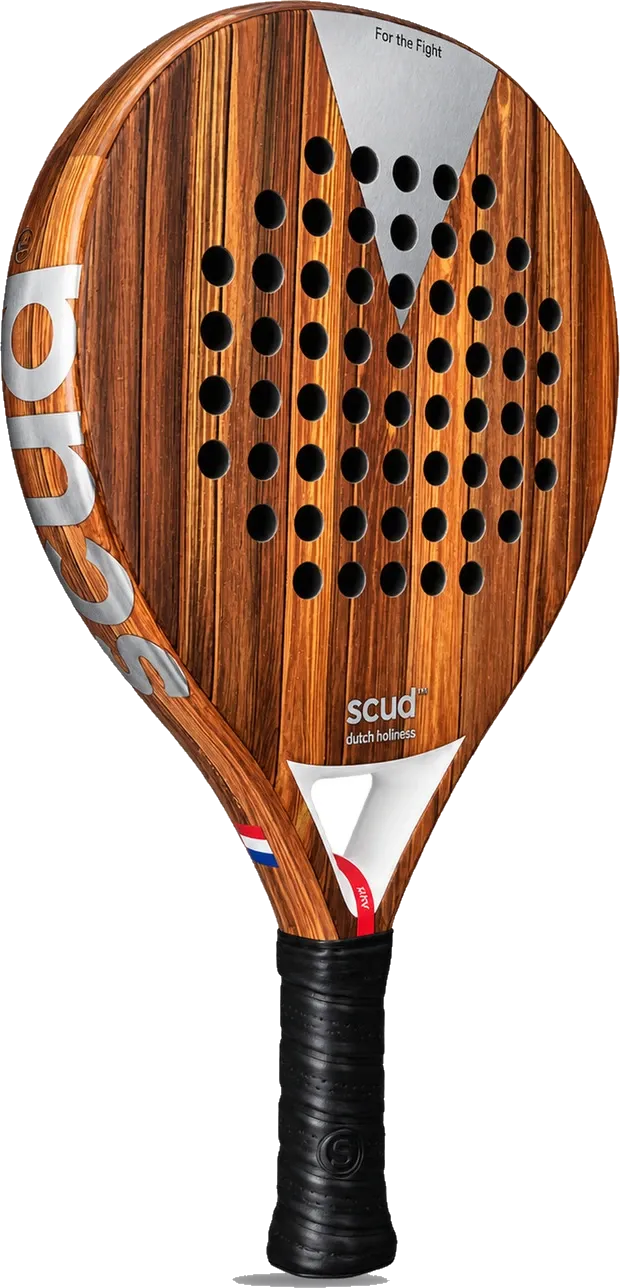
The volley calls above all for manoeuvrability: the racket must get in front of you effortlessly, on balls that come back fast. A medium or low balance and a moderate weight help a lot; a head-heavy racket makes itself felt after a few quick exchanges at the net. We go through these settings in our article on weight and balance. The SCUD Wood W1, with its teardrop shape, 350 g and medium balance, is the most manoeuvrable in the range; the SCUD White S3 adds the power of a diamond shape for firmer volleys, at the cost of a little speed of handling. Our free guide to choosing your racket helps you decide.
In short
- The volley is for holding the net, not for winning the point at all costs.
- Stand about two metres from the net, level with your partner.
- Continental grip, short swing, slightly open face, firm wrist, contact in front of the body.
- When in doubt, volley down the middle; on a high ball, look for the side mesh.
- Ball below the net: lift it slow and long. Ball above it: attack.
Frequently asked questions
How far from the net should you volley?
About two metres. Any closer and the lob gets past you; any further and the ball dips at your feet. Adjust to your opponent: take a step back against a good lobber.
Should you put spin on the volley?
A little slice, yes: the ball bounces lower and comes off the glass without height. That spin comes naturally from a slightly open face and a swing that moves forward and slightly downwards.
Can you touch the net when volleying?
No. Touching the net, the posts or the cable with your body or racket while the ball is in play loses the point, even after you have hit it.
Why do my volleys come back off the glass?
Because they are too long or too hard. A volley that hits the back glass comes back to the opponent with time to play. Aim two or three metres in front of the glass, or at the side mesh.
What is the difference between a volley and a bandeja?
The volley is played in front of the body, at chest height or lower. The bandeja is a high shot, above the shoulder, played on an opposing lob to keep the net. Both are played at the net, with the same grip.
At the net, your opponent has only one way out: lobbing you. See how that shot is played, and how to defend it, in our guide to the padel lob.