Padel has a reputation as an accessible sport, and it is deserved: it is fun from the very first session. That is exactly what leads many players to walk onto the court and play the first point cold. Yet padel strings together short sprints, overhead strokes and constant changes of footing on a court ten metres wide. Ten minutes of preparation are enough to get the body ready. This guide offers a simple routine and recalls what equipment can, and cannot, do for you. It is no substitute for a doctor or physiotherapist: if pain has set in, they are the people to see.
What padel asks of the body
Three areas are put under particular strain, each for a reason rooted in the game itself.
The shoulder. Bandeja, víbora and smash are played above the head, arm extended, with a rotating action. Over a match these shots are repeated dozens of times. The shoulder absorbs both the speed of the arm and the braking after impact.
The elbow and forearm. Every impact sends vibration into the handle and then into the forearm tendons. A grip that is too tight, a racket that is too stiff or a ball taken at the edge of the face all increase that load. Elbow pain, familiar to tennis players, exists in padel too.
The ankle and knee. Padel is played on short footing, with constant starts and stops on sanded artificial turf. Changes of direction, retreats towards the glass and side-steps at the net load the ankle in every plane.
Add to that the lower back, called on during low returns off the glass, and the wrist, very active on sliced shots.
A 10-minute routine before the match
The purpose of a warm-up is simple: raise body temperature, mobilise the joints that are about to work, then reproduce the movements of the game at increasing intensity. The sequence below takes ten minutes and needs no equipment.
| Time | Phase | Content |
|---|---|---|
| 0-2 min | Getting going | Jog around the court, heel flicks, high knees, side-steps along the net |
| 2-5 min | Mobility | Arm circles forwards and backwards, shoulder rolls, wrist circles, hip rotations, ankle flexions leaning against the glass |
| 5-7 min | Activation | Forward and lateral lunges, small jumps on the spot, shadow strokes (forehand, backhand, bandeja) speeding up gradually |
| 7-10 min | With the ball | Gentle volleys at the net in pairs, then rallies from the back, then a few lobs and bandejas at match intensity |
Two rules to make this routine worthwhile. First: long stretches, held for thirty seconds, belong after the match, not before; before play, dynamic movements come first. Second: shadow strokes build up speed gradually, never full power from the first swing.
The elbow: a load that accumulates
The elbow is almost never injured on one shot: it wears out over thousands. What makes the difference is the sum of vibration received, and that sum depends on three factors you can control.
The first is grip. Squeezing the handle constantly tenses the forearm and passes more shock to the tendons. A relaxed grip between shots, tightened only at impact, changes a great deal.
The second is centring. A ball taken in the centre of the face, in the sweet spot, produces little vibration; a ball taken at the edge of the frame produces a lot. The wider the sweet spot, the more the arm is spared, and that is one of the most serious arguments for a forgiving racket when you start out.
The third is the racket itself: its stiffness, weight, balance and whether it has a system that filters vibration. We come back to that below.
The shoulder and the ankle: two different logics
For the shoulder, prevention comes down to technique and volume. A properly executed smash uses the legs and trunk, not just the arm. A player who smashes everything, or who plays three matches in a row after a week of doing nothing, loads the shoulder beyond what it is used to. The bandeja, more economical, exists for exactly that reason: keeping the net without finishing every point with arm strength, as we explain in our article on padel shots.
For the ankle, everything starts with the shoes. A sole designed for sanded surfaces, with grip that does not lock the foot during pivots, clearly reduces the risk of a twist. Running shoes, built to go straight ahead, are the wrong choice. Warming up the ankles against the glass, and picking up stray balls on the court before playing, complete the picture.
The part equipment plays
Equipment replaces neither technique nor the warm-up, but it changes the load the body receives on every strike.
- Weight and balance. A heavy, head-balanced racket asks more of the shoulder on every overhead shot. A player prone to shoulder or elbow pain does well to start with a fairly light, centre-balanced racket.
- Foam. Soft foam absorbs part of the shock at impact; firm foam returns energy but passes on more vibration.
- Carbon. A dense weave gives a sharp, direct response; a more forgiving carbon, or one combined with fibreglass, softens the touch.
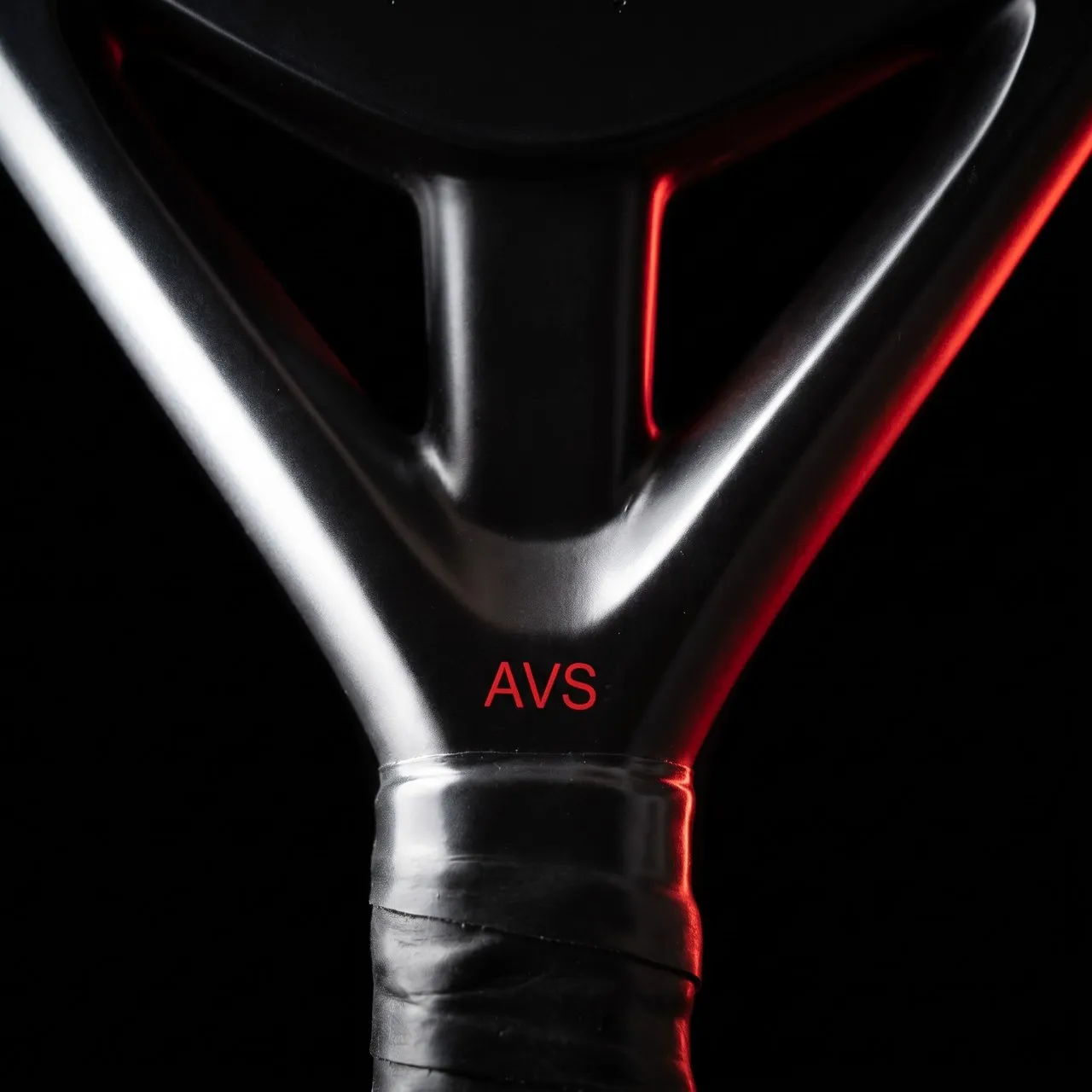
- Anti-vibration system. A device built into the heart of the racket filters jolts before they travel up the handle.
- Grip and overgrip. A handle that does not slip avoids unnecessary squeezing; a fresh overgrip changes the hold for a few euros.
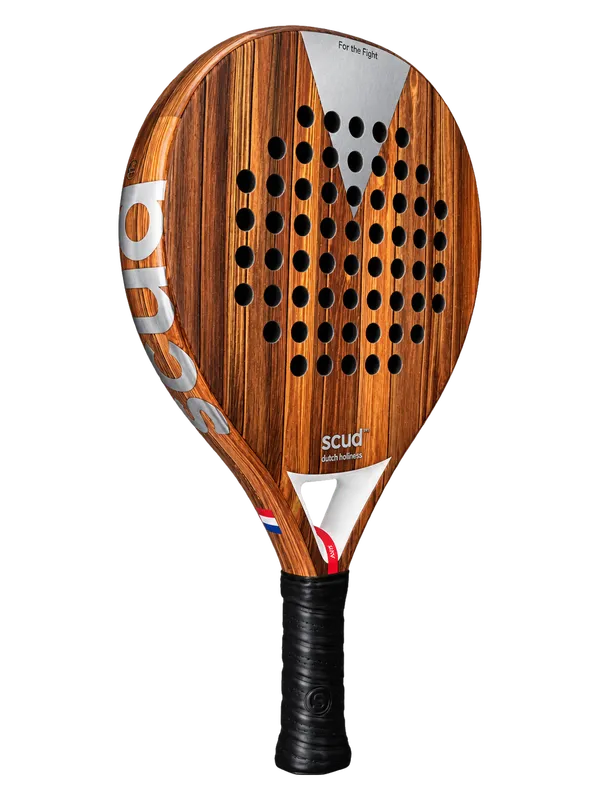
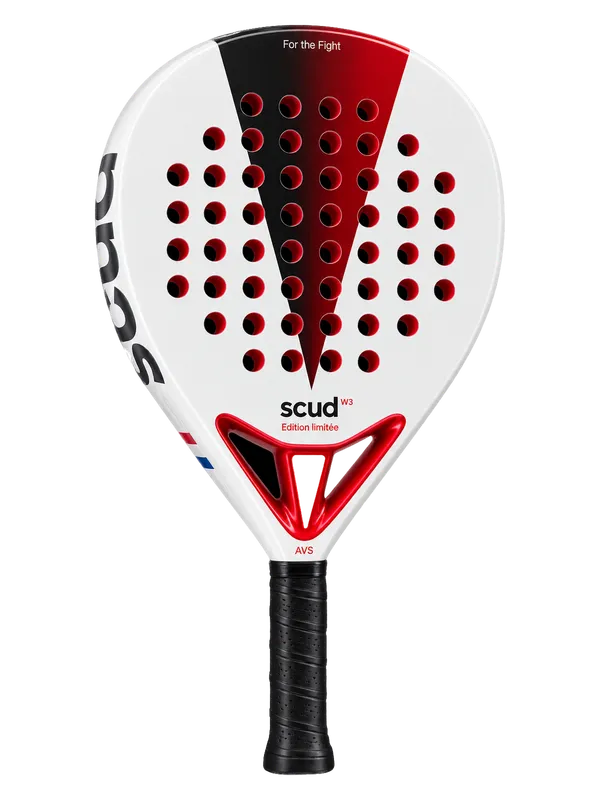
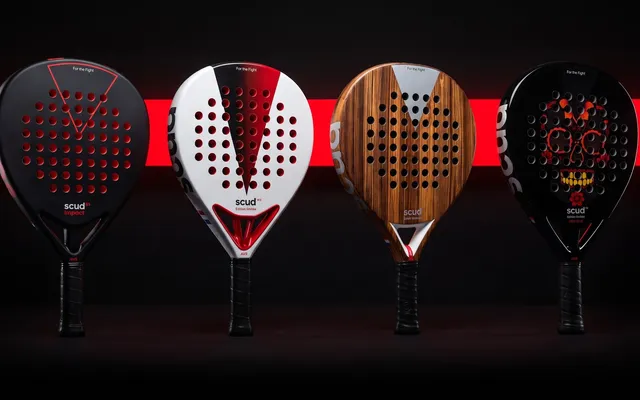
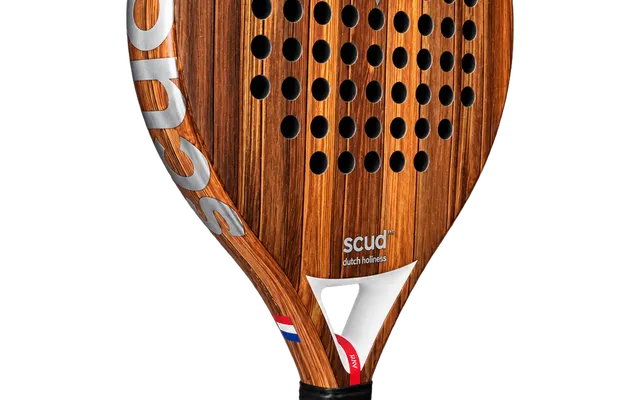
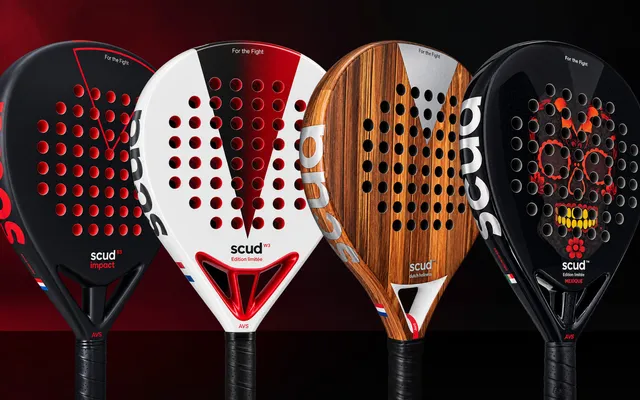
At SCUD, every racket includes the AVS anti-vibration system and a honeycomb silicone handle under the grip, designed for a secure hold without squeezing. For a player who puts arm comfort first, the SCUD Wood S1 is the most suitable model in the range: 12K carbon and fibreglass, soft EVA foam, teardrop shape, medium balance and 350 g. The SCUD White S3 is a step firmer, with a 12K carbon that stays forgiving on off-centre hits. Our guide on power or control and our free guide to choosing a racket help you decide according to your arm as much as your game.
After the match
Recovery is part of prevention. A few minutes of gentle stretching for the shoulder, forearm and calves, proper hydration and a night’s sleep count for more over a season than any accessory. And pain that persists for several days after playing, or returns at every session, is not something to “manage” with an overgrip: it is time to seek advice.
In short
- Shoulder, elbow and ankle are the three areas most loaded in padel, each for a reason tied to the game.
- Ten minutes are enough: getting going, mobility, activation, then the ball at rising intensity.
- Long stretches come after the match; before it, keep moving.
- The elbow wears on the sum of vibration: relaxed grip, centred ball, suitable racket.
- Equipment changes the load; it replaces neither technique, nor the warm-up, nor medical advice.
Frequently asked questions
Should you stretch before playing padel?
Before play, dynamic movements come first: arm circles, lunges, shadow strokes. Long-held stretches belong after the match.
Can a racket cause elbow pain?
It can contribute: a very stiff, head-heavy racket with a small sweet spot passes on more vibration. A forgiving racket with an anti-vibration system reduces that load, without excusing poor technique.
Which SCUD racket is easiest on the arm?
The Wood S1: the lightest and softest in the range, with the AVS system and soft EVA foam. The White S3 is a slightly firmer alternative, but still forgiving.
Do shoes really matter?
Yes. A sole designed for sanded surfaces, which grips without locking the foot, protects the ankle during pivots. Running shoes are not suitable.
What if the pain persists?
See a doctor or physiotherapist. This article gives general principles, not individual advice.
A warmed-up body and a racket that spares the arm: that is how you keep playing for years, and our range is designed in that spirit.