
Contents — 9 parts
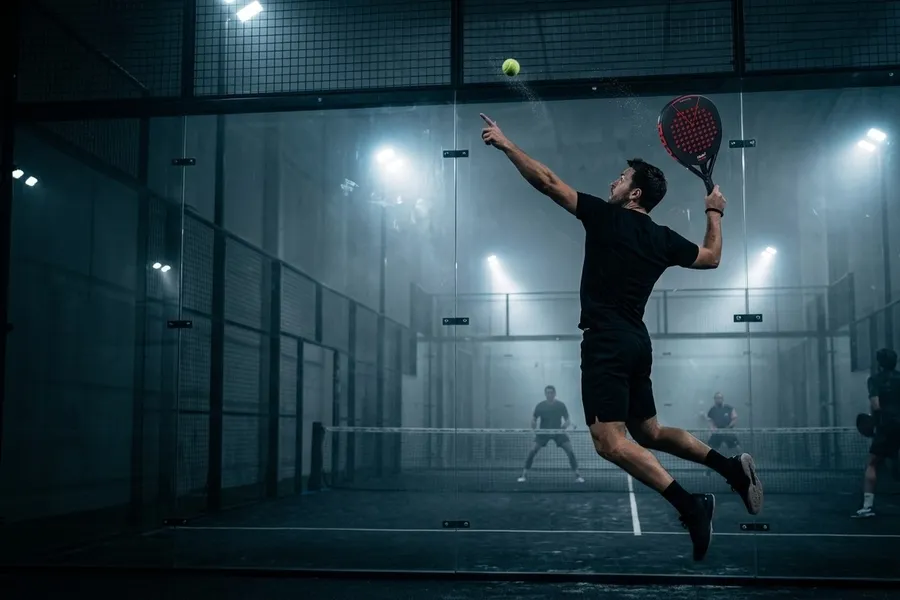
In tennis, the lob is a get-out-of-trouble shot. In padel, it is the most important shot from the back of the court. The reason lies in the geometry of the game: the team at the net wins most of the points, and there is only one reliable way to dislodge them, getting the ball over their heads. A good lob forces both opponents to retreat; while they retreat, your team moves forward. The roles are reversed in a single shot.
This guide follows on from our guide to the volley: we switch to the other side, that of the defending team.
Why the lob is central to padel
The back glass changes everything. In tennis, a lob that is too short gets smashed, and a lob that is too long goes out. In padel, a slightly long lob bounces then hits the glass, and the opponent has to play it off the glass, with their back to the net or nearly. A slightly short lob, if it is high enough, still forces the net player to retreat and play a bandeja rather than a smash. The margin for error is therefore wider than in tennis, and the lob becomes a building shot, not a last resort.
Watch any final on the professional tour, such as the Paris Major 2026: both pairs spend a large part of the rallies lobbing to take the net back, and answering the lob with a bandeja to keep it.
The three lobs in padel
The defensive lob
High and slow, it aims to buy time. You are in trouble, far from the ball or stuck in a corner: you send it very high, towards the opponents’ back wall, to give yourself time to recover your position. Its height makes up for its lack of speed. It is the beginner’s lob, and it is enough to win plenty of points at that level.
The attacking lob
Flatter, just above the reach of the opponent’s racket, it aims to surprise. The net player has no time to back up: they have to turn and run. It is often played with topspin, which makes it dip after the peak of its trajectory and bounce faster towards the glass. It is riskier: too low, and it gets smashed.
The lob off the glass
The ball has bounced then hit your back glass; you take it as it comes off the glass and send it back as a lob. It is the most comfortable way to lob, because the ball comes back towards you and you have time to get the racket under it. It is also, as we explained in our guide to the return of serve, one of the best returns of serve.
The technique, step by step
Preparation
Get under the ball, or slightly behind it, moving back if necessary. The lob is almost always played on the forehand or backhand with the continental grip, the same as for the volley. Bend your knees: the height will come from your legs, not your arm.
The strike
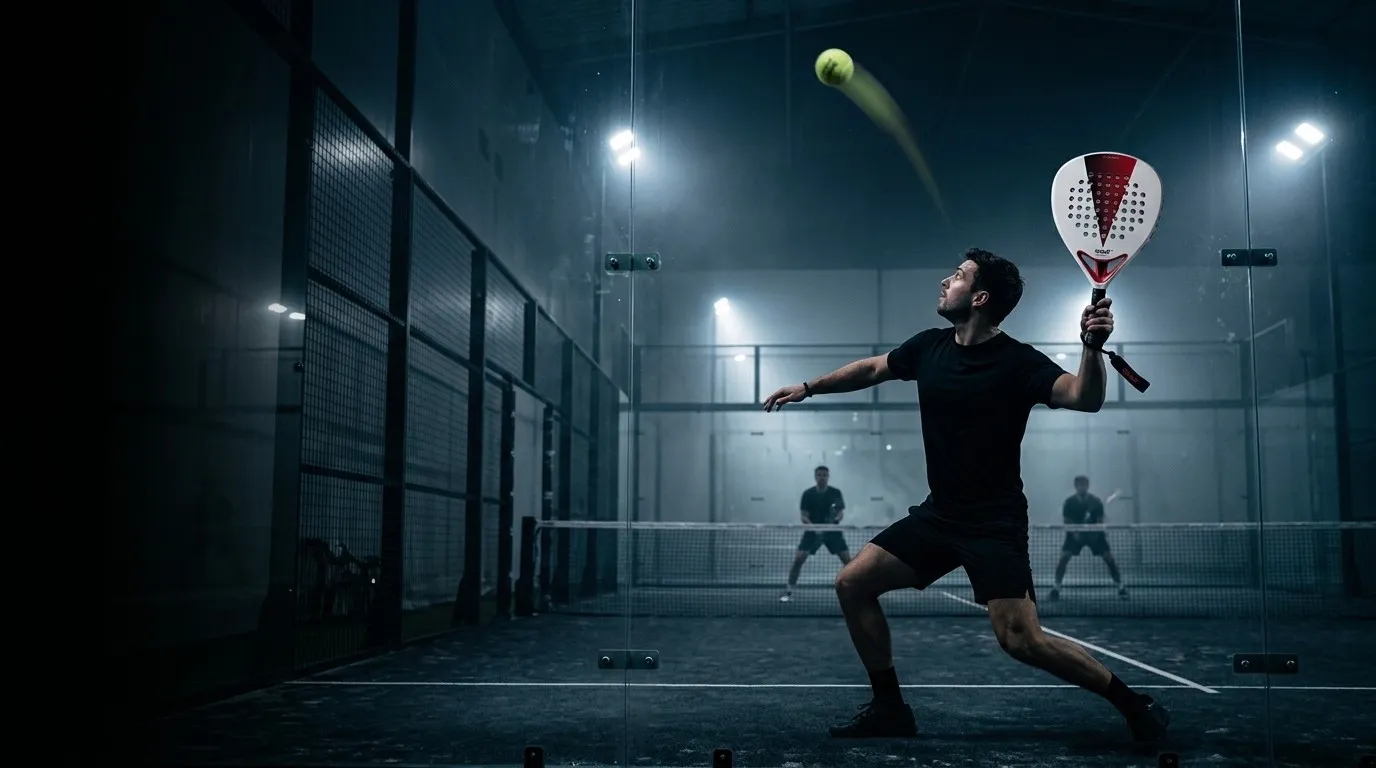
The face opens towards the sky, and the swing goes from low to high, carrying the ball. Hit under the ball, in front of your body, then push upwards as you straighten your legs. For a defensive lob, keep the face very open and the swing slow. For an attacking lob, close the face slightly and brush the back of the ball from low to high to put topspin on it.
The follow-through
Finish with the racket high, above your shoulder, in the direction of the ball. A cut-short follow-through produces a short lob, the most common mistake.
Moving up to the net
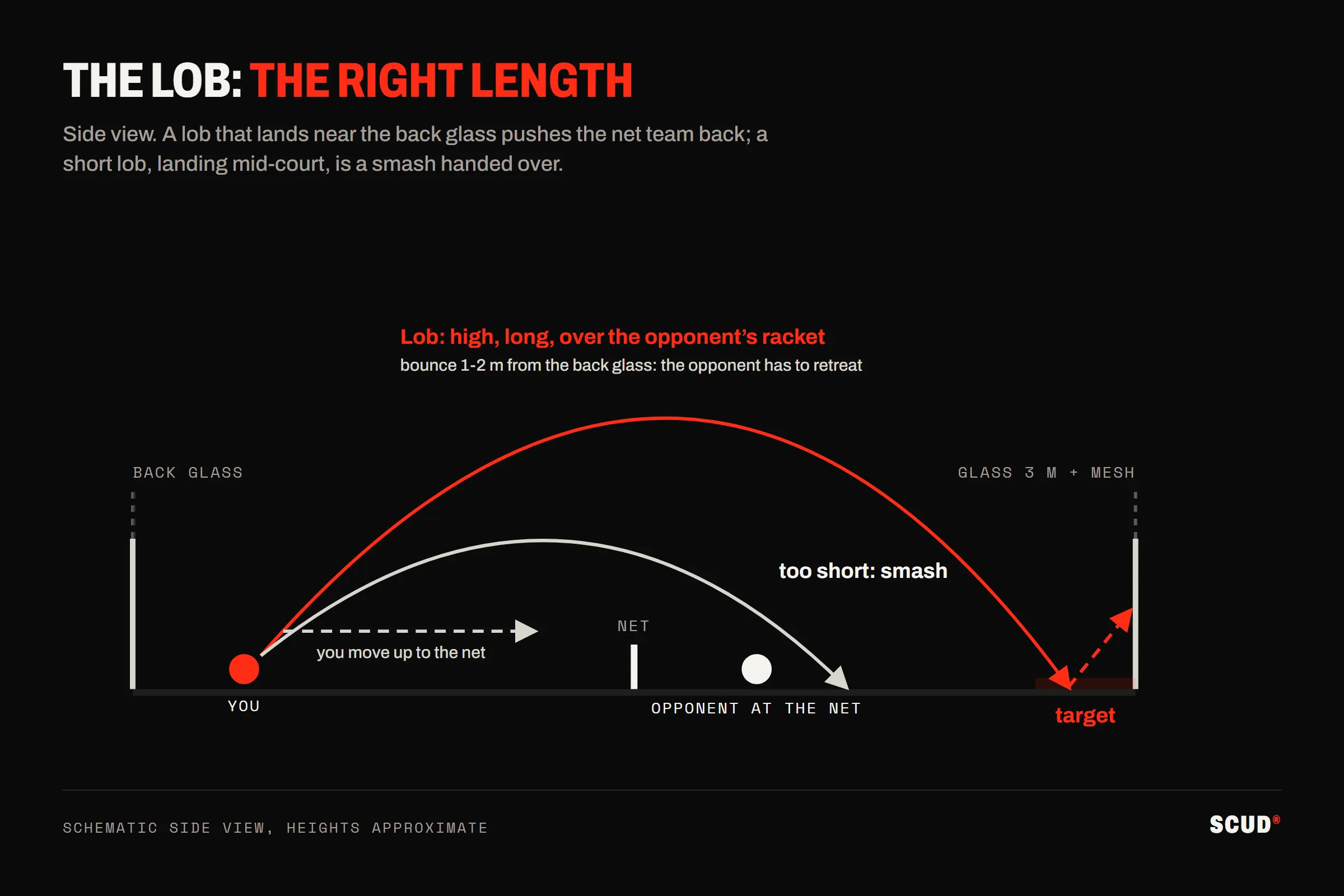
The lob is only useful if you move forward behind it. As soon as you see the ball going over the opponents and forcing them back, move up with your partner. If the lob is short and the opponent can smash, stay at the back and get ready to defend.
Where to aim
| Target | Why |
|---|---|
| Over the player with the weaker smash | They will have to play a bandeja, or retreat |
| The opponent’s backhand side | Smashing on the backhand is hard, they will play a bandeja |
| The centre, deep | Hesitation between the two opponents, narrower angles for the reply |
| The back corner, near the side glass | The ball hits two panes of glass and comes back less predictably |
Aim for depth above all: a lob that lands one or two metres from the back glass forces the opponent to retreat or to play it off the glass. A lob that lands mid-court, level with the service line, is a smash handed over.
The backhand side is a classic target. For a right-hander playing on the left, a lob that goes over their left shoulder forces a backhand smash or bandeja, two difficult shots.
Defending against the lob
If you are the one at the net watching the ball go over your head, you have three options:
- Play a bandeja or a víbora if the ball is not too high or too far: a control shot that keeps the net. Our article on the bandeja, the víbora and the chiquita explains how these shots are played.
- Smash if the lob is short and you are well placed; see our guide to the padel smash.
- Retreat and let the ball hit the glass if it is too high or too far: you play it off the glass, often with a lob of your own.
In all three cases, your partner follows your movements: if you retreat, they retreat too.
The most common mistakes
- Lobbing short. A lob that lands mid-court gets smashed. Aim for depth.
- Lobbing without moving forward. If your team stays at the back, the lob has only delayed the inevitable.
- Hitting with your arm. The lob comes from the legs; a stiff arm produces a short, flat lob.
- Lobbing when the opponent is already at the back. If they are not at the net, the lob gives them a high ball to attack.
- Lobbing into a headwind without compensating. The ball drops short: hit higher and longer.
Which racket for lobbing well?
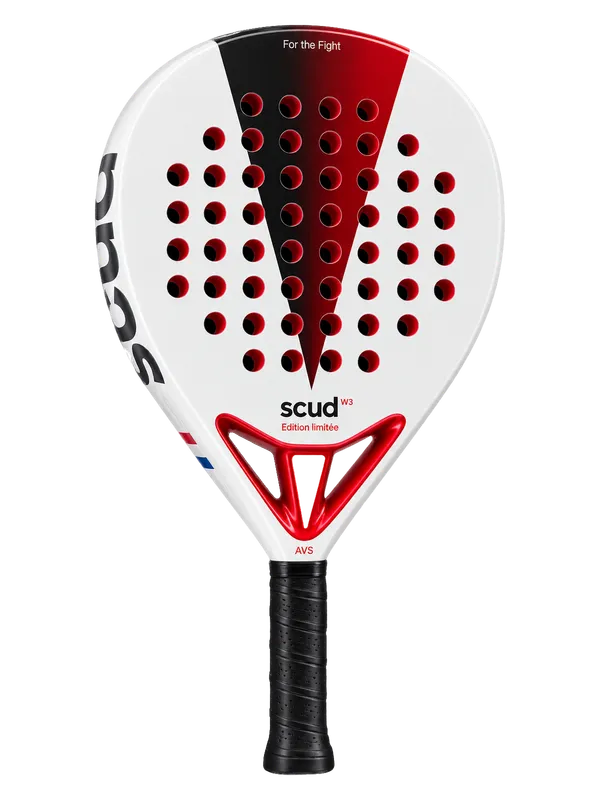
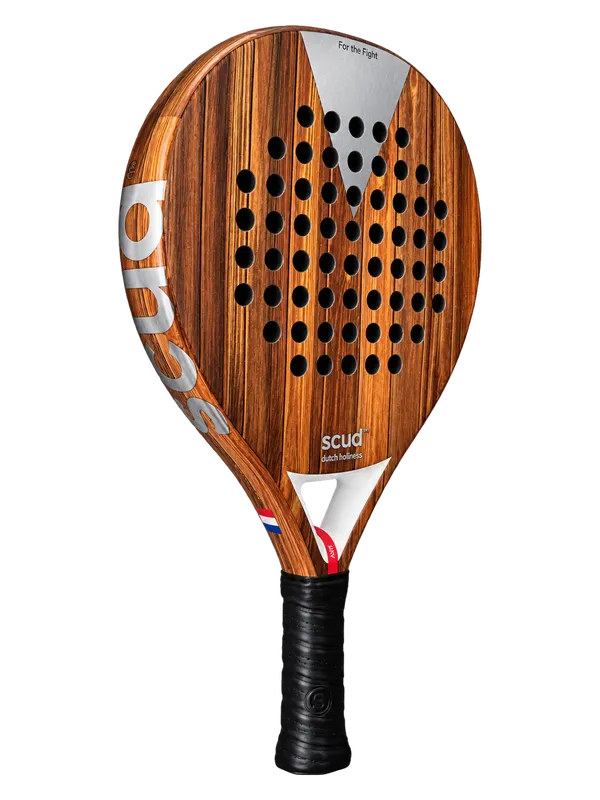
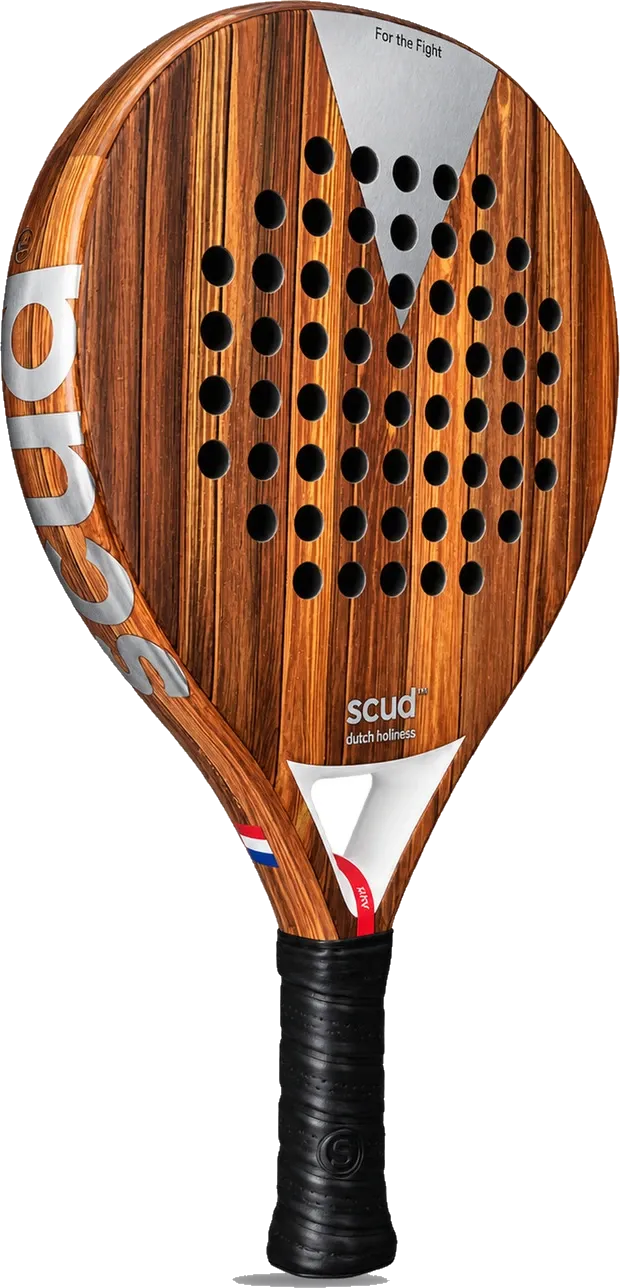
The lob is a touch shot: you need to feel the ball to judge height and length. A forgiving racket, with enough dwell time, helps more than a powerful one. The SCUD Wood W1, with its soft EVA foam and fibreglass, gives a lot of feel; the SCUD White S3, with its forgiving 12K carbon, adds length without losing that touch. To understand what the foam changes in judging a shot, read our article on EVA and FOAM cores.
In short
- The lob is the only reliable way to dislodge a team settled at the net.
- The back glass gives a wider margin than in tennis: a slightly long lob is still effective.
- Aim for depth, the backhand side or the player with the weaker smash.
- The technique comes from the legs: open face, strike under the ball, high follow-through.
- After a good lob, move up to the net with your partner.
Frequently asked questions
When should you lob in padel?
When both opponents are at the net and you are at the back. The lob forces them to retreat and lets you take their place. If the opponents are already at the back, the lob serves no purpose.
How do you hit a lob that doesn’t get smashed?
By playing it high enough and long enough to land near the back glass. Also aim for the opponent’s backhand side: a backhand smash is hard, so they will rather play a bandeja.
Should the lob hit the back glass?
It is not a goal in itself, but a lob that bounces near the glass forces the opponent to play it off the glass, with their back to the net. That is often enough to take the net back.
Should you lob on the forehand or the backhand?
Both. The lob is played with the same continental grip as the volley, and most of the movement comes from the legs. Work on it on both sides, because your opponent will target your weak point.
What should I do if my lob is too short?
Stay at the back and get ready to defend the smash: move away from the back glass to give the ball room to bounce, and play it off the glass.
The lob has taken you from defence to attack: now you need to know how to finish. That is the subject of our guide to the padel smash.