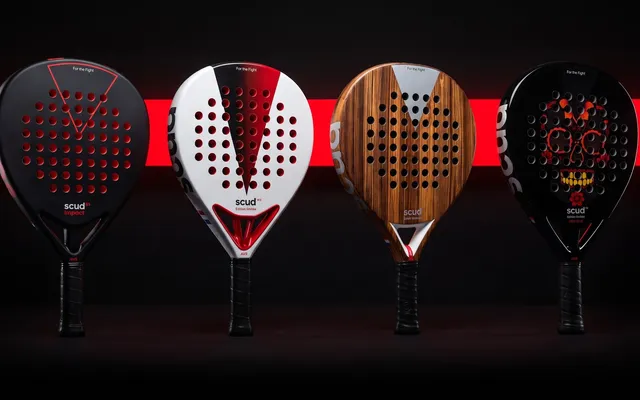
For a padel beginner, the right racket is forgiving before it is powerful: round or teardrop shape, 350 to 365 g, low or medium balance, soft or medium EVA foam, a fibreglass or 12K carbon shell. That profile forgives off-centre balls, spares the arm and lets the stroke take shape. Budget matters less than those five criteria: a well-suited racket at €90 is worth more than a €300 competition racket that hurts your elbow after a month.
What a first racket needs to do
The first months of padel serve one purpose: repeating simple strokes until they become reliable. Volley, bandeja, back-wall shot, lob. None of these needs power; all of them need control and time.
A beginner’s racket must therefore make those repetitions possible. It has to return a ball taken off centre properly, move fast enough for the player to arrive in time, and pass on little vibration so the arm lasts the session. Everything that raises the demand — mass in the head, a stiff frame, hard foam — takes something away from a beginner without giving anything back, because they do not yet have the arm speed to exploit it.
The five criteria that count
| Criterion | What we recommend for starting out | Why |
|---|---|---|
| Shape | Round or teardrop | Wide, central sweet spot, off-centre balls tolerated |
| Weight | 350 to 365 g | Enough stability, no premature fatigue |
| Balance | Low or medium | Manoeuvrable racket, wrist and elbow preserved |
| Foam | Soft or medium EVA | Ball “carried”, comfortable feel, fewer vibrations |
| Shell | Fibreglass or 12K carbon | A frame that flexes a little and forgives centring errors |
Each of these deserves its own reading: we have devoted one article to the three racket shapes and another to the weight-balance pair. Above all, remember that they are read together: a 365 g teardrop with medium balance and soft EVA is a beginner’s racket; a 375 g teardrop with high balance and hard EVA no longer is.
The classic mistakes
Copying a professional’s racket. Tour players use stiff diamonds because they have the arm speed and technique to load them. In a beginner’s hands, the same racket produces dead balls and a sore forearm.
Going too stiff. 18K carbon and hard foams return the energy the player gives them — and the vibrations with it. Until the strike is stable, the pain arrives before the winners. We cover this in our article on tennis elbow in padel.
Going too heavy. A racket of 375 g or more “gives power” on paper. In practice, the beginner arrives late on the ball and compensates by shortening the swing. One more bad habit to correct later.
Forgetting the overgrip and the protector. Two accessories costing a few euros that change the grip and stop a new frame getting damaged on the glass from the first session. Our advice is in looking after your padel racket.
Buying without ever having held a racket. The first sessions work perfectly well with a club loan or rental racket. Two or three hours are enough to know whether you prefer a racket that turns fast or one that steadies the hand.
How much to spend on a first racket
Prices commonly seen on the market fall into three tiers.
- Entry level, €40 to €100. Fibreglass, soft foam, round shape. Enough to discover the sport and play once a week. Lifespan is short and the feel remains vague, but nothing stops you improving with it.
- Mid-range, €100 to €200. Carbon or a carbon-fibreglass mix, medium EVA, teardrop or round. This is the most sensible tier for a beginner who plays regularly: the racket lasts two seasons without holding progress back.
- High end, €200 to €400. 12K or 18K carbon, refined finishes, limited series. Justified for a beginner only if the racket stays forgiving — and provided you do not pick a competition model on the grounds that it is the most expensive on the shelf.
Price says nothing about tolerance. At €250 you will find very comfortable control rackets as well as stiff diamonds built for competition. What explains the price gaps — and when they are worth it — is the subject of our article on padel racket prices.
What we offer beginners
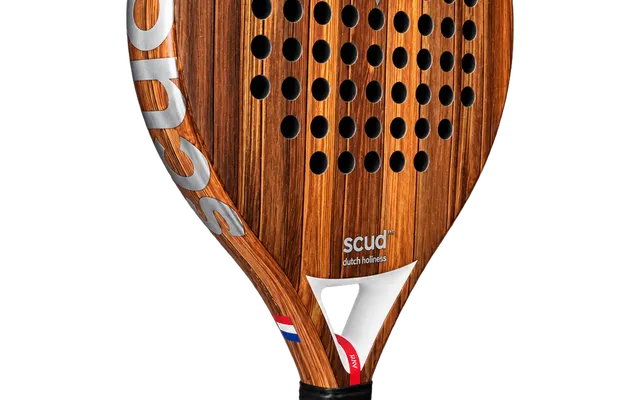
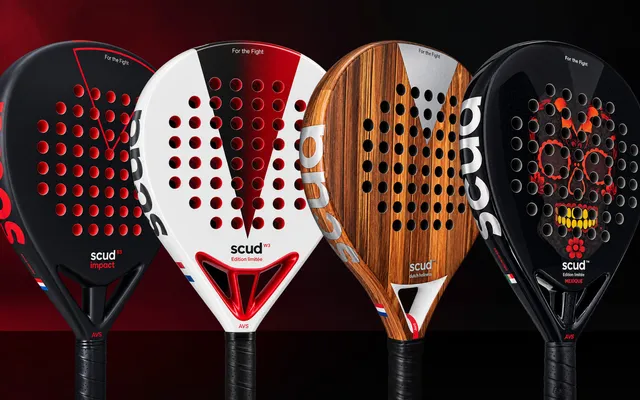
Our range is short and made in limited editions, with a hand-applied sanded finish on every face. It does not cover the entry-level tier, and we would rather say so clearly than sell a competition racket to someone discovering the sport.
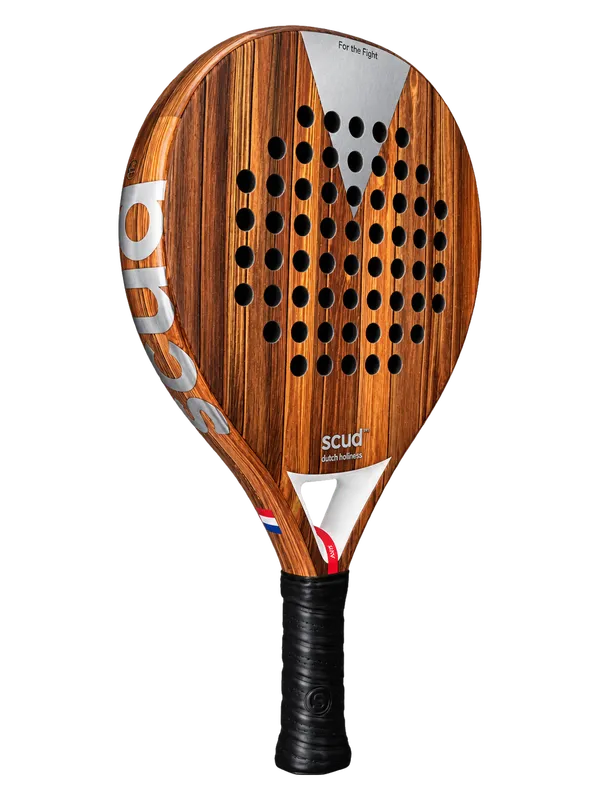
The SCUD Wood S1 is our most accessible racket: teardrop shape, 350 g, medium balance, soft EVA foam, a 12K carbon and fibreglass shell. It is exactly the profile in the table above, plus the AVS anti-vibration system and a honeycomb silicone handle. At €220, it is aimed at the beginner who already knows they will play regularly and wants a racket able to follow them for several seasons.
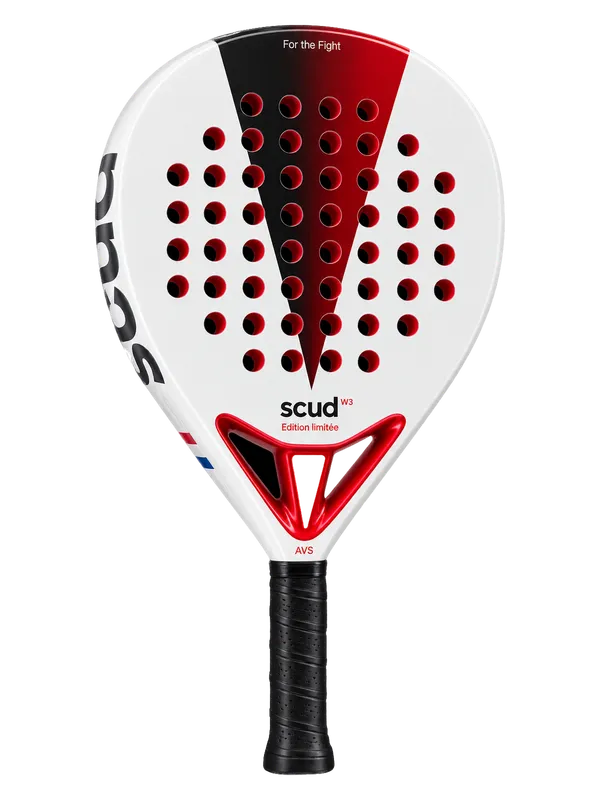
The SCUD White S3 is a step up in demand: diamond shape, 365 g, high balance, but forgiving 12K carbon. At €240, it suits the motivated, athletic beginner who improves quickly and is aiming for the net from the first months. It asks a little more arm speed than the Wood S1; it also rewards it more.
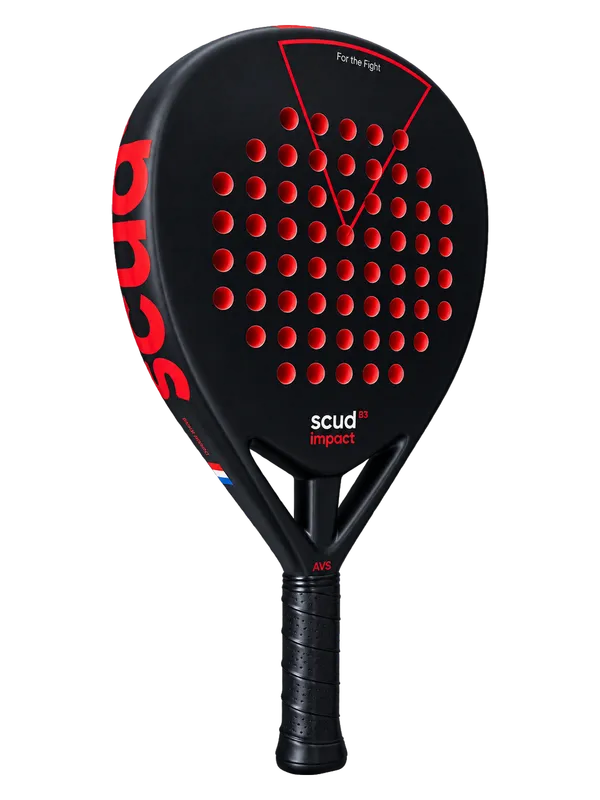
The Black Impact B3, our 18K carbon racket, is not a beginner’s racket. Its dry response and stiff diamond are meant for solid intermediate players and competitors. It can wait.
On all our rackets the handle is a standard size; there is no grip size to choose when ordering, and one or two overgrips are enough to thicken it. Shipping terms and 30-day returns are set out on the shipping and returns page.
When to move on to the next racket
The most reliable sign is not time elapsed but the feeling that the racket is holding your game back. When your smashes regularly land short even though the stroke is clean, when you look for head speed and cannot find it, when you play three times a week without arm pain for several months, it is time to look at more pronounced teardrops or forgiving diamonds.
Conversely, if your balls fly long, if your elbow aches after a session, or if you are still missing simple volleys, changing racket will bring nothing. The racket is not the limiting factor.
In short
- A first racket must be forgiving: round or teardrop, 350-365 g, low or medium balance, soft or medium EVA, fibreglass or 12K carbon.
- The most common mistakes are copying a professional, going too stiff or too heavy, and forgetting the overgrip and protector.
- Mid-range, €100 to €200, is the most sensible tier for a regular beginner; the high end is justified if the racket stays forgiving.
- At SCUD, the Wood S1 is the beginner’s racket; the White S3 suits a fast-improving beginner; the Black Impact B3 can wait.
- Change racket when it holds your game back, not when the calendar says so.
Frequently asked questions
Round or teardrop to start with?
Both work. Round is the most forgiving; a teardrop gives a little help on high shots and saves you changing racket as soon as you start coming to the net. If you know you will play regularly, the teardrop is the longer-lasting choice.
Is carbon only for experienced players?
No. 12K carbon, especially combined with fibreglass and a soft foam, stays forgiving. It is 18K carbon with a hard foam that requires an already stable strike. Our article 12K or 18K carbon explains the difference.
Should I buy two rackets?
Not at the start. One well-suited racket, a spare overgrip and a protector are enough. A second racket makes sense once you play competitively and want an identical backup.
What is the right weight for a woman or a player with a fragile arm?
The same range, aiming for the lower end: 350 to 360 g with a low or medium balance. We have an article on light rackets and the misconceptions around them.
How do I know a racket suits me before buying?
Play with a club racket or a partner’s racket of a similar profile. If you order from us, you have 30 days to return it, return costs at your expense, provided it remains in resaleable condition.
To go further, download our free guide to choosing a racket, then compare the sheets of our padel rackets: shape, weight, balance, foam and carbon are shown side by side.