A padel ball looks like a tennis ball, costs about the same and is sold in the same kind of tube. Yet it is not the same ball: it is slightly smaller, inflated to a lower pressure and bounces a little less. These differences exist for a precise reason, the enclosed court, and they change the way the ball comes off the glass. Here is what you need to know to choose your balls, understand what the tube says and avoid throwing them away too soon.
What the rules say
The International Padel Federation sets the characteristics of a competition ball. It must be made of rubber, covered in white or yellow felt, and fall within precise ranges:
| Characteristic | Padel ball (FIP rules) |
|---|---|
| Diameter | 6.35 to 6.77 cm |
| Weight | 56 to 59.4 g |
| Bounce | 135 to 145 cm, dropped from 2.54 m onto a hard surface |
| Internal pressure | 10 to 11 pounds per square inch (psi) |
These are the values in the official rules, available at padelfip.com. In play, the range that matters most is the bounce: it determines how high the ball comes off the glass, and therefore how much time you have to play it.
Padel ball versus tennis ball: the difference
On paper the two balls weigh almost the same. The difference lies in two things: diameter and pressure. A tennis ball is slightly bigger and inflated to a higher pressure, which gives it a marginally higher bounce. A padel ball, inflated to 10-11 psi, bounces a little less.
On a tennis court that difference is almost imperceptible. On a padel court it is decisive. After bouncing on the floor, the ball hits the glass and comes back towards the player: with a ball that bounces too much, that return is too long, balls fly out over the glass more easily and defensive play becomes a lottery. With an approved padel ball, the rebound off the glass is slower and easier to read.
Playing padel with tennis balls is not forbidden at recreational level, but it means missing part of the game — and distorting the learning of the walls, the very thing we describe in padel rules for beginners.
Approval: what the logo on the tube means
An “approved” ball is one where a batch has been tested against the criteria above and listed by the International Federation. In sanctioned tournaments the organiser supplies balls from that list; in clubs and recreational play nobody will check, but choosing an approved ball is the guarantee of finding the same bounce from one brand to the next.
The tube usually states the type of ball. Two things are worth noting: the manufacturer and the ball’s reference, because the same brand often makes several ranges, from the competition ball to a cheaper training ball whose felt wears faster.
Pressure: why a ball “dies”
A pressurised ball contains air (or a gas mixture) under pressure, sealed inside the rubber. The tube itself is sealed under pressure so the balls keep their inflation until it is opened. As soon as the tube is opened, pressure starts to leak slowly through the rubber, and every impact speeds that leak up. A ball that has lost its pressure bounces less, feels heavy on the strike and comes off the glass at ankle height.
The felt wears at the same time: it fluffs up first, then goes smooth, which changes how much spin it takes. A ball with smooth felt slides on the racket face and takes less rotation, whatever the quality of your racket’s surface — a point we cover in our article on hand sanding.
Pressureless balls also exist, whose bounce comes from the elasticity of the rubber alone. They age differently, keep their bounce longer but feel harder on the strike. They suit training more than matches.
How long does a tube last?
There is no universal answer: it depends on the intensity of play, the temperature and the surface. In everyday use, a tube of three balls opened for a ninety-minute match between intermediate players remains playable for one or two more sessions, with a bounce that has already dropped. Competitors change balls every match; recreational players often make a tube last two or three sessions.
A few simple habits extend the life of your balls:
- Close the tube after the session if it has a lid: this does not restore pressure, but it protects the felt from humidity.
- Do not leave them in the car or on a balcony: heat speeds up the air leak and cold makes the rubber brittle.
- Keep used balls for the warm-up and open new ones for the match.
- Do not play with damp balls: waterlogged felt makes the ball heavy and wears the racket surface.
Altitude changes things
Atmospheric pressure drops with altitude, and a ball inflated for sea level bounces more in the mountains. The international rules provide for this: above 500 metres, a specific type of ball with a reduced bounce may be used. Manufacturers offer these “altitude” balls for mountain clubs; if you play in Grenoble, Chambéry or the Pyrenees, ask your club. For the vast majority of French courts, the standard ball is fine.
The racket’s part in how the ball feels
Balls often get the blame when the feel changes, when in fact ball and racket form a pair. A new ball, fully pressurised, leaves fast: combined with a very stiff racket and firm foam, it can produce a ball exit that is hard to dose in the first few games. A ball at the end of its life, on the other hand, seems to “stick” to the face and asks for more effort with a soft foam.
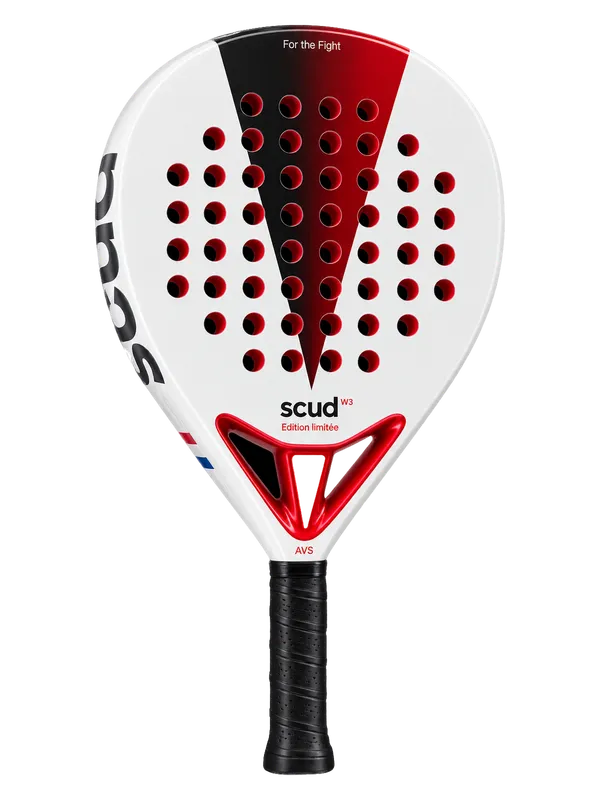
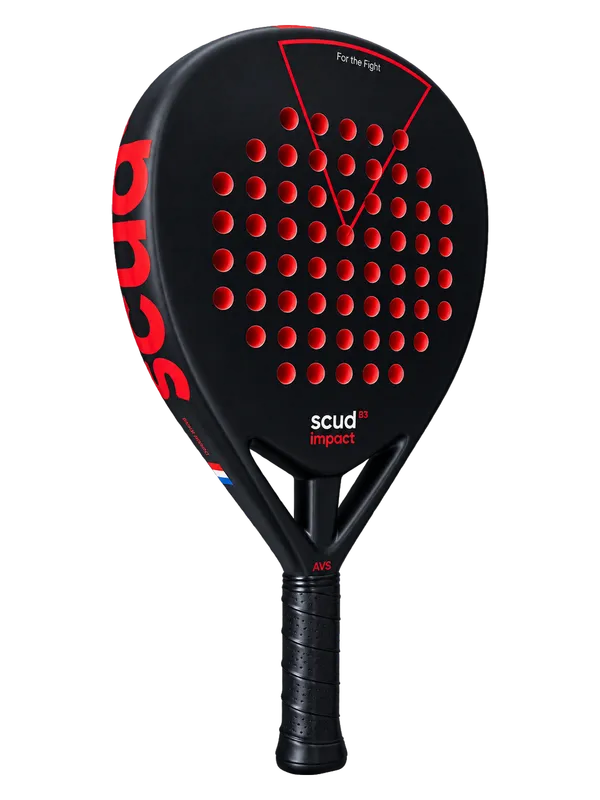
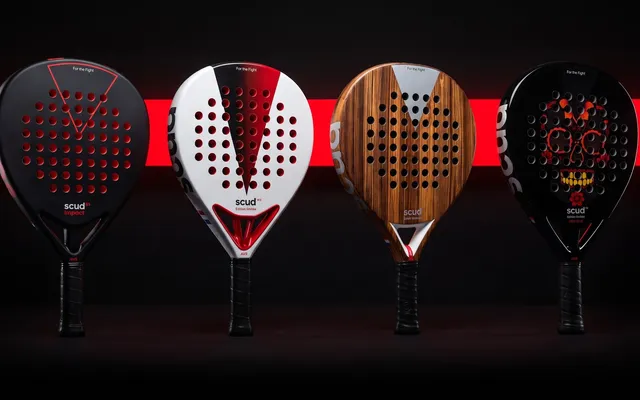
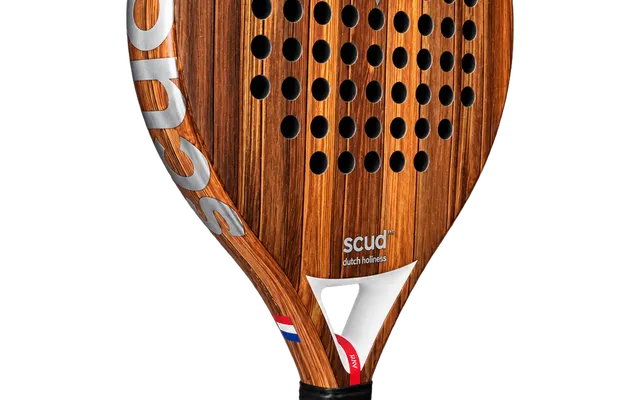
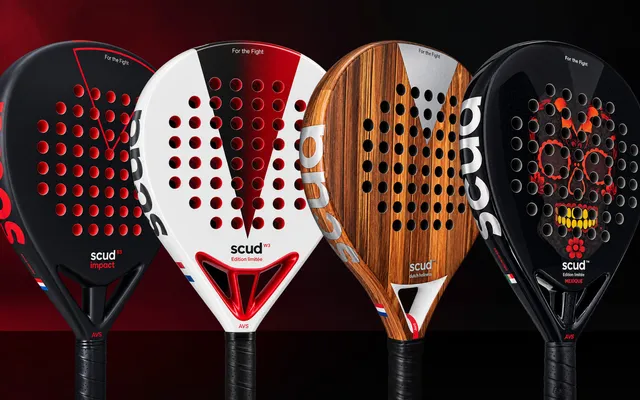
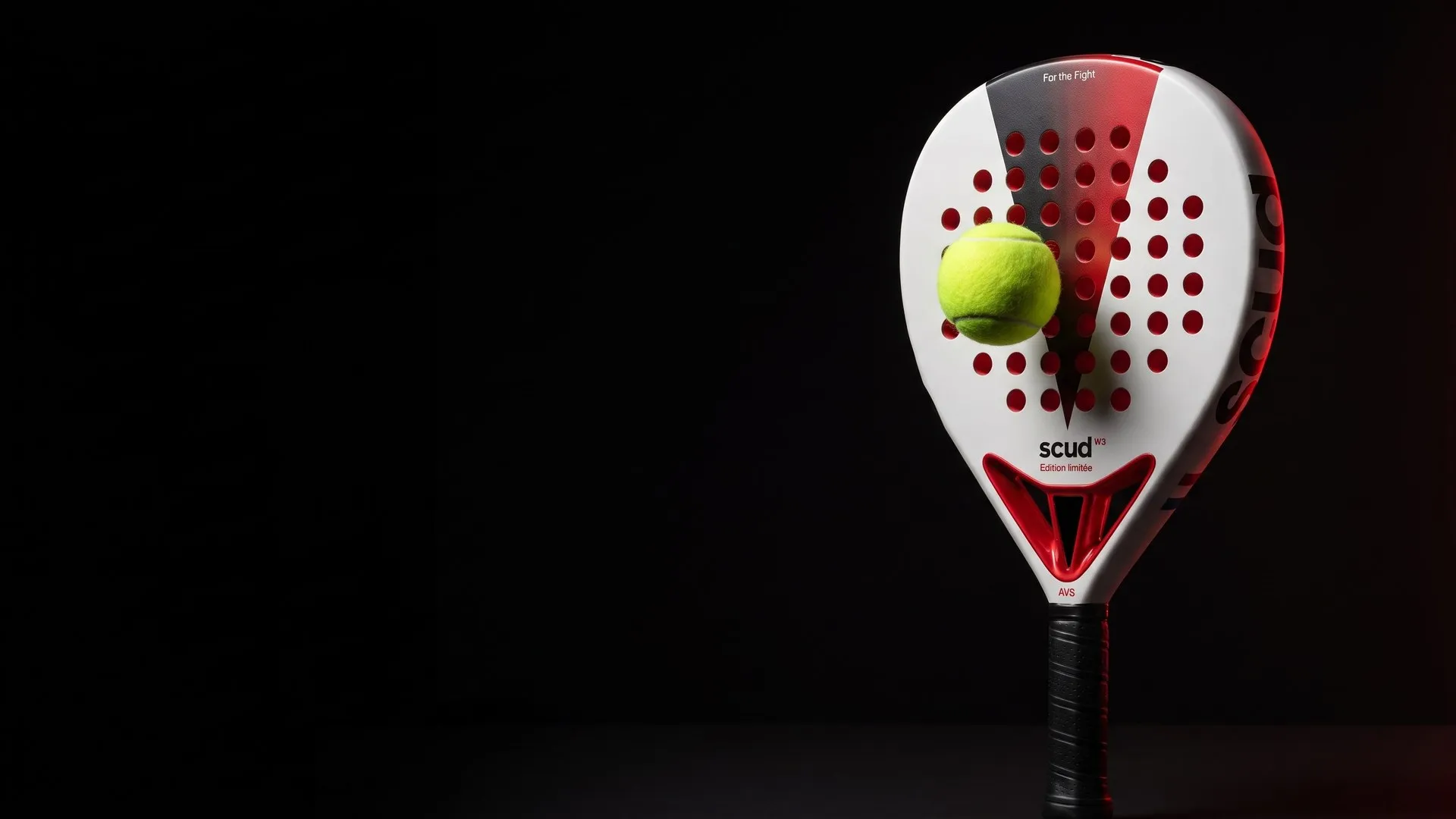
That is one reason our rackets receive a hand-applied sanding: the roughness of the surface partly compensates for worn felt by keeping grip on the ball. The SCUD White S3, with its 12K carbon and EVA Hard Power foam, gives good feel on the ball in both cases, new or worn. The SCUD Black Impact B3, in 18K carbon, makes the most of a new ball, turning its liveliness into power. To understand what foam and carbon change about that feel, read our free guide to choosing a racket.
In short
- An approved padel ball measures 6.35 to 6.77 cm, weighs 56 to 59.4 g and bounces between 135 and 145 cm.
- It is inflated to 10-11 psi, a little less than a tennis ball, which keeps returns off the glass playable.
- Approval guarantees a consistent bounce across brands; it is required in tournaments.
- A pressurised ball loses pressure from the moment the tube is opened; heat and humidity speed up ageing.
- Above 500 m of altitude, the rules provide for a reduced-bounce ball.
Frequently asked questions
Can you play padel with tennis balls?
At recreational level nothing stops you, but the higher bounce makes returns off the glass too long and distorts the game. An approved padel ball is far preferable, and compulsory in tournaments.
How many balls do you need for a match?
A tube of three balls is enough for a match. In clubs each pair often brings its own tube; in tournaments the organiser supplies them.
How do I know if a ball is still good?
Squeeze it between thumb and forefinger: it should push back firmly. Dropped from shoulder height, it should come back up above the waist. If the felt is smooth and shiny, it will take little spin.
Are pressureless balls a good idea?
For training and ball baskets, yes: they last a long time. For matches, most players prefer the feel of a pressurised ball.
Do you need special balls to play in the mountains?
Above 500 m of altitude the rules allow a reduced-bounce ball. The clubs concerned know which ones to use.
A good ball and a racket whose surface really grips: that is the pair that brings spin to life, and our range is hand-sanded for exactly that.