
Contents — 9 parts
In padel, the serving team starts with an advantage: it puts the ball in play then moves up to the net, the position from which most points are won. The return of serve therefore has a simple aim, and it is almost never to win the point: stop the server from settling comfortably at the net, and if possible push them off it. A good return is not a hard return. It is a return that forces the server into a difficult volley, or goes over their head.
This guide follows on from our guide to the padel serve: this time we are on the other side of the net.
What the rules say
The receiver must let the ball bounce in their service box, then return it before the second bounce. They can stand wherever they like in their half of the court, and so can their partner. If the serve hits the receiver or their racket before bouncing, the point goes to the server.
The rest follows the ordinary rules: you can play the ball before it touches the glass, or let it hit the back or side glass and play it afterwards, as long as it has not bounced twice on the ground.
The receiving order is decided in the first game of each set and does not change until the next set: one player always receives on the right, the other always on the left. On the deciding point of a game, the receiving team chooses the side.
Where to stand
Depth
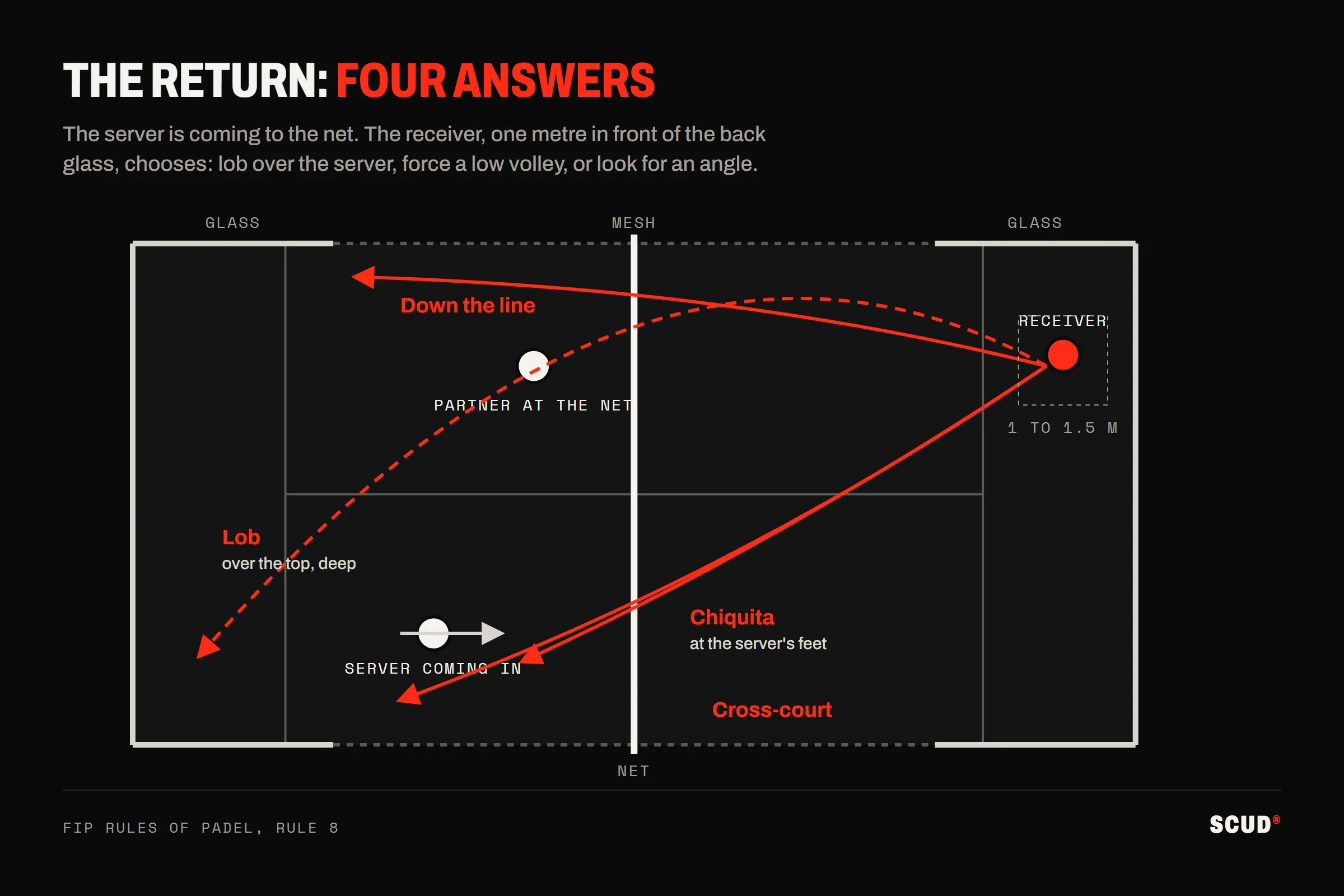
Stand about one to one and a half metres in front of the back glass, in line with your service box, slightly shifted towards the side glass. Too close to the glass and you no longer have room to play the ball coming off it. Too far forward and a fast serve down the middle beats you for pace.
Width
Your starting position must cover both possible serves: the ball heading for the side glass and the one coming down the middle. One step towards the side glass is usually enough, since that is the most common serve. If your opponent always serves down the middle, move closer to the centre line: you will force them to change target.
Stance
Knees bent, weight on the balls of your feet, racket in front of you at chest height, in a continental grip. Just before the server strikes, do a small hop (the split step): you land as you read the direction of the ball, ready to move either way.
Before or after the glass?
This is the first decision, and it is made in a split second.
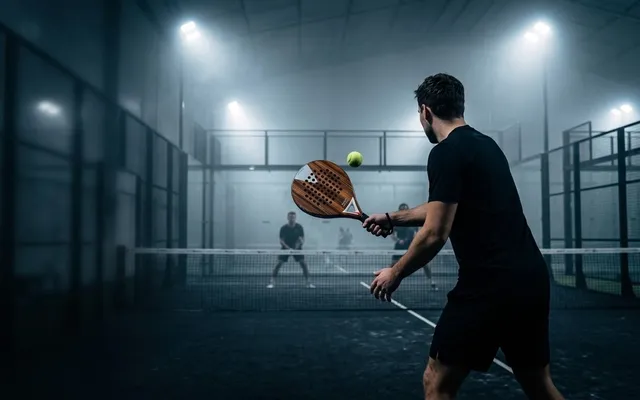
Playing before the glass, just after the bounce, catches the server off guard: they have not finished moving forward when the ball comes back. It is the right choice on a short serve, one without spin or one too central. The risk: a sliced serve that stays low forces you to lift the ball, and a lifted return is a gift for the volleyer.
Playing after the glass gives you time and a ball coming back towards you. It is the right choice on a serve placed tight to the side glass, or one loaded with spin. The price: the server has had time to reach the net. Your return then has to be more precise.
A useful rule to start with: if the ball reaches hip height before the glass, play it. If it stays low or runs into the glass, let it come.
The four returns to know
The lob
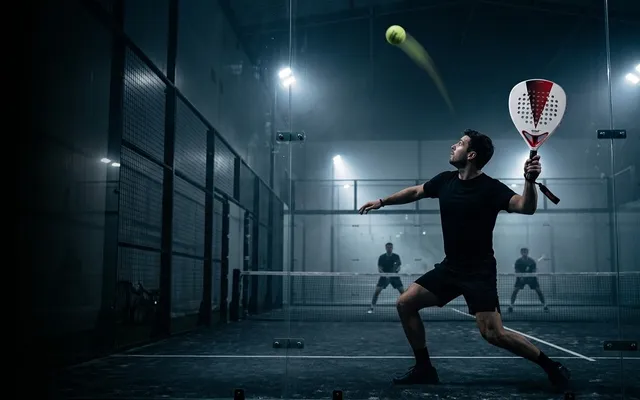
It is the return most played by good players, and the most underrated by beginners. A high, deep lob that passes over the server as they move in and drops near the back glass forces them back. You and your partner can then move forward and take the net. The return lob is often played after the glass, when you have time to get the racket under the ball. Our guide to the padel lob covers the technique.
The low ball at the feet (the chiquita)
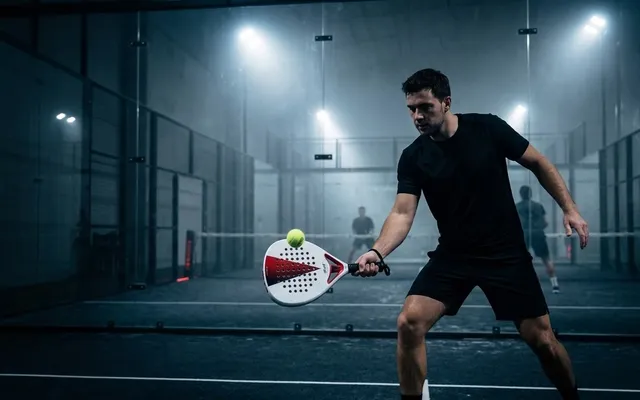
A slow ball that clears the net just barely and drops at the server’s feet as they arrive. They have to volley upwards, with no angle or power. It is the ideal return against a server who comes in fast, and the touch shot par excellence: it calls for a racket that gives you feel, as we explained in our article on padel shots and the racket.
The cross-court ball
A firm, diagonal shot towards the server or the space between them and the side glass. It is the longest trajectory, and therefore the safest: the net is lower in the middle and the diagonal leaves more margin. It is also the return the server expects; keep it low, so they have to volley below net height.
The ball down the line
The return into the lane of the server’s partner, the one already at the net. It is a risk — the net is higher at the sides and the margin smaller — but it surprises. Keep it for variety, when the server’s partner starts cutting across to the middle too early.
| Return | Aim | Play it when |
|---|---|---|
| Lob | Push the serving team back, take the net | The serve is well placed and you have time after the glass |
| Chiquita | Force a low volley | The server comes in fast |
| Cross-court | Safe, low return towards the server | Short or central serve |
| Down the line | Surprise the net player | They anticipate too much towards the middle |
Right or left: who receives where?
The right-side player (the drive) receives serves that come to their forehand, along the side glass on their right. This is often where the most consistent player goes, the one who builds the point and plays the chiquita patiently.
The left-side player (the revés) receives serves on their backhand side if they are right-handed, but has their forehand in the middle of the court and takes most opposing lobs as smashes. Traditionally, the more attacking player goes here. In a right-hander/left-hander pair, the usual choice is to put the left-hander on the right, with the right-hander taking the left side: both forehands then meet in the middle of the court.
On the deciding point of a game, the golden point in FFT (French Tennis Federation) tournaments or the Star Point on the professional tour, the receiving team chooses the side. Put your most reliable receiver there, not the most spectacular one.
The most common mistakes
- Trying to win the point on the return. The server is at the net and ready: a hard shot comes back twice as fast.
- Always playing before the glass. On a low sliced serve, you condemn yourself to lifting the ball.
- Staying at the back after a good lob. The lob is pointless if your team does not take the net afterwards.
- Forgetting the server’s partner. They are already at the net; a mid-height ball down the middle is theirs.
- Standing too close to the back glass. Without room for the ball coming off it, playing off the glass becomes impossible.
Which racket for a good return?
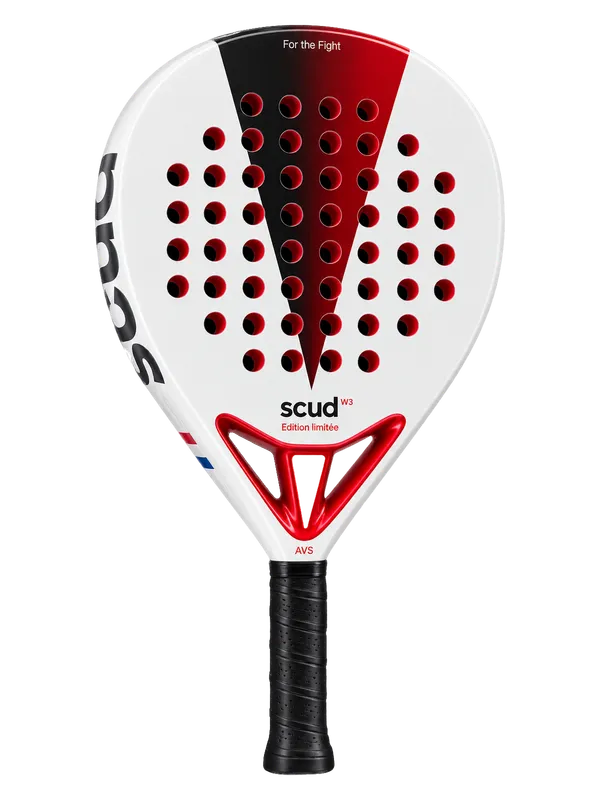
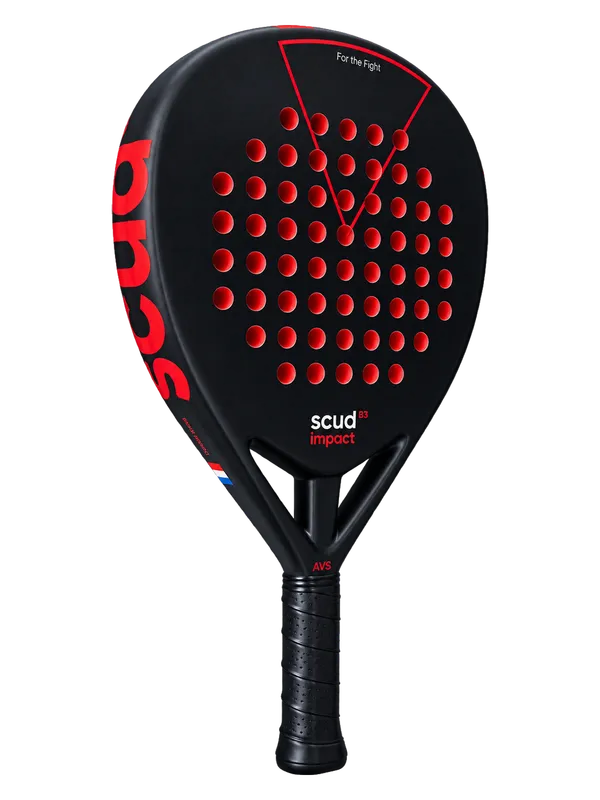
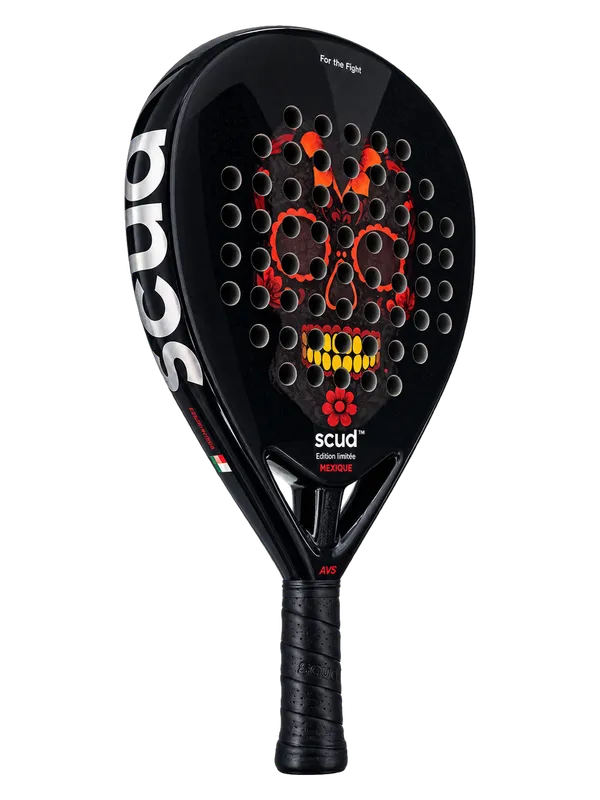
The return calls for forgiveness and touch: the contact point is rarely ideal, especially after the glass, and both the lob and the chiquita are all about weighting the shot. A racket with a generous sweet spot forgives off-centre hits. The SCUD White S3 combines forgiving 12K carbon with the power of a diamond shape; the stiffer SCUD Black Impact B3 demands more precision on the return but makes every lob longer and every cross-court ball heavier. Our article on power or control helps you decide according to your profile.
In short
- The return is not looking for the point: it stops the server from settling at the net.
- Stand one metre in front of the back glass, slightly shifted towards the side glass.
- High ball before the glass: play it. Low or well-placed ball: let it come.
- The lob and the chiquita are the two most effective returns against a server coming in.
- After a good lob, move forward: it is your turn to take the net.
Frequently asked questions
Can you volley the serve?
No. The receiver must let the ball bounce in their service box. If the ball hits them or their racket before the bounce, the point goes to the server.
Can the receiver’s partner stand at the net?
Yes. The rules let both players on the receiving team stand wherever they like in their half. In practice, the partner often stands level with the service line, ready to move forward or back depending on the return.
Should you return hard or placed?
Placed. The server is moving in or already at the net: a hard ball at mid-height gives them an easy volley. A low ball at their feet or a lob over their head puts them in trouble.
Why lob on the return of serve?
Because the lob pushes back the team that has just taken the net. If the lob is deep enough to force them to play after the back glass, your team can move forward and reverse the roles.
Who should receive on the right and on the left?
By convention, the more consistent player on the right and the more attacking one on the left. In a right-hander/left-hander pair, the left-hander usually goes on the right, so that both forehands meet in the middle.
Has the return won you the net back? Now you have to hold it: that is what our guide to the padel volley is all about.