A padel racket commonly costs between 40 and 400 euros, and some signature editions go beyond that ceiling. The gap is not random: it comes down to the materials in the face, the foam, the manufacturing, the size of the production run and, it has to be said, a share of marketing that does nothing for your strike. This guide sets out what each price band actually buys, what does not justify a premium, and how to decide whether a high-end model makes sense for the way you play.
The price bands you commonly see
The figures below are not a market study: they are the ranges you meet most often in shops and online, and that we watched shift while building our own range.
| Band | Typical price | Typical face | Foam | Manufacturing |
|---|---|---|---|---|
| Entry level | 40-100 EUR | Fibreglass | Basic EVA or FOAM | Mass production, industrial finish |
| Mid-range | 100-200 EUR | Fibreglass + carbon, or 3K/12K carbon | Medium EVA | Mass production, some finishing |
| High-end | 200-400 EUR | 12K to 18K carbon | Calibrated EVA (soft, medium, hard) | Shorter runs, careful finishing |
| Signature and special editions | 400 EUR and up | Premium carbon | Calibrated EVA | Small runs, a player’s name or exclusive artwork |
The borders are porous: an end-of-line mid-range model sells at an entry-level price, and last year’s high-end drops a notch. The price tag tells you something about the racket, but never everything.
What really explains the gap
The face: fibreglass or carbon
Fibreglass costs less than carbon, is easy to work and gives a soft, forgiving face. Carbon, woven as 3K, 12K or 18K, is stiffer, more stable and more durable at impact, and its raw material costs markedly more. Between 12K and 18K the difference lies mainly in the density of the weave and the stiffness it produces: we explain it in 12K or 18K carbon: what difference on court?.
The foam
A calibrated EVA foam, with a density chosen for a specific behaviour (soft, medium, hard), costs more than a generic foam. It also ages better: on a cheap racket it is often the core that “dies” first, with a ball response that goes dull after a season.
Mould, curing and finishing
A dedicated mould, controlled curing and a worked surface finish add steps, and therefore cost. Hand-sanding the hitting surface, for instance, takes an operator and time per piece, where an industrial finish is applied in one pass. We devote an article to it: hand-sanded finish: why the surface changes your spin.
Run size
A racket produced in tens of thousands of units amortises its fixed costs far faster than a limited edition of a few hundred. It is simple arithmetic: at equal quality, the small run costs more per unit. In exchange, it is rare on court.
Marketing and sponsorship
Part of the price of the big brands funds professional player contracts, campaigns and distribution. That is not a scandal, it is the business model; but that share does nothing for your bandeja.
What does not justify a price gap
Two arguments recur on spec sheets and deserve some perspective.
A professional player’s name on the frame tells you that player is under contract with the brand, not that the racket sold is the one they use in tournaments, nor that it will suit you. The number of “technologies” listed, often under trademarked names, is not an indicator of quality: a stiff frame with an anti-vibration system and a good foam can be described in three lines or fifteen, depending on the marketing department. Read instead the five figures that matter: shape, weight, balance, weave and foam. Our guide how to choose your padel racket decodes them one by one.
When a high-end model is worth it
The right question is not “how much does the racket cost” but “how much does each hour of play cost”. Take a purely illustrative example. A player who plays twice a week, an hour and a half each time, plays about 130 hours over a ten-month season. A 240-euro racket that lasts two seasons works out at under one euro per hour of play; an 80-euro racket that cracks after one season works out at around sixty cents per hour. The real gap is therefore a few tens of euros per season, with, on the cheaper side, a ball response that fades towards the end of its life and a replacement to organise every year.
Conversely, for a player discovering padel and not yet sure of sticking with it, an entry-level or mid-range racket is a rational choice: long enough to find out whether you like the sport and what style of game you develop. We say so plainly in which padel racket for a beginner?.
High-end makes sense in three cases: you play at least once a week over the long run, your technique is stable enough to feel the difference in response, or you want an object that reflects you and that you will keep.
The false economies
- The “barely used” second-hand racket. A hairline crack at the edge of the frame or a compacted core does not show in a photo. A racket that sounds hollow or whose face gives under thumb pressure has already given what it had.
- The entry-level racket that breaks. A fibreglass frame with no protector, knocked against the glass, splits quickly. Two 60-euro rackets in two seasons cost more than one that lasts.
- The ill-suited high-end racket. A 300-euro racket too demanding for your arm will cost you in physiotherapy sessions what it saved you in strokes.
- Neglecting consumables. A frame protector and an overgrip cost a few euros and extend the life of any racket; we explain how in looking after your padel racket.
What you pay at SCUD
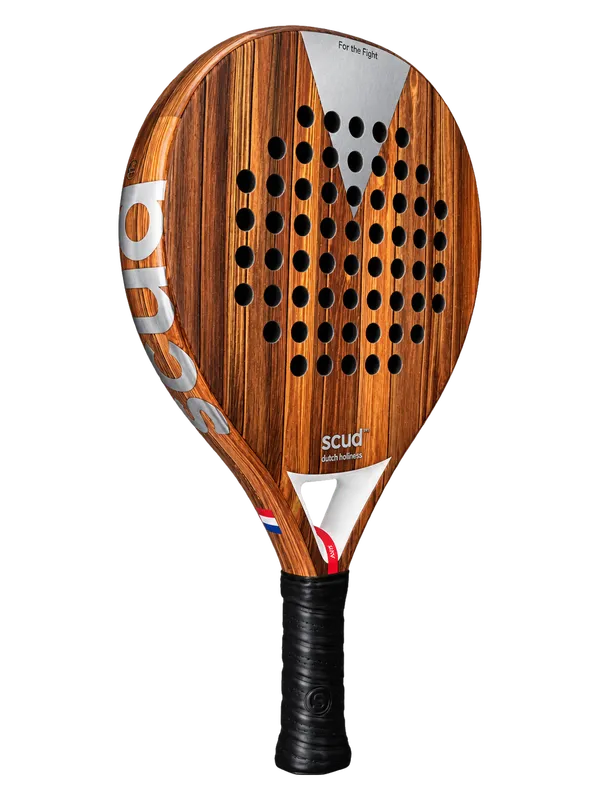
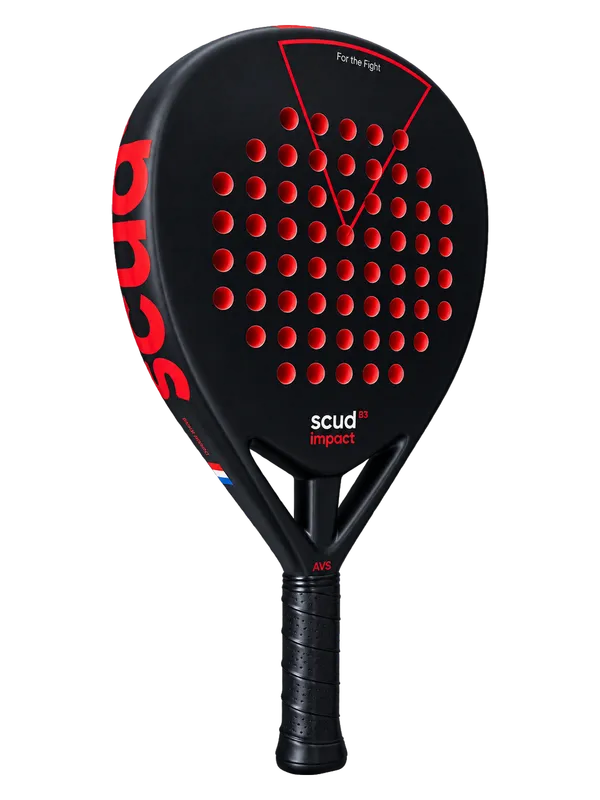
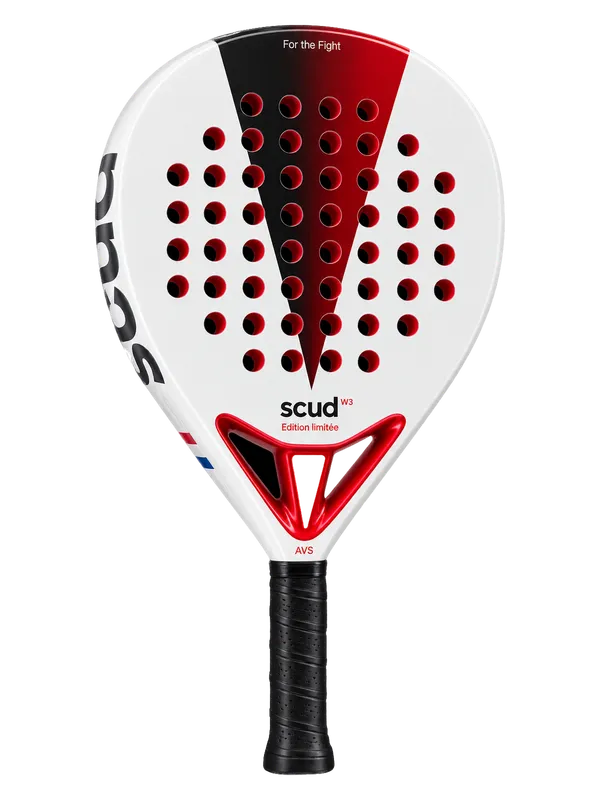
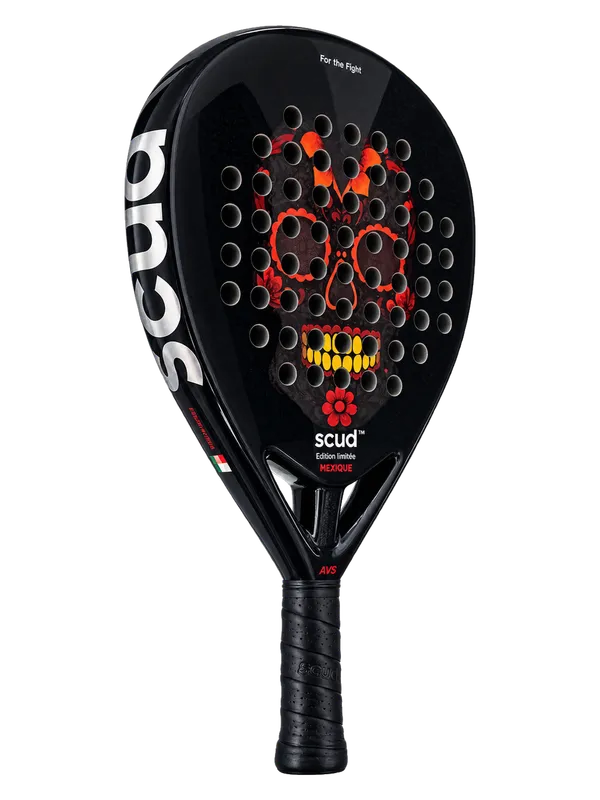
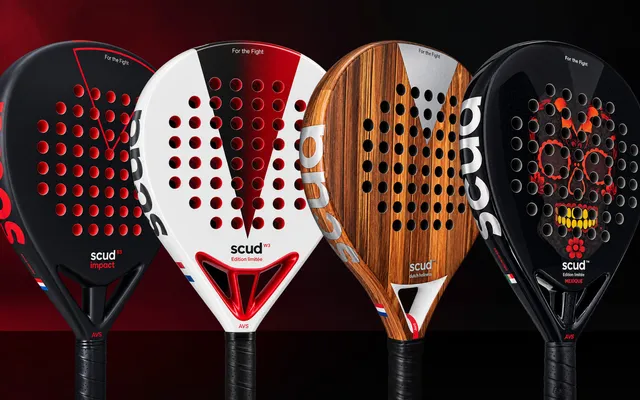
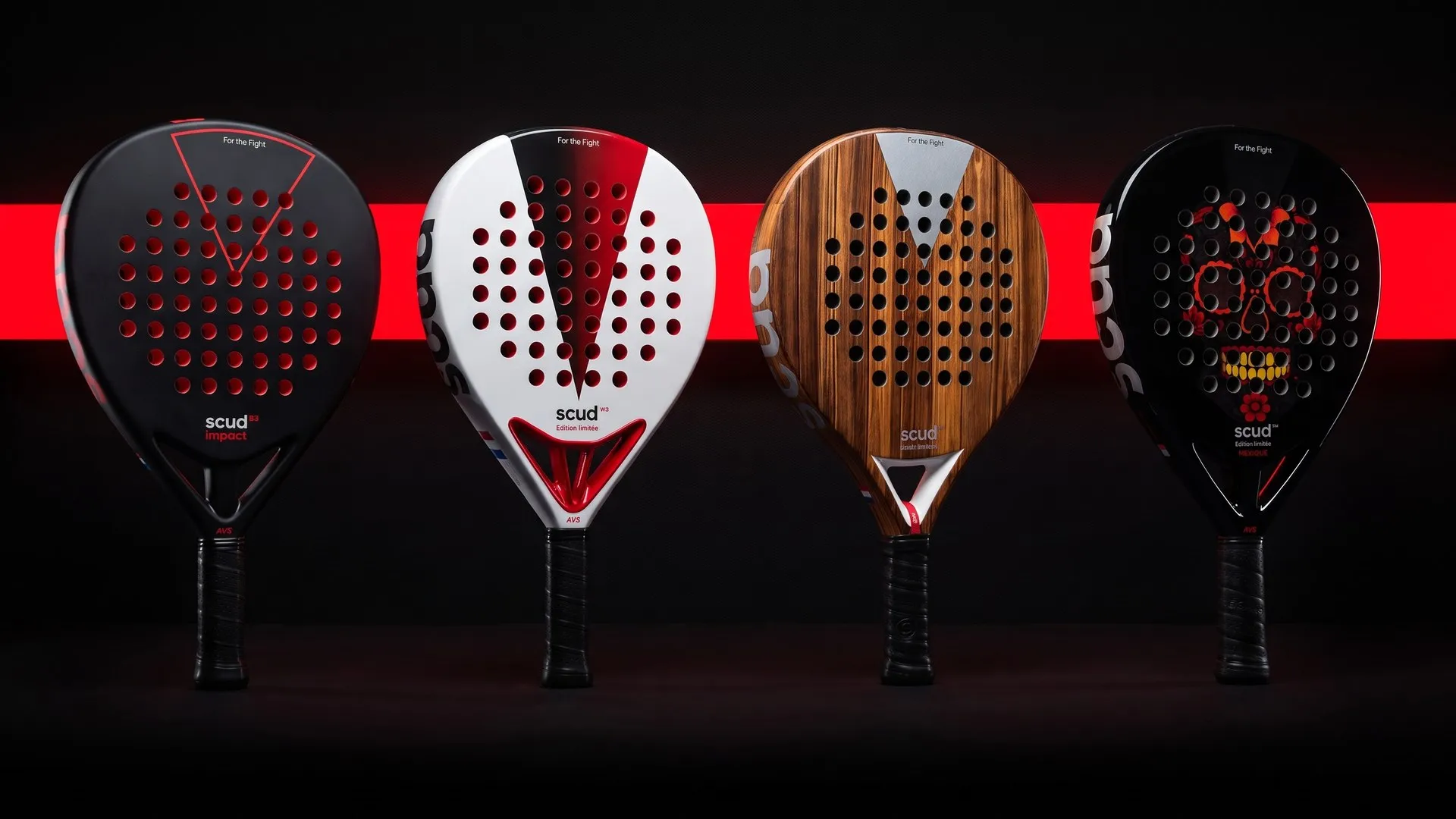
Our rackets sell for 220 euros for the SCUD Wood S1 and 240 euros for the SCUD Black Impact B3, the White S3 and the Mexique M1. These prices are net and final: B SCUD OÜ is not VAT-registered, so no tax is added at checkout.
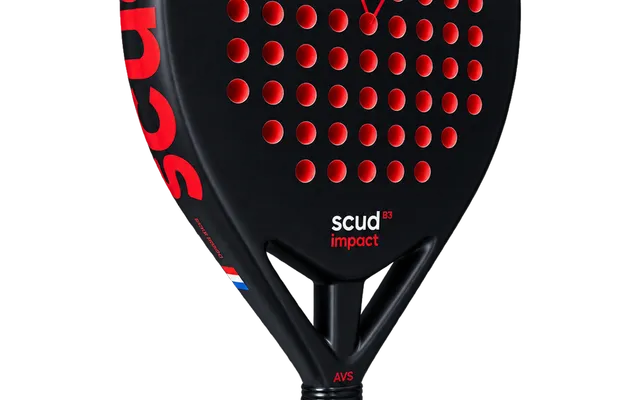
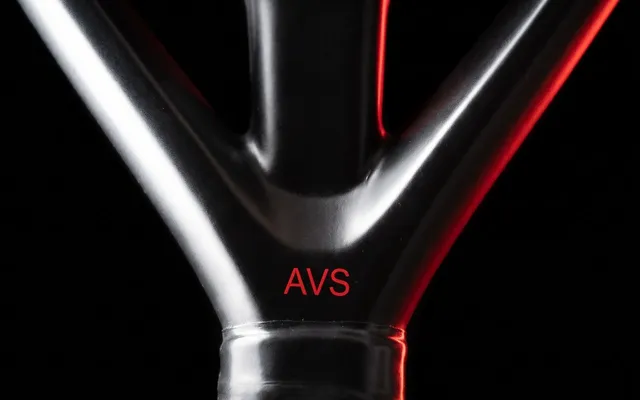
What that price covers: a 12K or 18K carbon face (with fibreglass on the Wood S1), a calibrated EVA foam, the AVS anti-vibration system, a honeycomb silicone handle under the grip, and a sanded hitting surface applied by hand, piece by piece. What it does not cover: a professional player contract or a billboard campaign. Each model is produced in a limited run, with no guarantee of an identical restock; you will find them on the limited editions page.
Delivery is 15 euros in France and 20 euros in the rest of the European Union, free from 300 euros of purchases, with dispatch within 48 hours; you have 30 days to change your mind, with return costs at your expense. Full details are on the delivery and returns page.
In short
- Commonly observed prices run from 40 to 400 euros, with signature editions above; each band corresponds to different materials and manufacturing.
- The gap comes from the face (fibreglass or carbon), the foam, the finishing, the run size and marketing.
- A player’s name or the number of listed “technologies” says nothing about quality.
- Think in cost per hour of play: for a regular player, a durable 200-250 euro racket costs only a few tens of euros more per season than an entry-level one replaced every year.
- A racket that is too demanding, or a cracked second-hand one, are the real false economies.
Frequently asked questions
Is a 60-euro racket enough to start with?
Yes, to discover the sport for a few months. It will usually be fibreglass, soft and forgiving; plan to replace it once your game settles.
Why are 18K carbon rackets more expensive?
The weave is denser, the face stiffer and more stable; the material costs more and the resulting behaviour is aimed at players who know how to use it.
How long does a padel racket last?
Commonly one to two seasons for a regular player, longer with a frame protector and storage away from heat. The core loses its liveliness before the frame breaks.
Is the price of a limited edition justified?
It pays for a small run and hand finishing, not for superior performance in itself. Its value lies in rarity and in the care given to each piece.
Are your prices shown inclusive of VAT?
Our prices are net: as B SCUD OÜ is not VAT-registered, no tax is added. Only delivery costs are added below 300 euros of purchases.
To see where each model sits and what it costs, browse all our padel rackets or download our free guide to choosing your racket.