In about ten years, padel has gone from a curiosity imported from Spain to one of the fastest-recruiting racket sports in France. Courts are being built in tennis clubs, in dedicated centres on the edge of cities and even in former warehouses. This article takes stock of that growth without inflating the numbers: where we are not certain of a figure, we describe the trend and point you to the official sources.
Where padel comes from
Padel was born in Mexico in 1969, in Acapulco: Enrique Corcuera adapted a plot too small for a tennis court by enclosing it with walls, and set most of the rules still in force today. The game then moved to Spain, and on to Argentina, which became and remain the two leading padel nations, before reaching Italy, Sweden, Portugal and France. The International Padel Federation (FIP), founded in 1991, oversees the rules and the international circuit; its website, padelfip.com, remains the reference for the official rules.
In France, the sport has been attached to the French Tennis Federation (FFT) since 2014. That attachment partly explains the shape the growth has taken: many courts were built inside existing tennis clubs, which already had the land, the members and the coaching staff.
Growth driven by three engines
Tennis clubs diversifying
An unused tennis court takes up the space of two or three padel courts. For a club, converting an ageing tennis court into padel courts is a way to attract new, often younger members and to fill evening and weekend slots. A large share of French padel courts were created this way.
Dedicated private centres
Alongside the non-profit clubs, centres devoted entirely to padel have opened in most large urban areas: covered courts, online booking, a bar, group lessons. They brought padel a pay-per-session model, with no licence or annual commitment, which has done a great deal for its accessible image.
The visibility of the professional game
Since 2022, Roland-Garros has hosted a major stop on the Premier Padel professional circuit every summer. Seeing the best players in the world on Court Philippe-Chatrier has given padel an exposure few emerging sports get, and the international circuits have since come together under a single banner, which simplifies the calendar and the world ranking.
How many courts, how many clubs?
The FFT regularly publishes the number of courts and affiliated clubs offering padel; it is the only reliable source, and it moves fast. The orders of magnitude we can state safely are these: in the mid-2010s, France had only a few hundred courts; by the mid-2020s, it has several thousand, spread across several hundred clubs and centres. Growth has been continuous year on year, including after 2020, driven by covered courts that allow play all year round.
For an up-to-date figure, see the padel section of fft.fr, which details the offer by regional league and by department. We would rather send you there than publish a number that will be out of date by next season.
How the sport is structured
| Setting | What it covers | For whom |
|---|---|---|
| Private centre | Pay-per-session booking, covered courts, lessons | Newcomers, occasional players |
| FFT-affiliated club | Licence, padel school, teams, sanctioned tournaments | Regular players, competitors |
| FFT tournaments (P25 to P2000) | Competitions graded by points level | Licence holders, from ranked beginner to elite |
| International circuit | Premier Padel, FIP championships | Professionals |
An FFT licence gives access to an individual ranking and to sanctioned tournaments, graded from P25 (the most accessible) to P2000 (the strongest). A recreational player may never need one; a player who wants to improve will find a yardstick and opponents of their own level.
What this changes for a beginner
The density of courts has very concrete consequences. First, in a large city it is now rare to have to drive more than half an hour to play, and most centres offer slots early in the morning and late at night. Second, demand has created a coaching offer: group lessons, clinics, organised matches for players on their own. Finally, the equipment market has matured, with rackets for every profile, approved balls and accessories, which was not the case ten years ago.
That last point deserves a warning: with so much on offer, the temptation to buy too fast is strong. Padel asks a beginner for a forgiving, comfortable racket long before it asks for power. Our article on how to choose a padel racket explains the criteria, and our free guide to choosing a racket sums them up in a few pages.
Where SCUD sits in this landscape
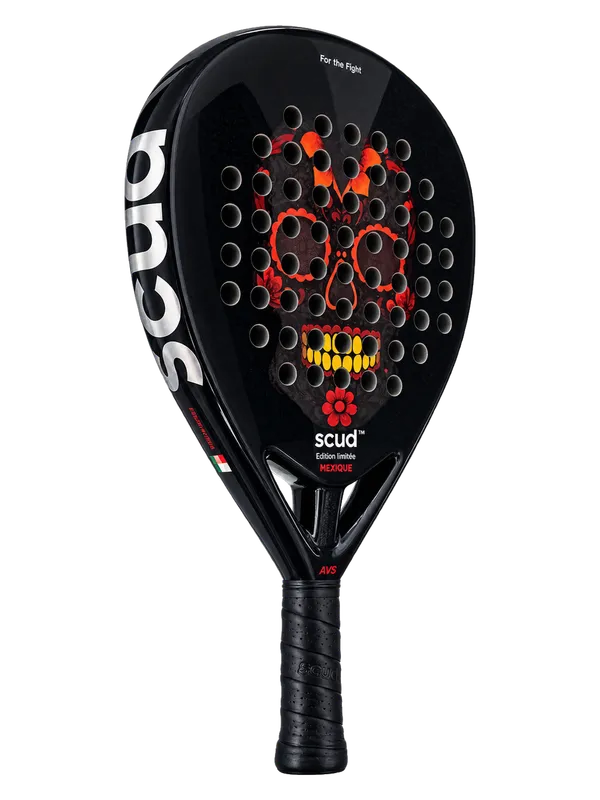
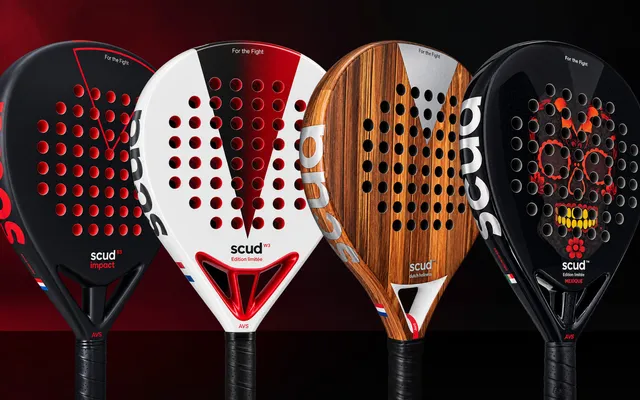
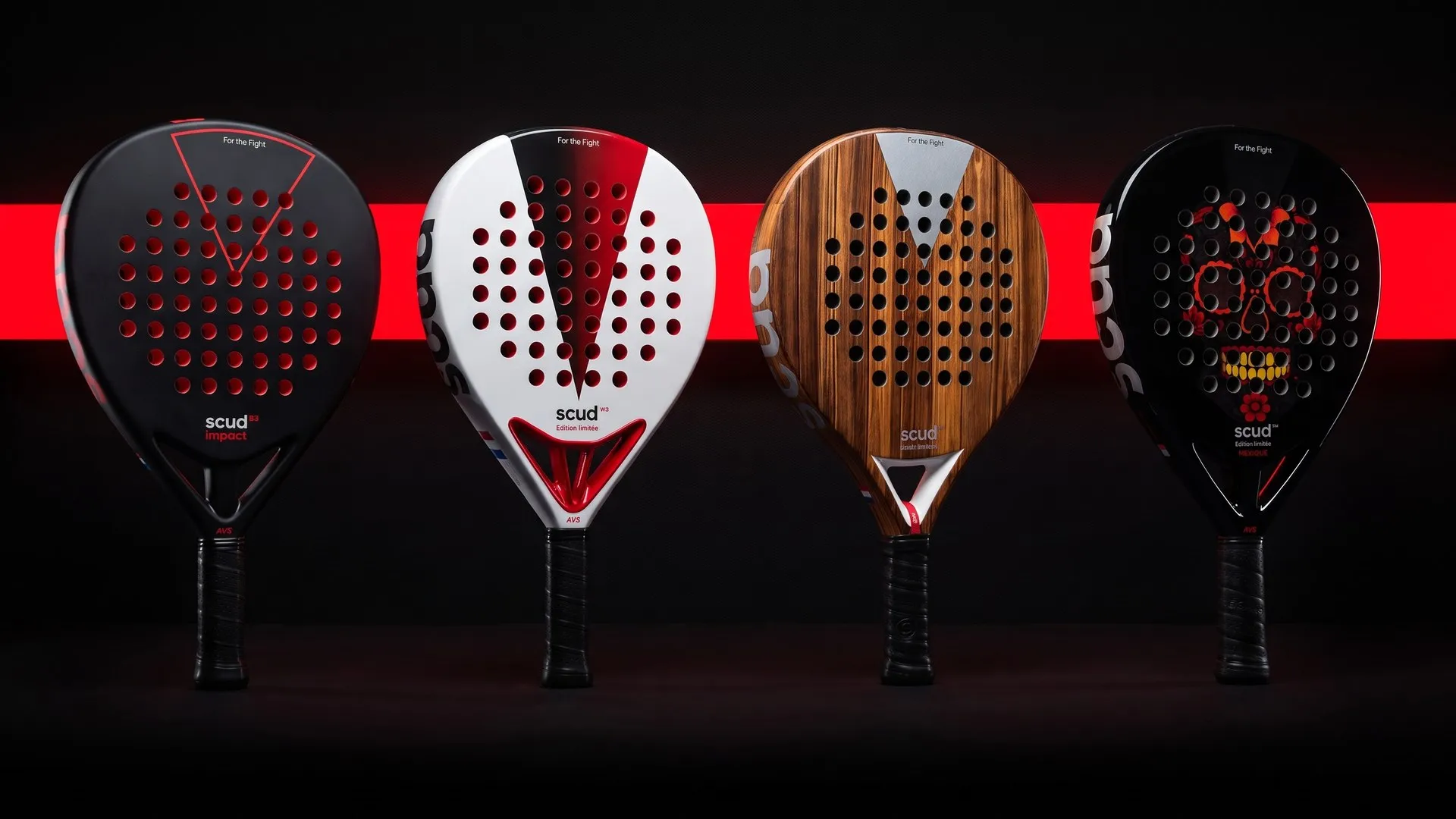
SCUD is a padel brand that designs its rackets in France and sells them directly, in France and across the European Union, from its own online shop. We do not manufacture large runs: every model comes out as a limited edition, with the sanding of the hitting surface applied by hand. In a market that is growing fast, this is a deliberate choice: fewer models, short runs, and a guide to steer each player towards the right profile rather than an endless catalogue.
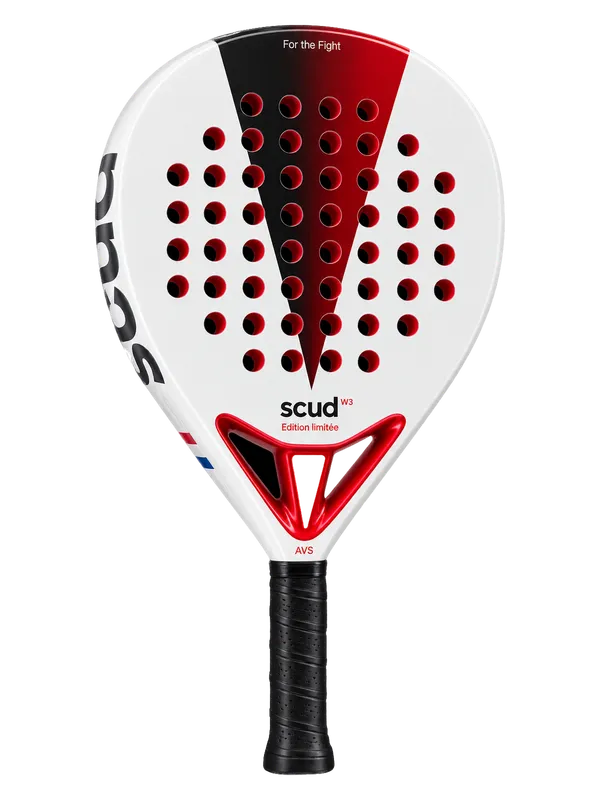
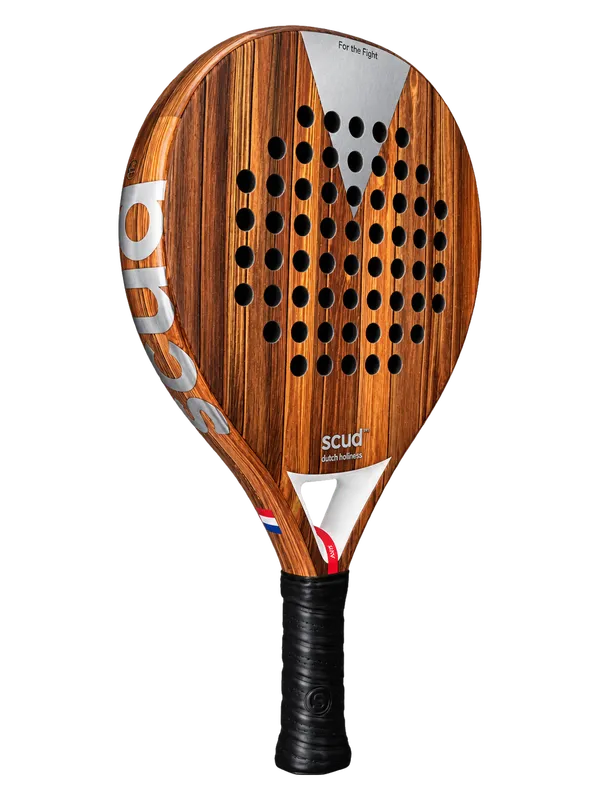
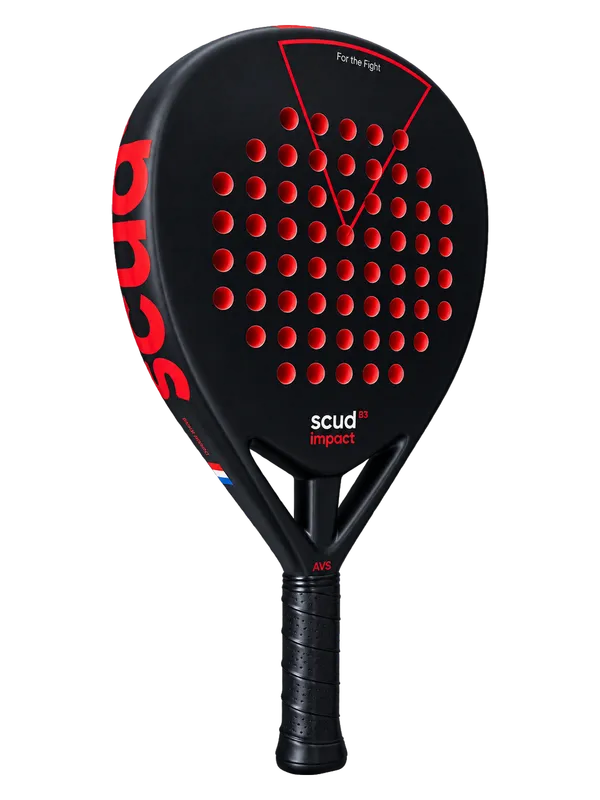
For players who are starting out or who value consistency, the control collection brings together the White S3 (12K carbon, EVA Hard Power foam) and the Wood S1 (12K carbon and fibreglass, soft EVA, teardrop shape, 350 g), the most forgiving in the range. Players who already have an attacking game will find the Black Impact B3 in the power collection.
In short
- Padel was born in Mexico in 1969 and developed through Spain and Argentina before reaching France.
- The FFT has overseen the sport in France since 2014; the FIP sets the international rules.
- Growth rests on converted tennis clubs, private centres and the visibility of Roland-Garros since 2022.
- The number of courts has gone from a few hundred to several thousand in a decade; the FFT publishes current figures.
- For a beginner, the abundance of choice makes a methodical racket choice essential.
Frequently asked questions
Do you need a licence to play padel in France?
No. Private centres rent their courts by the session without a licence. An FFT licence becomes useful for entering sanctioned tournaments and getting a ranking.
Where can I find the exact number of courts in France?
On the French Tennis Federation’s website, which keeps an up-to-date census of clubs and courts. The figure changes every year, often substantially.
Why are so many courts covered?
Because padel is played all year round and the French climate does not allow that outdoors. Covered courts give clubs steady occupancy in the evenings and in winter.
Is padel an Olympic sport?
Not to date. The FIP is working towards recognition, but padel is not on the Olympic programme.
Which racket should I start with at a centre near me?
A forgiving, fairly light racket with soft foam. The rental rackets offered by centres let you try before investing in a model that suits you.
Padel now has courts all over France; all you are missing is the racket, and our range is made for that.