The feel of a padel racket in the hand is set in three layers: the handle, the original grip that covers it, and the overgrip or overgrips you wrap on top. The handle is not something you choose — almost every padel racket shares the same standard section — but the final thickness, the tackiness and the way sweat is handled can all be adjusted in a few minutes with an overgrip that costs a few euros. It is the cheapest and most underrated setting in padel.
The three layers of a handle
The handle is the part of the frame you hold, extending from the face. Unlike tennis, there are no handle sizes to pick at purchase: manufacturers, ourselves included, ship a standard section, shorter and slimmer than a tennis handle, designed for the continental grip.
The original grip is the band applied in the factory directly onto the handle. Thicker and more padded than an overgrip, it gives the handle its basic shape and is only replaced when genuinely worn out.
The overgrip is a thin band, self-adhesive at one end, wrapped over the original grip. It is a consumable that sets the final thickness, the tackiness and the absorption of sweat.
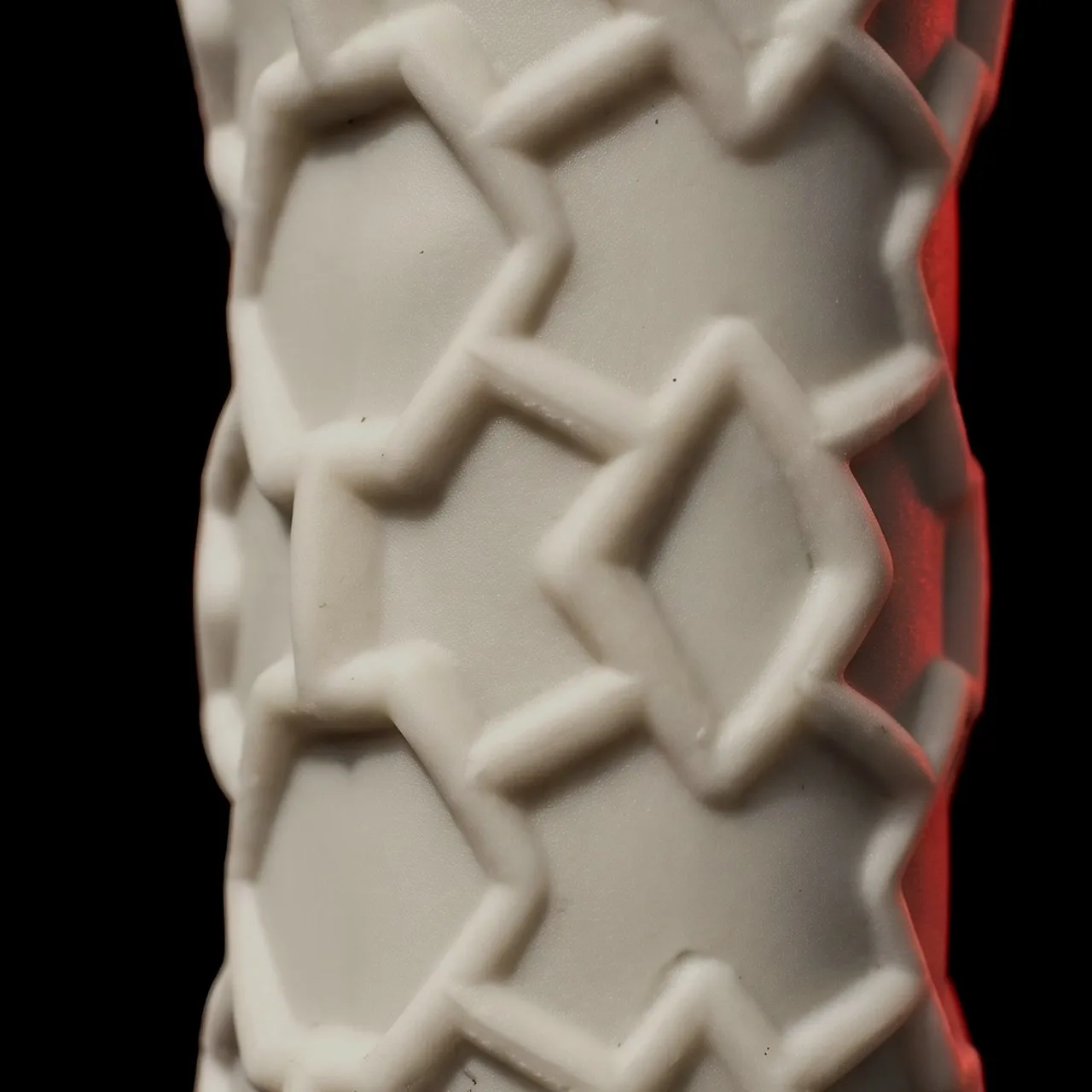
On our rackets, the handle is a honeycomb silicone covered by a grip: the cellular structure beneath the band improves hold without forcing you to squeeze. As everywhere else, fine-tuning is then done with an overgrip.
Choosing the thickness: one overgrip or two?
A handle that is too thin forces you to squeeze hard to hold the racket, which tightens the forearm and tires the elbow. A handle that is too thick limits wrist play, essential for the bandeja, the vibora and the spin added at the end of the swing.
A reference borrowed from tennis, to be taken with caution because neither the grip nor the handle are the same: hold the racket in a continental grip, then slide the index finger of your other hand between your fingertips and the base of your palm. If it just fits, the thickness is right; if it does not fit, the handle is a touch thin; if there is room to spare, a touch thick. In padel, many players prefer slightly thinner than this reference, to keep the wrist mobile.
In practice, that translates as follows:
- no overgrip: for small hands, or players who like to feel the racket very directly;
- one overgrip: the most common setting, which protects the original grip and adds fresh tackiness;
- two overgrips: for large hands, or for those who feel the need to squeeze;
- more than that: rare, and the handle becomes so round that you lose the reference points for orienting the face.
Adding an overgrip also adds a few grams to the handle, which lowers the racket’s balance very slightly. That is negligible for most players, but worth knowing if you play a head-heavy model and find it just a little too “front-loaded”: our article on padel racket weight and balance explains the mechanism.
Absorbent or tacky: two families of overgrip
Overgrips fall into two broad categories, and the right one depends on your hand more than on the brand.
Absorbent overgrips have a slightly textured, sometimes perforated surface that soaks up sweat. They are made for damp hands, indoor courts and summer, but wear quickly and lose their bite once saturated.
Tacky overgrips have a smooth, slightly sticky surface. They give a very secure hold with a dry hand, but turn slippery as soon as they get wet. They suit hands that sweat little and temperate climates.
Many players alternate: absorbent in summer, tacky in winter, since tacky holds its qualities better in cold weather.
Wrapping an overgrip properly
Wrapping takes two minutes and always follows the same order:
- Remove the old overgrip and wipe the original grip if it is damp.
- Peel the small adhesive strip at the bevelled end of the overgrip and stick it at the base of the handle, on the wrist-cord side.
- Wrap upwards towards the face, pulling gently to keep the band taut and overlapping each turn by about a third of its width.
- Keep a constant angle: even tension and overlap are what separate a smooth handle from one full of creases.
- At the top of the handle, trim any excess on the diagonal if needed and secure the end with the finishing tape supplied.
The direction of wrapping makes no mechanical difference; the simplest approach is to follow that of the original grip. If the wrist cord gets in the way at the base, pass it outside the first turn rather than trapping it under the band.
When to replace it
An overgrip needs replacing when it becomes smooth, shiny or visibly dirty, or as soon as you catch yourself squeezing harder to hold the racket. The rhythm depends mostly on how much you sweat and how often you play: commonly, every 10 to 20 hours of play. Very damp hands may need one overgrip a week; dry hands keep one much longer.
Between sessions, let the handle dry in the open air rather than in a closed bag; the moisture left in the original grip is what eventually degrades it. Our guide to looking after your padel racket details these storage habits.
The wrist cord is not optional
The International Padel Federation rules require a cord attached to the handle, worn around the wrist during play. This is not a formality: on a smash, a racket that slips out of a sweaty hand can injure a partner or an opponent inside a space enclosed by glass. Adjust the cord’s length so it does not tug on the wrist at the end of the swing, and check it is not trapped under the overgrip when you replace it.
Problem, adjustment
| What you feel | Likely cause | Adjustment to try |
|---|---|---|
| The racket twists in the hand on off-centre balls | Handle too thin or overgrip worn | Add an overgrip, or replace it |
| The forearm is tense and the elbow pulls | You squeeze too hard, often because the handle is too thin or slippery | One more overgrip, absorbent or tacky depending on your hand |
| The wrist no longer “snaps” at the end of a bandeja | Handle too thick | Remove an overgrip |
| The hand slides as soon as you sweat | Tacky overgrip saturated | Switch to an absorbent overgrip, dry the hand and the handle |
| The original grip has gone smooth and hard | Wear or prolonged moisture | Replace it, then protect it with an overgrip |
| The racket feels too heavy in the head | Head-heavy balance for your arm | An extra overgrip lowers the balance slightly |
At SCUD
All our rackets ship with a standard-size handle in honeycomb silicone covered by a grip. There is therefore no size to select when ordering: it is the question we receive most often, and the answer is the same as for almost every padel racket — you adjust with one or two overgrips. You will find it on our FAQ page.
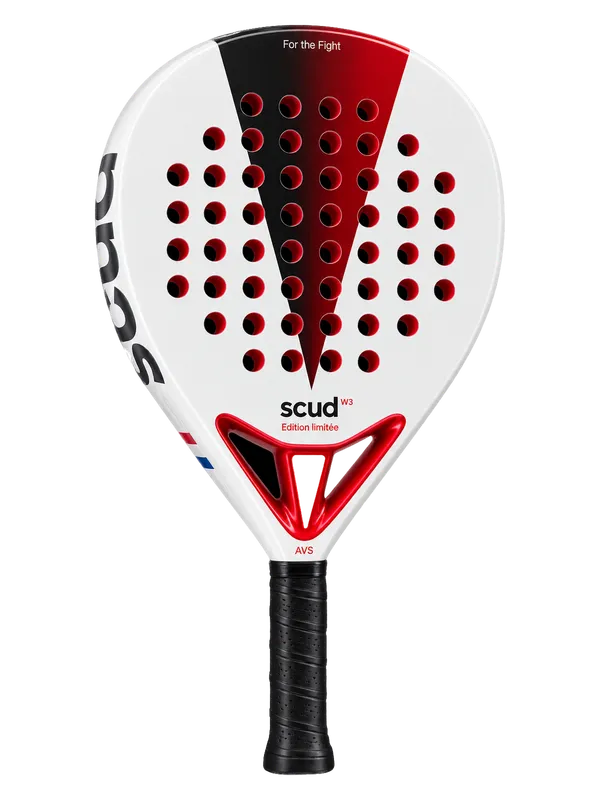
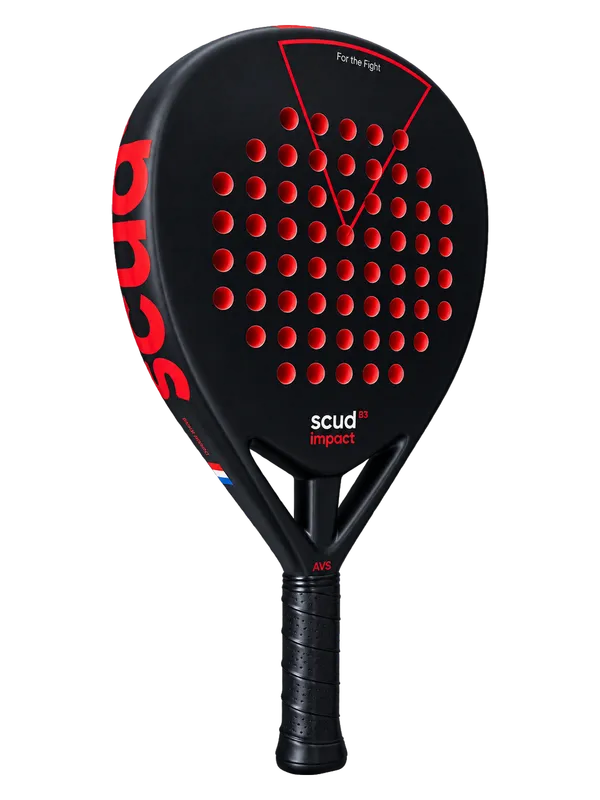
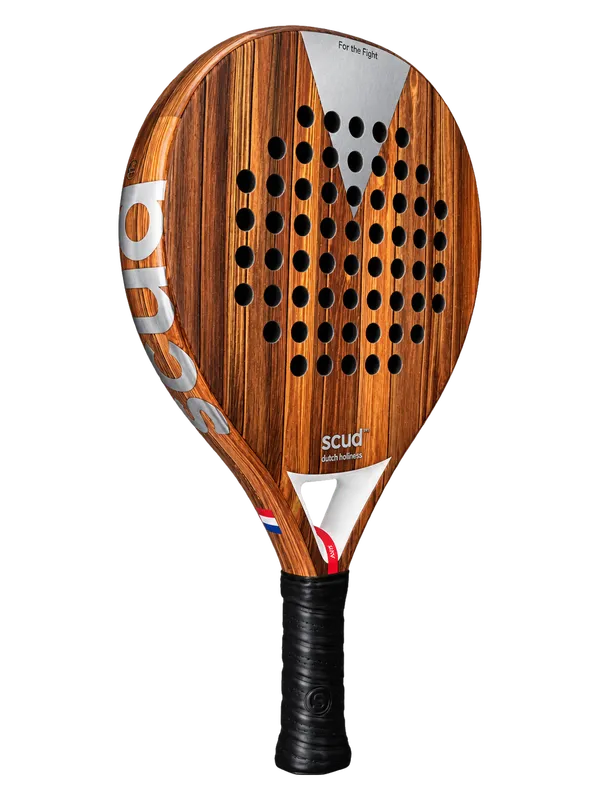
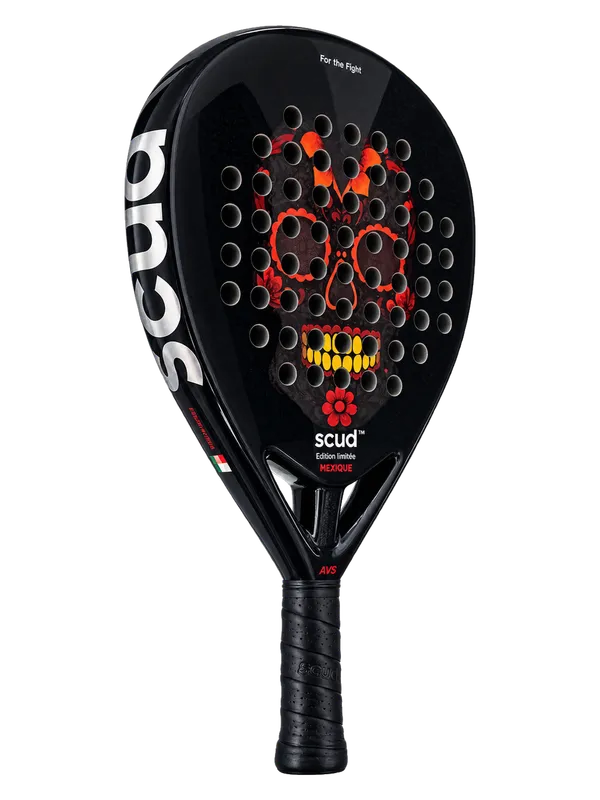
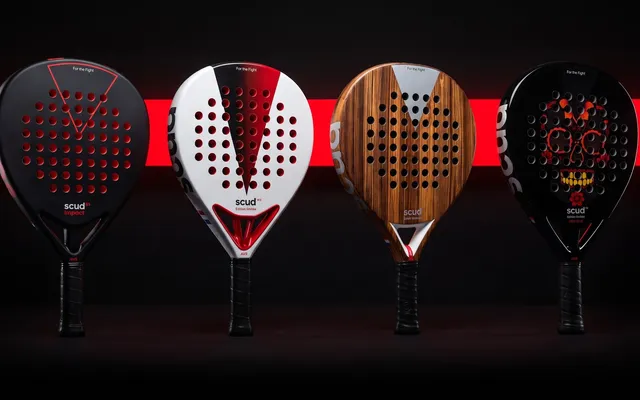
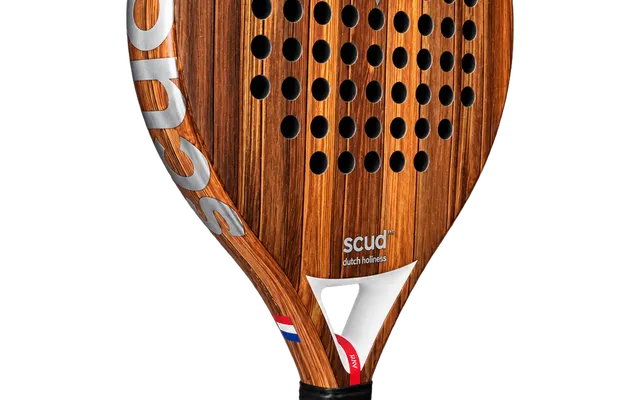
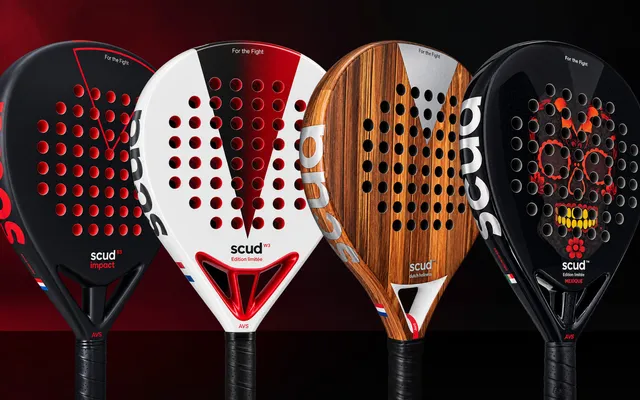
The handle is only one part of how a racket feels in hand: weight, balance and core matter just as much, and we have gathered them all in our free guide to choosing a racket. The product pages of the SCUD White S3 and the SCUD Black Impact B3 detail the handle alongside their other characteristics, as do those of the limited editions collection.
In short
- A padel racket’s handle is standard; the final thickness is adjusted with one or two overgrips.
- A handle that is too thin makes you squeeze and tires the elbow; one that is too thick locks the wrist.
- Absorbent overgrip for damp hands, tacky for dry hands; replacement commonly every 10 to 20 hours of play.
- The wrist cord is compulsory: adjust it and do not trap it under the overgrip.
- Let the handle air-dry after every session.
Frequently asked questions
Do I need to choose a grip size for a SCUD racket?
No. Our rackets have a standard handle, like the vast majority of padel rackets. Add one or two overgrips if you prefer a thicker hold.
How many overgrips can you stack?
Two is the sensible maximum. Beyond that the handle becomes round, you lose the reference points for orienting the face, and the added weight starts to be felt.
Can you play without an overgrip?
Yes, directly on the original grip. You will simply wear it out faster, and have to replace it instead of changing a consumable that costs a few euros.
Does an overgrip protect against tennis elbow?
It is not a treatment, but a well-fitted handle stops you squeezing unnecessarily, which reduces forearm tension. The other racket-related factors are covered in tennis elbow and padel: the racket’s role.
Once the handle is set, all that remains is choosing the racket itself: our whole range is gathered on the padel rackets page.