
Contents — 9 parts
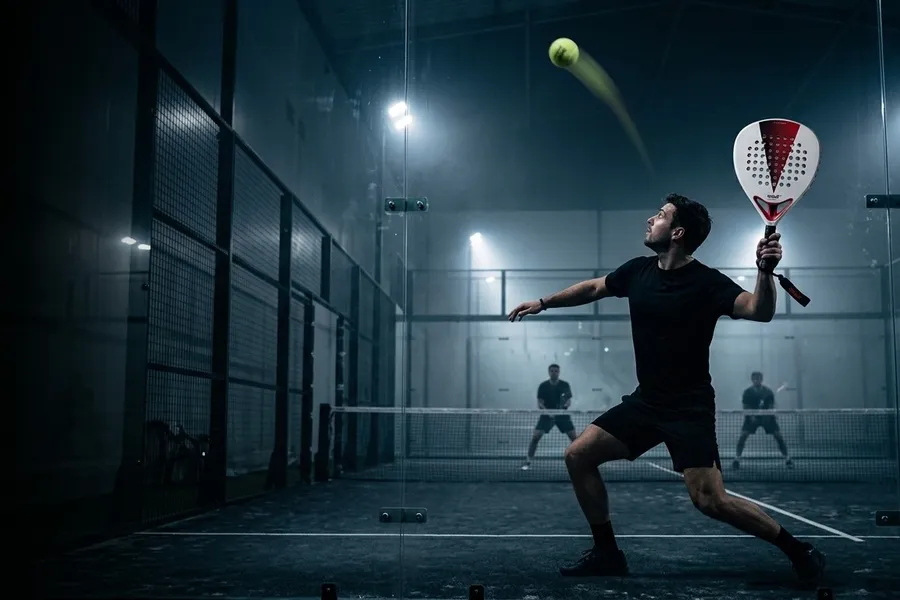
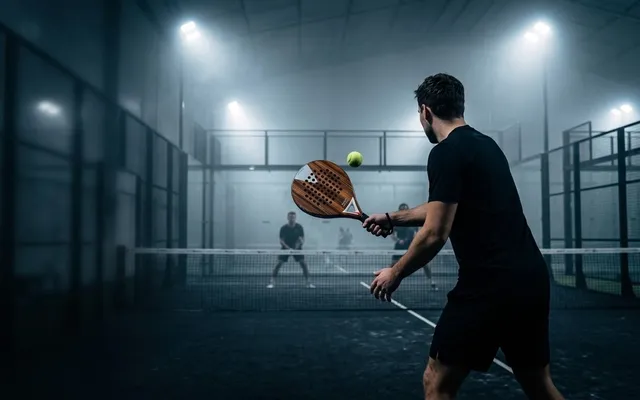
The smash is the most spectacular shot in padel, and the most badly played. In tennis, a well-struck smash almost always ends the point. In padel, the back glass sends the ball back: a powerful but poorly directed smash bounces, hits the glass and comes back onto your opponent’s racket, who only has to lob you again. Smashing hard is not enough; you have to smash where the ball will not come back.
This guide concludes the series that began with the serve, the return, the volley and the lob: your opponent has just lobbed you, and it is up to you to finish.
Smash or bandeja: the first decision
Faced with a lob, the player at the net has two choices. The bandeja, a sliced control shot, holds the net without going for the point. The smash goes for the finish. The question is not “can I smash this?” but “does this smash have a good chance of ending the point?”.
Smash when:
- the lob is short, and drops between the net and the service line;
- you are under the ball, without having to back-pedal off balance;
- the ball comes to your forehand side, above your shoulder.
Play a bandeja when the lob pushes you back, when the ball is too far away or behind you, or when it comes to your backhand. A smash played while moving backwards lacks power and comes back off the glass: you lose the net without having gained anything.
In the final of the Paris Major 2026, Coello and Tapia turned the match around against Galán and Chingotto by winning the last seven points of the deciding tie-break: at that level, a smash only wins the point if it is placed.
The technique, step by step
Get into position
As soon as you read the lob, turn your shoulders side-on, the opposite shoulder towards the net, and move back with side steps or crossover steps, never backpedalling while facing the net. Position yourself so that you hit the ball slightly in front of you.
Wind up
The racket goes up behind your head, elbow at shoulder height. Your free hand points at the ball: it helps you aim and keep your balance. Continental grip, as for the volley.
Strike
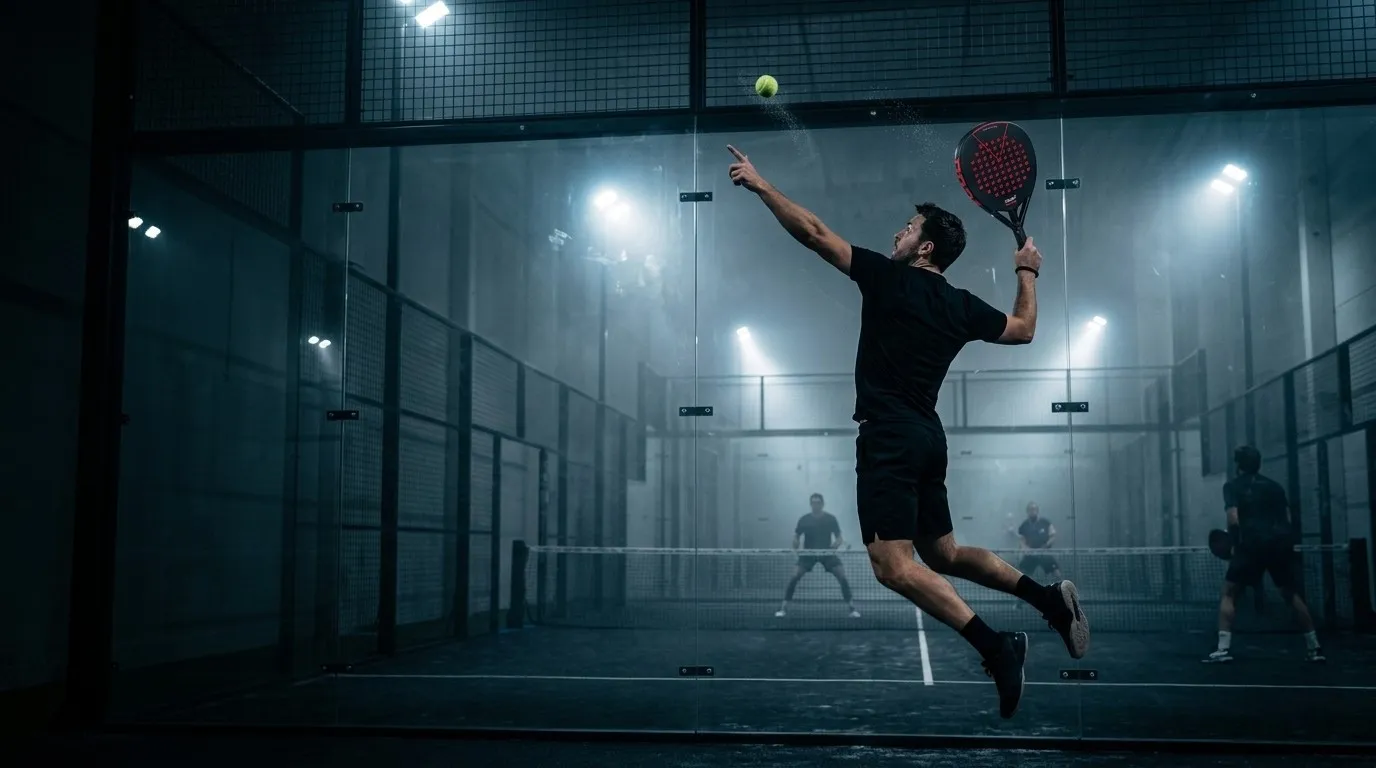
The contact point is as high as you can reach, arm extended, slightly in front of you. The movement starts from the legs, goes through the rotation of the trunk, then the shoulder and arm. At impact, the forearm rotates outwards (pronation), which closes the face and directs the ball downwards.
Follow through
The follow-through comes down in front of you, on the side opposite your hitting arm. Get straight back into volley position: if your opponent retrieves the ball, it will come back fast.
The three smashes that end the point
The smash into the mesh
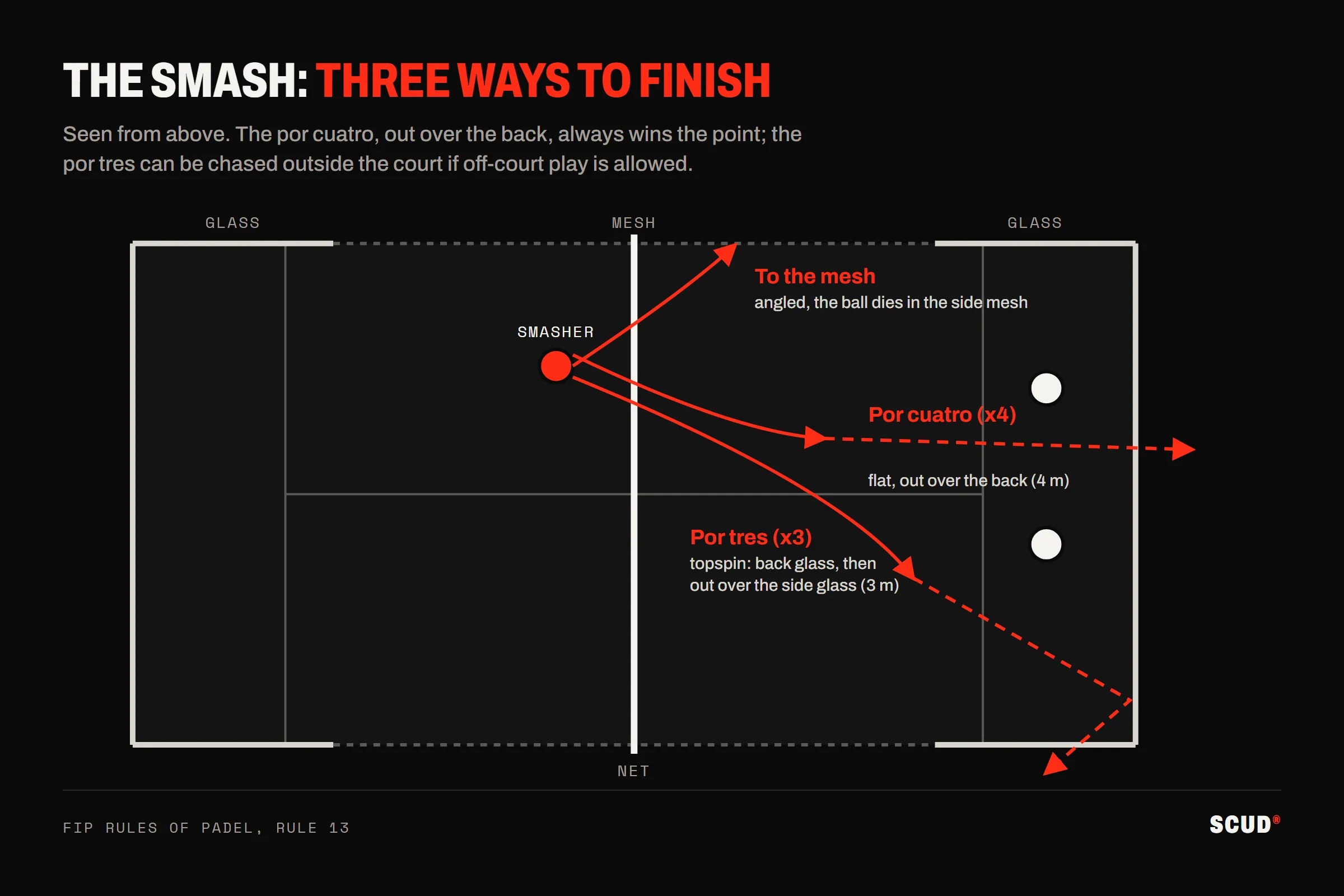
This is the safest and most useful smash. Hit flat and at an angle, it bounces in the opposing court then goes into the side mesh, near the net. On the mesh, the ball loses its speed or flies off in an unpredictable direction; the opponent, who was expecting a bounce off the glass, often has no answer. It does not require exceptional power, but precision. It is the smash to work on first.
The x3
The por tres is a smash hit with topspin and loaded with spin. The ball bounces hard in the opposing court, usually hits the back glass, then exits over the side glass, three metres high, hence its name. It requires hitting the side of the ball, brushing from low to high, so that it kicks after the bounce. It is a shot for experienced players, which does not forgive approximation: without enough spin, the ball comes back off the back glass, high and slow.
The x4
The por cuatro is a flat smash, hit very close to the net, down towards the floor of the opposing court. The ball bounces so high that it goes over the back glass and the mesh above it: three metres of glass plus one metre of mesh, four metres in all. It requires a high ball close to the net, and a lot of power. The technique is simpler than for the x3, but there is only a small area of the court from which it can be played.
| Smash | Spin | Where the ball goes out | Level |
|---|---|---|---|
| Into the mesh | Flat, angled | Dies in the side mesh | All levels |
| x3 (por tres) | Topspin, on the side | Over the side glass (3 m) | Experienced |
| x4 (por cuatro) | Flat, very powerful | Over the back (4 m) | Experienced, close to the net |
What the rules say about balls that go out
The FIP rules distinguish two cases, and they change the value of these smashes:
- A ball that goes out over the back glass after a correct bounce wins the point. No one can go and fetch it: the x4 is therefore always a winner.
- A ball that goes out over the side glass or through the door can be retrieved outside, if off-court play is allowed on that court and in that competition. The defender goes out through the door and must return it before it bounces a second time. An x3 is therefore not always final.
On courts without a safety zone around them, off-court play is not allowed and a ball that goes out over the side after a correct bounce wins the point.
Where to smash when you can’t finish
If the lob is not short enough for a winning smash, but too easy for a simple bandeja, smash flat at your opponent’s feet or deep into the centre. The aim is then to keep the net by sending back a difficult ball, not to win the point. Avoid the back glass dead centre: the ball comes back off it and your opponent, who has had time to get into position, lobs you again.
The most common mistakes
- Smashing hard down the middle. The ball comes back off the back glass, and you lose the net.
- Smashing while moving backwards. Without a base, the smash lacks power: play a bandeja.
- Forgetting to turn side-on. Facing the net, the smash is an arm-only shot, with neither power nor direction.
- Hitting the ball behind your head. It goes upwards or into the net.
- Trying the x3 too early. Without the technique, it gives away an easy ball. Work on the smash into the mesh first.
- Not getting back into position. If the ball is retrieved, it comes back fast.
Which racket for smashing?
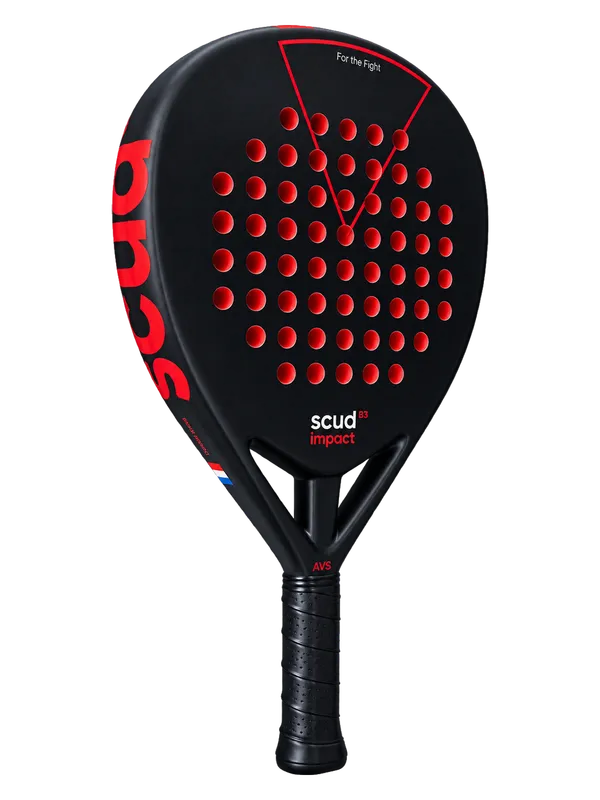
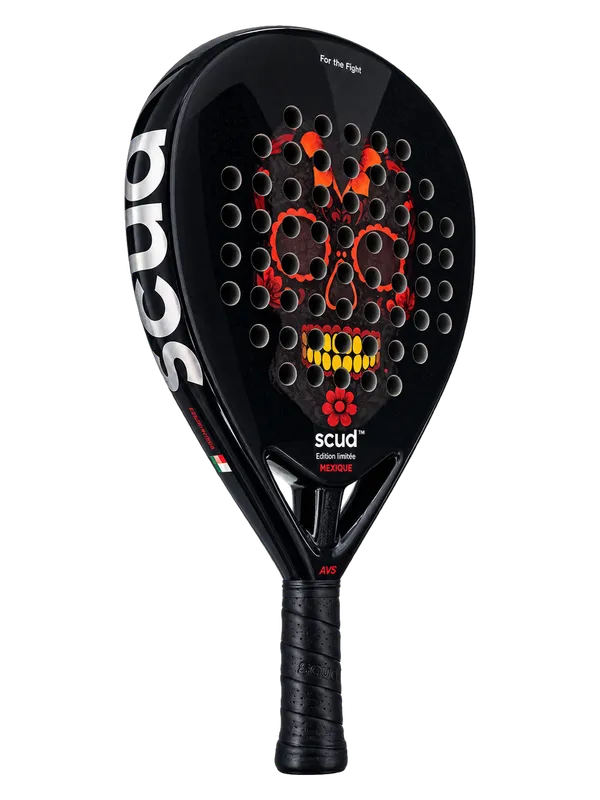
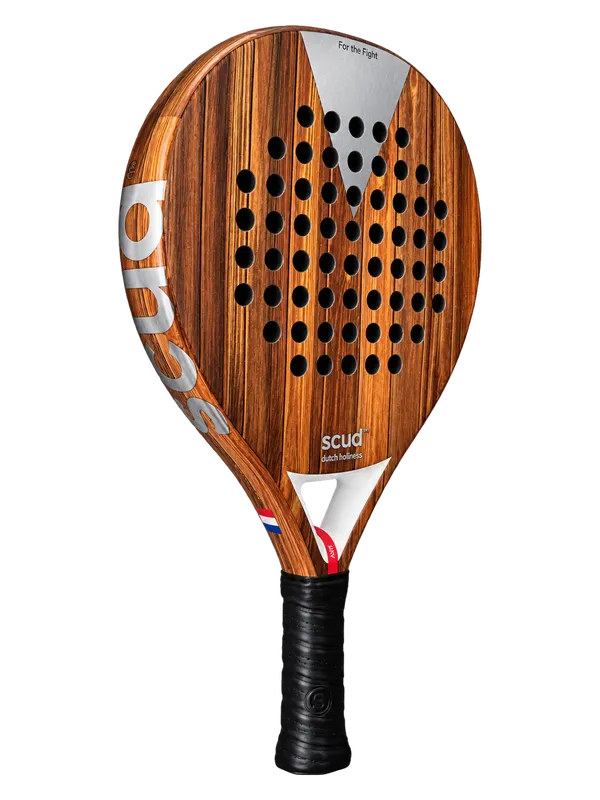
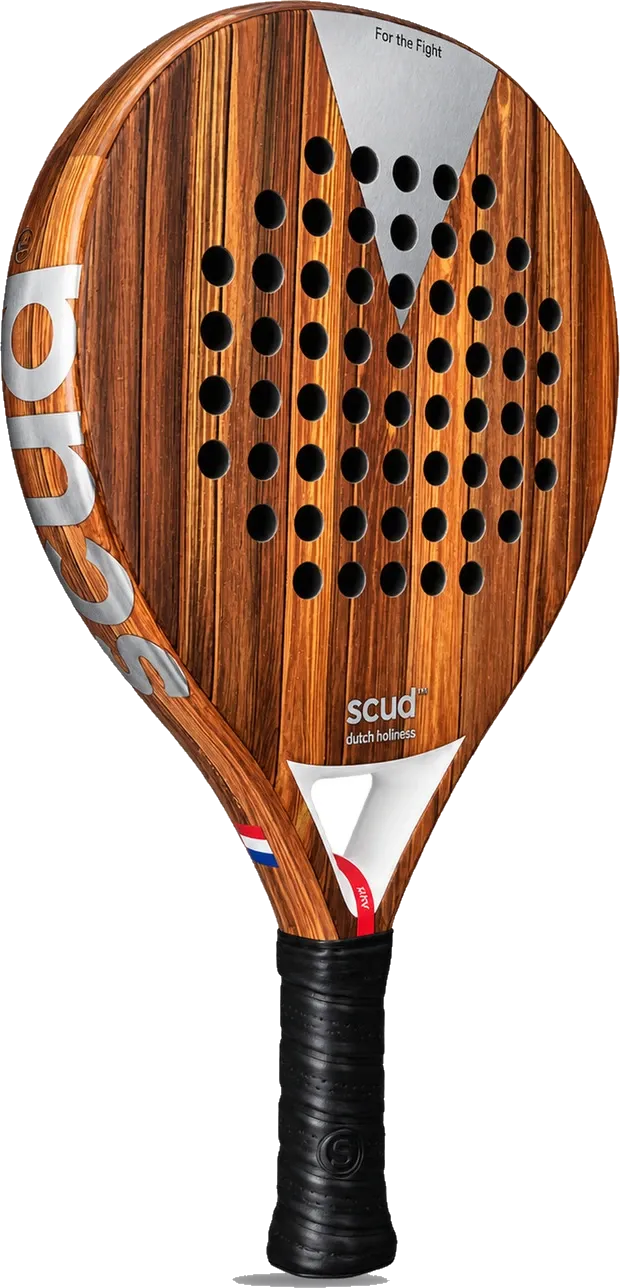
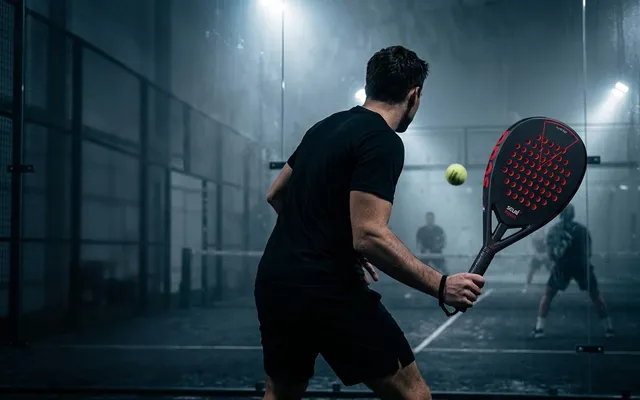
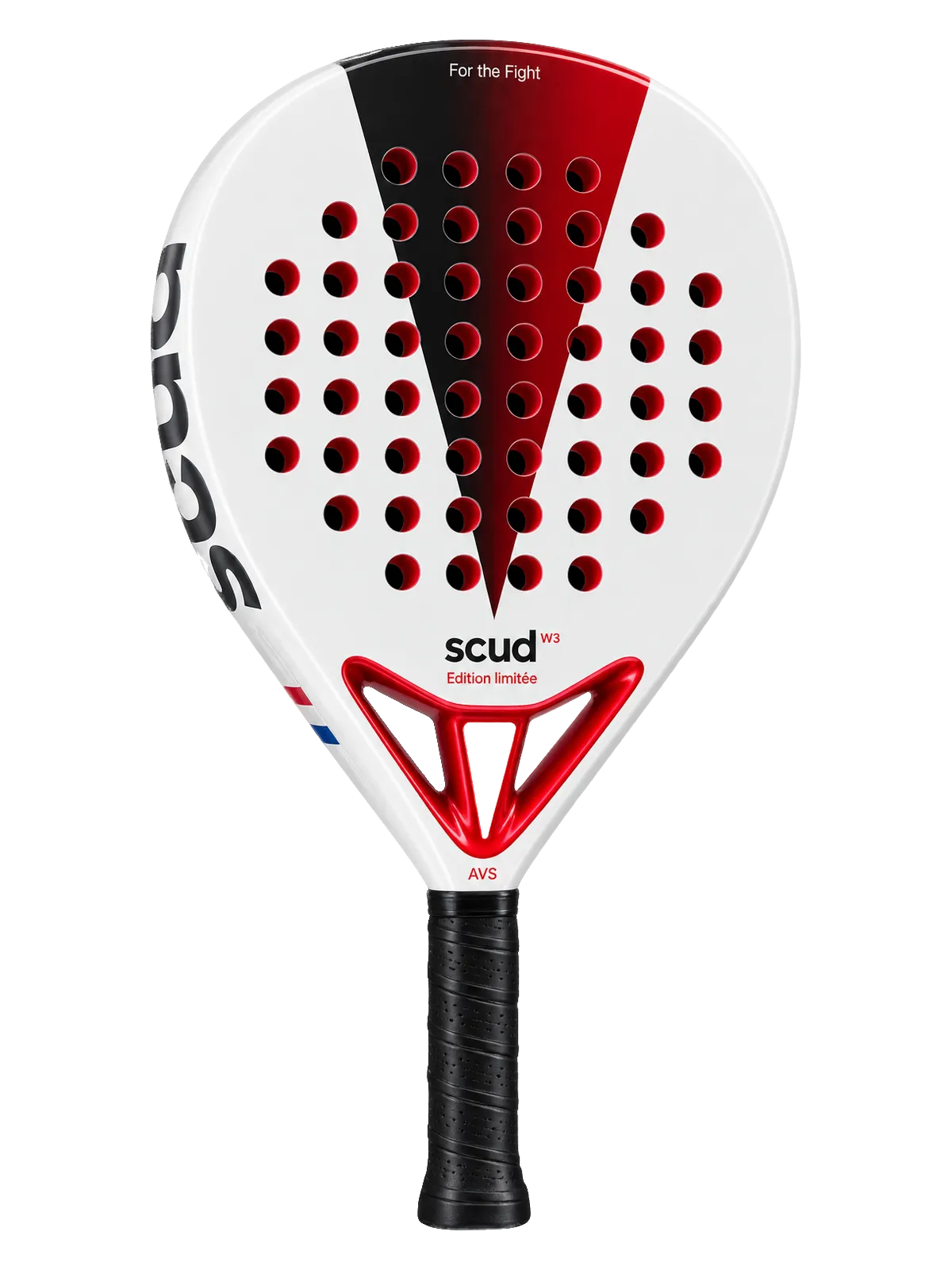
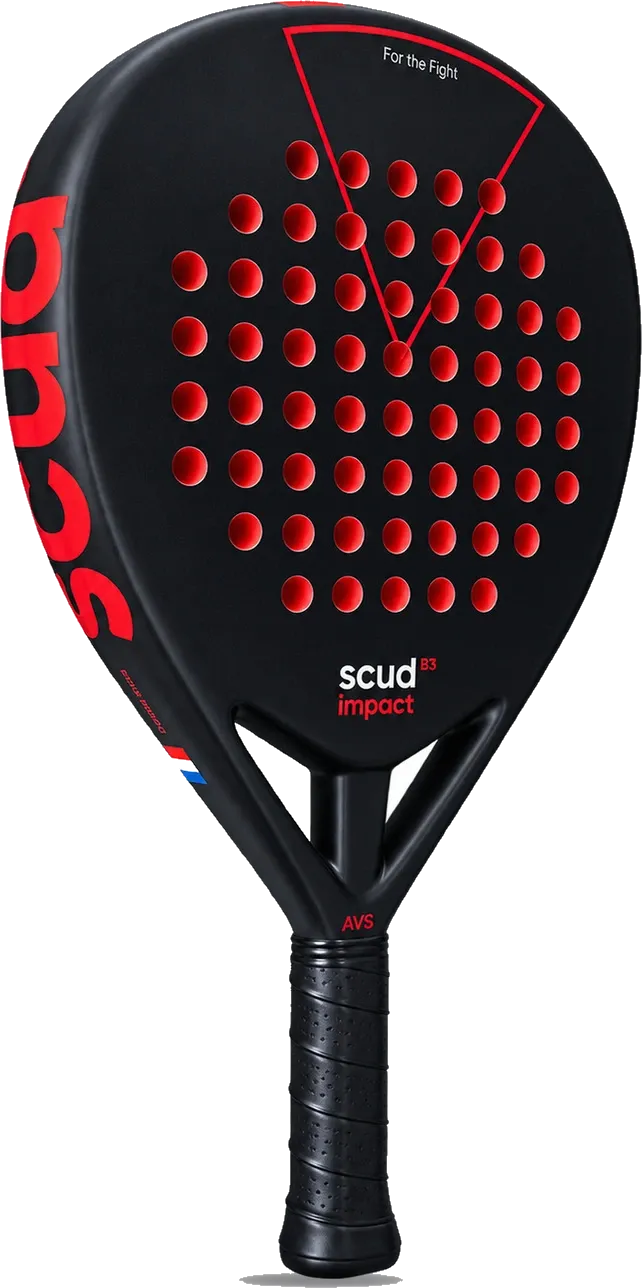
The smash is the shot where the racket’s power matters most. A high balance and a diamond shape create a lever effect that accelerates the ball without forcing the arm; a firm foam returns the energy instead of absorbing it. The SCUD Black Impact B3, with 18K carbon, EVA Hard Power foam and a diamond shape, is built for this shot, and its AVS anti-vibration system filters the jolts from such a direct frame. The SCUD Mexique M1 keeps the diamond shape and high balance, with 12K carbon and a firm EVA foam that are a little more forgiving. To understand what shape changes on the smash, read our article on racket shapes, and our guide for advanced players.
In short
- Smash on a short lob, when you are under the ball, on your forehand side; otherwise, play a bandeja.
- Side-on, free hand towards the ball, contact as high as possible in front of you, pronation.
- The smash into the mesh is the safest: work on it first.
- The x3 goes out over the side glass (3 m), the x4 over the back (4 m).
- The x4 is always a winner; the x3 can be retrieved if off-court play is allowed.
Frequently asked questions
What is the difference between an x3 and an x4?
The x3 is a topspin smash that goes out over the side glass, three metres high. The x4 is a flat smash, hit close to the net, that goes out over the back of the court, four metres with the mesh.
Can you retrieve an x3?
Yes, if off-court play is allowed: the defender goes out through the door and returns the ball before its second bounce. A ball that goes out over the back, like an x4, cannot be retrieved.
Why do my smashes come back off the glass?
Because they go down the middle, with no angle or spin. The back glass sends the ball back. Aim for the side mesh with a flat, angled smash, or for your opponent’s feet.
Do you need to jump to smash?
Not necessarily. Jumping helps you hit the ball higher, but a well-placed smash with both feet on the ground is more accurate. On a lob that pushes you back, choose the bandeja over a jumping smash off balance.
Which racket for hitting x3s?
A racket with high balance, a diamond shape and a rough surface for spin helps a lot. But the x3 is above all a matter of technique: without brushing from low to high, no racket will send the ball out.
The smash concludes this first series of technique guides. To choose the racket that will go with your game, browse our rackets or download our free guide to choosing a racket.