Contents — 13 parts
- Padel and tennis: the differences at a glance
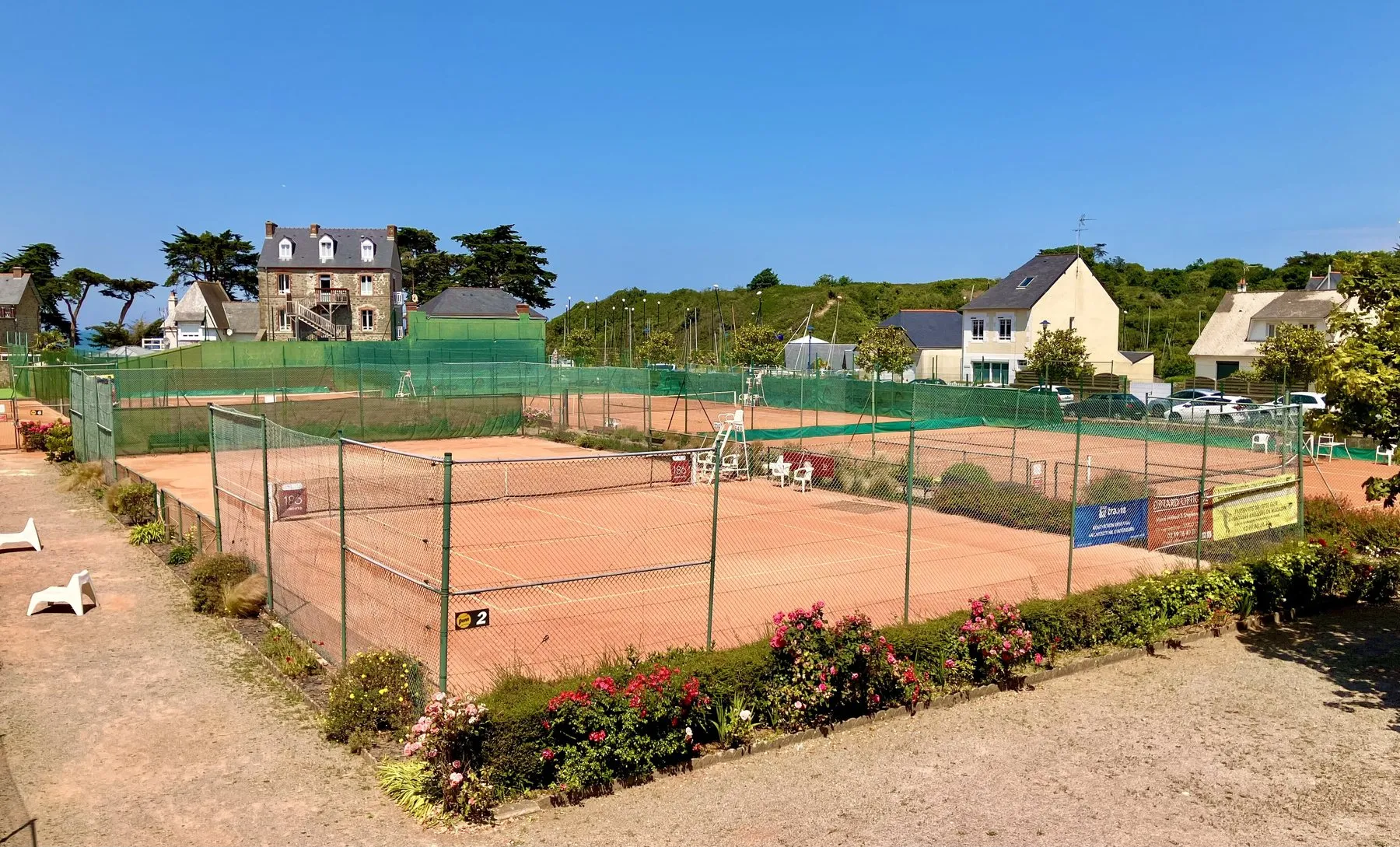
- The court: 200 m² enclosed versus nearly 670 m² open
- The rules: what really changes
- The racket and the ball
- Which is easier to learn?
- Which is cheaper?
- Fitness and injuries
- The atmosphere: social sport versus duel
- Padel or tennis: which one is for you?
- Switching from tennis to padel (and vice versa)
- Why not both?
- In summary
- Frequently asked questions
Padel or tennis? Both are played with a racket, a yellow ball and a net, both are scored 15, 30, 40, and they increasingly share the same clubs. Yet they are two very different experiences: a court three times smaller and enclosed by walls, an underarm serve, four players instead of two, and a way of winning the point that has almost nothing in common.
This comparison takes the differences one by one, from the court to the budget, from learning to atmosphere, using the rules of both international federations and real prices. By the end, you will know which one suits you, and why many players end up playing both.
Before you pick a side, look at the match in numbers: our video pits the two sports against each other over seven rounds, from player numbers to square metres.
Padel and tennis: the differences at a glance
| Tennis | Padel | |
|---|---|---|
| Court | 23.77 × 10.97 m for doubles, open | 20 × 10 m, enclosed by glass and mesh |
| Players | Singles (1 v 1) or doubles | Almost always doubles (2 v 2) |
| Racket | Strung frame, up to 73.66 cm | Solid, perforated face, 45.5 cm maximum, wrist strap compulsory |
| Serve | Overhead, without a bounce | Underarm, below the waist, after a bounce |
| Walls | None: a ball that goes out is lost | The ball can be played after it bounces off the glass |
| Scoring | 15, 30, 40, game; sets of 6 games | The same, with a golden point or Star Point depending on the tournament |
| Net | 91.4 cm at the centre | 88 cm at the centre |
| Price of an hour in Paris (municipal) | €12 outdoors, €20 indoors | €20, split between four |
| Typical profile in France | 45% of licence holders are under 18 | Mostly adults aged 35 to 55 |
The court: 200 m² enclosed versus nearly 670 m² open
This is the difference that drives all the others. A padel court measures 20 metres by 10, or 200 m², walls included. A doubles tennis court measures 23.77 by 10.97 metres, but you have to add the run-off around it: with the space recommended by the International Tennis Federation, its footprint reaches about 36.57 by 18.29 metres, nearly 670 m².
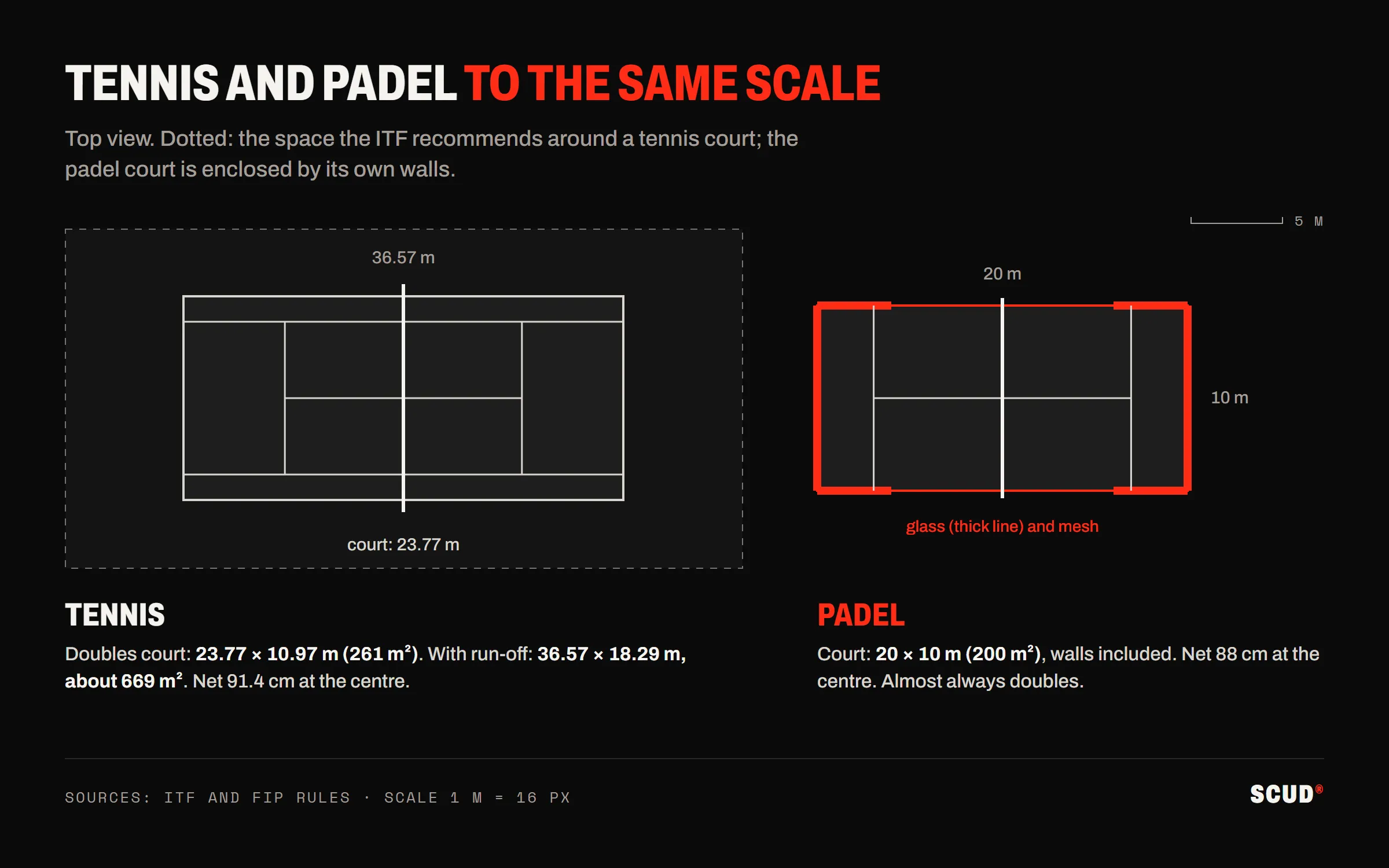
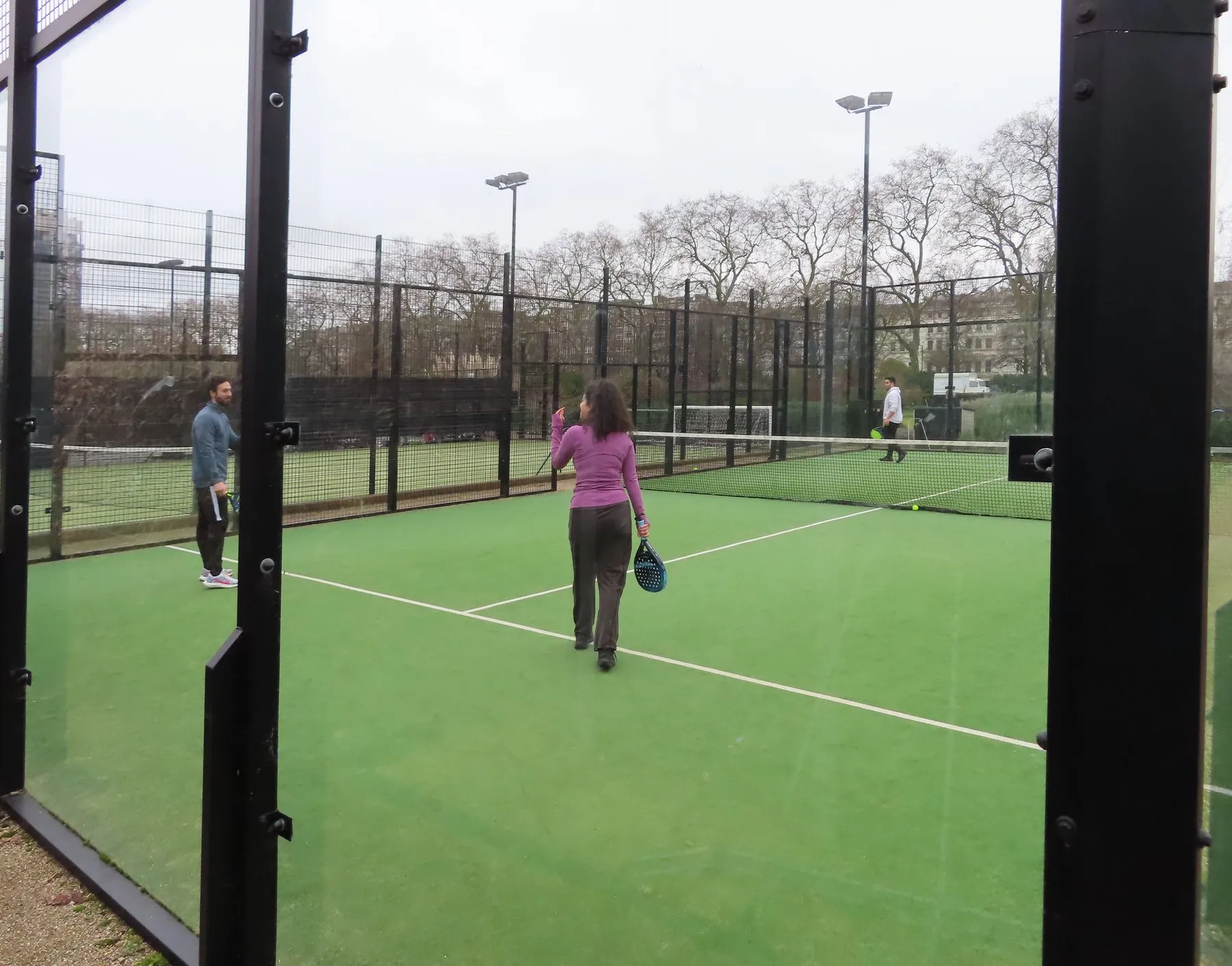
This smaller, enclosed court changes the game in three ways:
- The ball comes back. In tennis, a ball that gets past you is lost. In padel, after bouncing on the ground, it can hit the glass and come back: you get a second chance, and rallies last longer.
- You run shorter distances, but more often. Movements are short and repeated: a few side steps, a move up to the net, a retreat towards the glass.
- You play as a team. With four players on 200 m², each covers their own half of the court. Communication with your partner matters as much as your forehand.
The rules: what really changes
Scoring is the same in both sports: 15, 30, 40, game, then sets of six games. The first rule that surprises a tennis player is the serve. In padel, it is underarm: you let the ball bounce behind the service line and hit it below the waist, diagonally, with two attempts as in tennis. No more cannonball serves: in padel, the serve is there to start the point, rarely to win it.
The second is the walls. The ball must first bounce on the ground on the opponents’ side; it can then hit the glass, and you can play it after that rebound. If it hits the opponents’ glass directly without bouncing on the ground, it is a fault. The mesh follows slightly different rules. We explain all of this in padel rules for beginners.
One last nuance: at 40-40, many padel tournaments play a golden point instead of advantage, and since 2026 the professional tour has applied the Star Point. In recreational play, traditional advantage is still common.
The racket and the ball
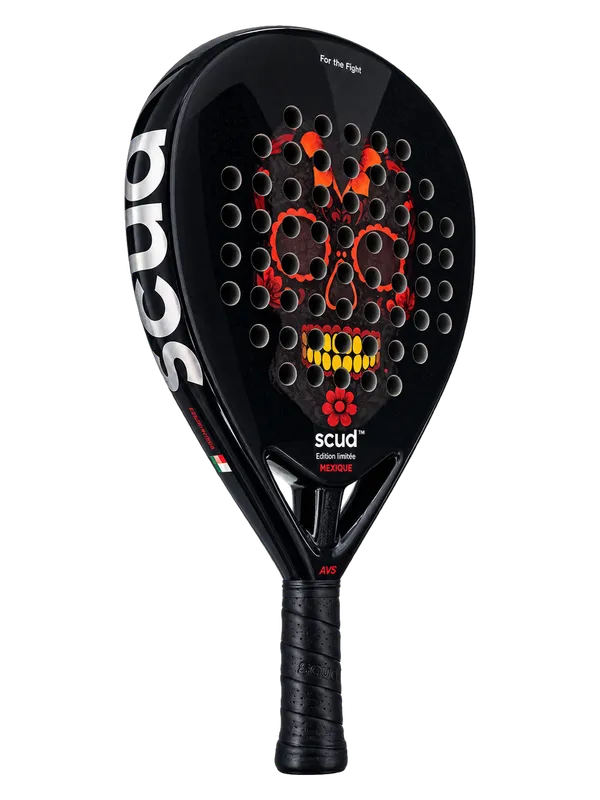
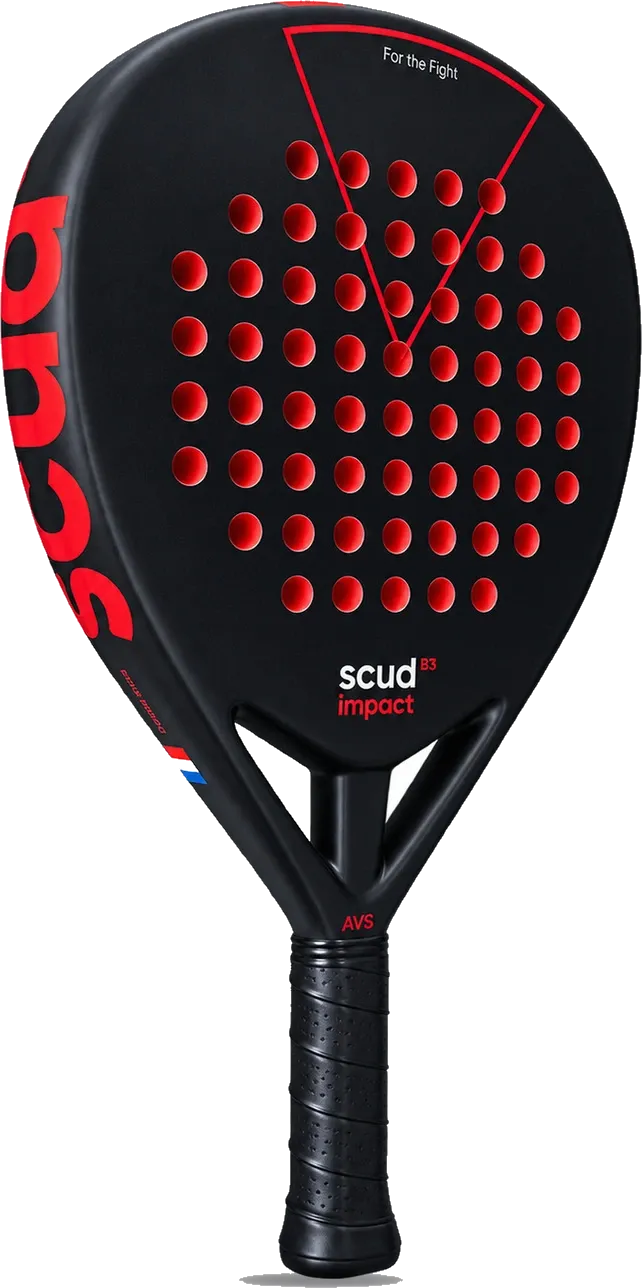
A tennis racket is a hollow frame fitted with strings, up to 73.66 cm long; it is the strings that send the ball back, and their tension can be adjusted. A padel racket has no strings: it has a solid, perforated face, two carbon or fibreglass skins over a foam core, limited to 45.5 cm in length and 38 mm in thickness, with a compulsory wrist strap. Shorter, it is handled close to the body, almost like an extension of the hand.
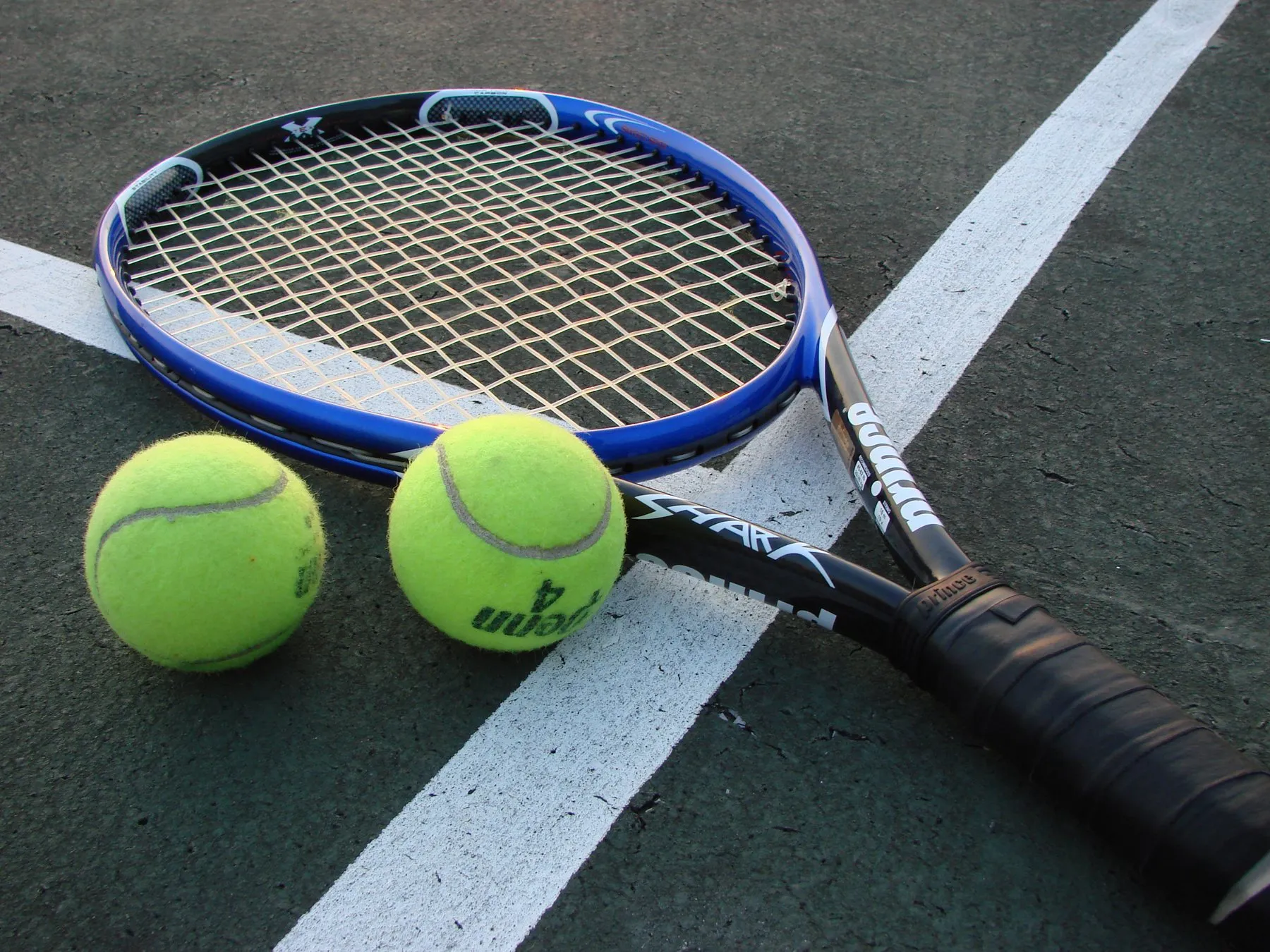
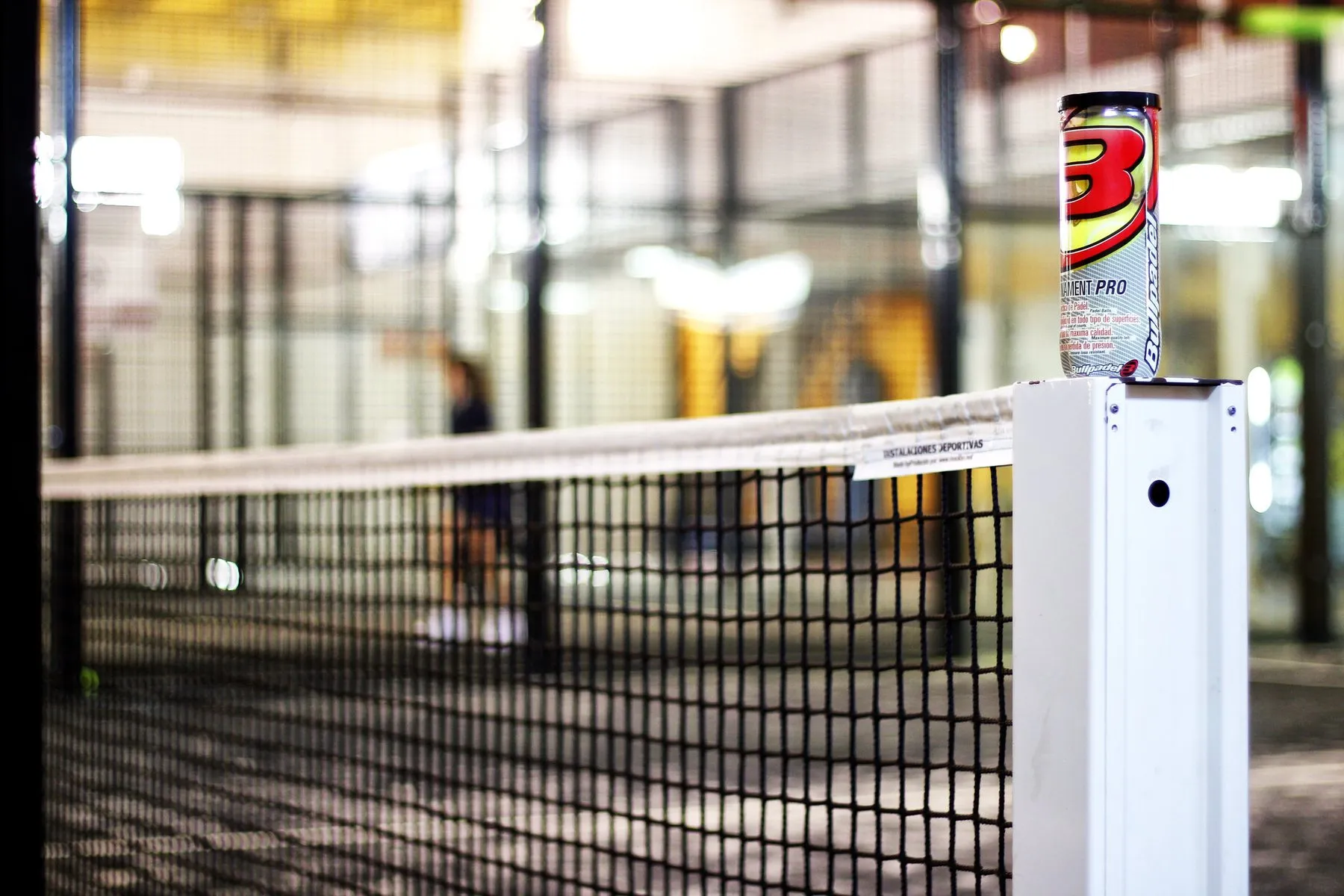
The balls look alike but are not the same: the padel ball is slightly smaller and less pressurised, so that its rebound off the glass stays playable. We compare the three objects (tennis, padel and pickleball) in rackets compared, and the balls in our guide to padel ball pressure and approval.
Which is easier to learn?
This is the most common argument in favour of padel: you are rallying from the first hour, whereas in tennis a beginner often spends their first session picking up balls. Let us be precise: no published study measures the learning time of the two sports. The only figure that comes close is from the 2025 Playtomic report: 92% of players come back after their first padel game.
Several padel rules genuinely make the early days easier:
- the underarm serve removes tennis’s most technical stroke;
- the short, stringless racket is more forgiving of off-centre hits;
- the walls prolong the rally rather than ending it;
- the small court and playing as a four reduce the distance to cover.
But the curve then reverses. Reading the ball as it comes off the glass, choosing between lob, bandeja and víbora, holding the net with your partner: progressing in padel takes as much work as in tennis. You get started faster; you do not master it faster. If you are taking it up, our learn padel course guides you step by step.
Which is cheaper?
Padel has a reputation for being expensive; per hour and per person, it is not so clear-cut. At the City of Paris municipal facilities, at full price, a padel court is hired for €20 an hour, or €5 per player for four. An outdoor tennis court costs €12 an hour: €6 per player in singles, €3 in doubles. An indoor court, at €20 an hour, works out at €10 per player in singles.
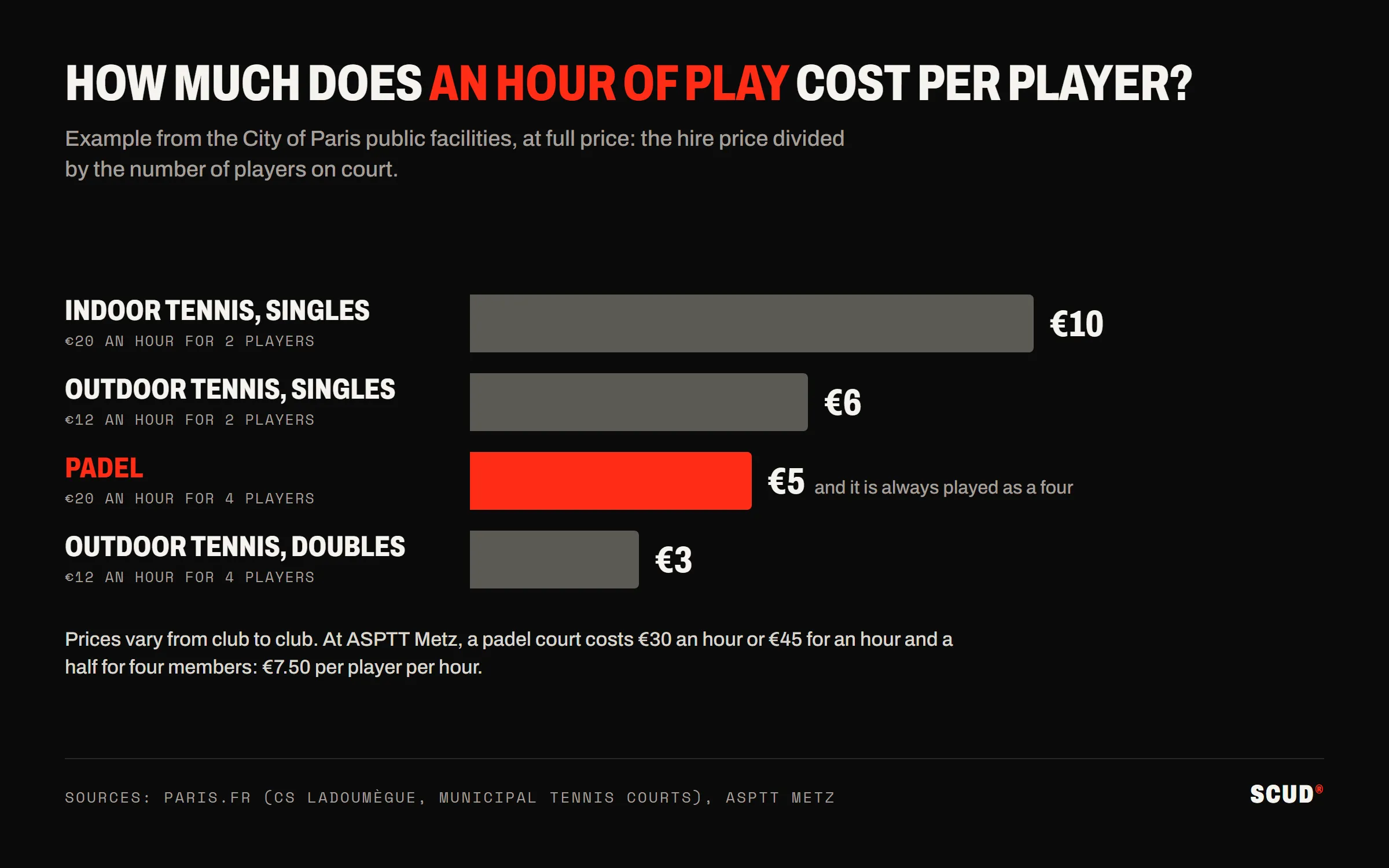
The business model, however, is different. Tennis is often played at a club, with an annual membership fee: around €300 at the Monaco clubs cited by Monaco Tribune. Padel is largely played per session, booked online at private centres, with no commitment. At a private club, expect to pay more than in Paris: at ASPTT Metz, a court costs €30 an hour for four members.
For equipment, a beginner’s padel racket and a tube of balls are enough; we go through the budgets in how much to spend on a padel racket. Shoes, on the other hand, deserve attention in both sports: a herringbone or hybrid sole for padel’s artificial grass, a sole suited to the surface for tennis.
Fitness and injuries
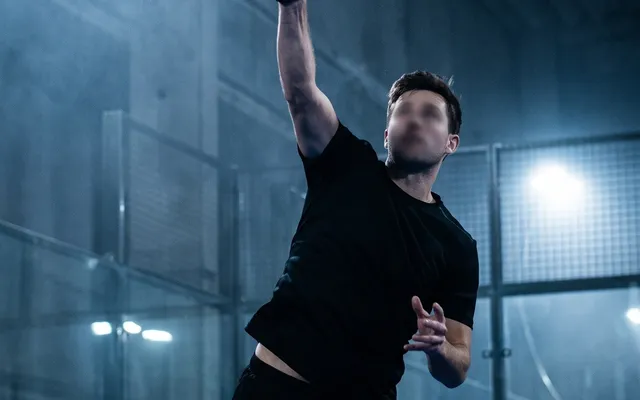
The two sports put different demands on the body. Tennis calls for long movements, full swings and an overhead serve that is very demanding on the shoulder. Padel strings together short, explosive movements, lots of volleys and smashes, on a surface where you constantly change direction.
In both cases, the vulnerable areas are similar: the elbow, which gave its name to tennis elbow but also affects padel players, the calf and ankle on changes of direction, and the shoulder on smashes. Padel has a reputation for being gentler on the joints; nothing proves this in general, and many injuries come from adults returning to sport and starting too fast. Two reads before you begin: our guide to tennis elbow in padel and our warm-up and injury prevention routine.
The atmosphere: social sport versus duel
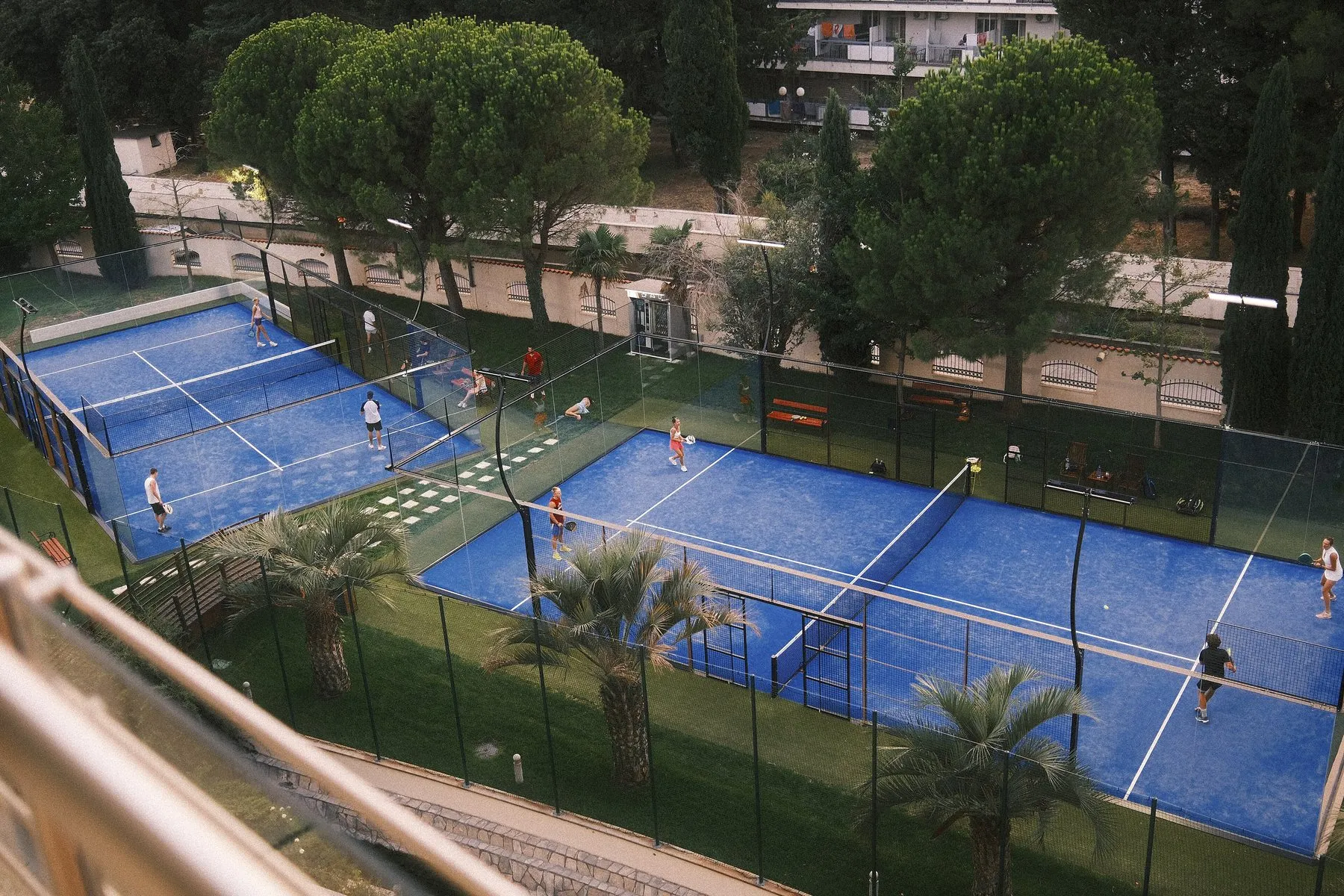
In padel, you always play as a four. Games are booked among friends or colleagues, rallies last, you laugh at balls that bounce back out off the glass, and the session often ends at the club bar. Gilles Moretton, president of the FFT (French Tennis Federation), describes it as a “very accessible, friendly sport that brings people together”.
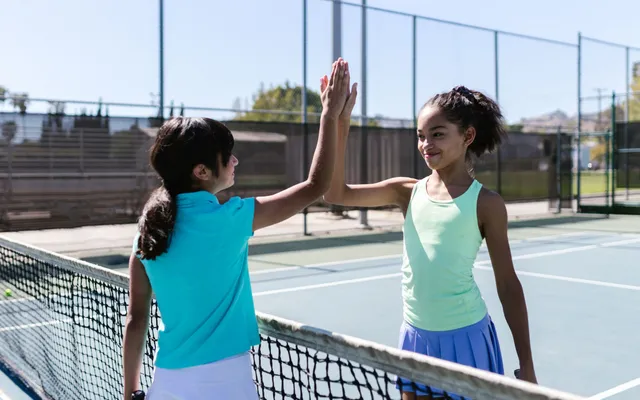
Tennis offers something else: the duel in singles, alone against an opponent, where everything depends on you. It is also a childhood sport: according to Gilles Moretton, 45% of tennis licence holders are under 18, compared with around 5% in padel, which is mostly played between the ages of 35 and 55. In competition, French padel remains very male: among ranked players in September 2026, only 12.7% are women, according to PadelSpeak, compared with around 30% women among FFT licence holders.
Padel or tennis: which one is for you?
| You… | Go for |
|---|---|
| want to rally from your very first session | Padel |
| love the duel, alone against an opponent | Tennis |
| are looking for an activity to share with friends or colleagues | Padel |
| want to enrol a child in a sports school | Tennis, highly structured from a very young age |
| have little time and want to book session by session | Padel |
| dream of serving hard and hitting from the baseline | Tennis |
| enjoy tactics, positioning and net play | Padel |
| already play tennis and are looking for a complement | Both: your volleys will serve you well |
Switching from tennis to padel (and vice versa)
A tennis player comes to padel with real assets: reading the trajectory, volleying, touch and fitness. They also come with reflexes that work against them: too big a swing, the urge to hit hard from the back, and the habit of playing the ball before the glass instead of letting it come back. The hardest part is not learning, it is unlearning. To understand padel’s own shots, read our guide bandeja, víbora, chiquita.
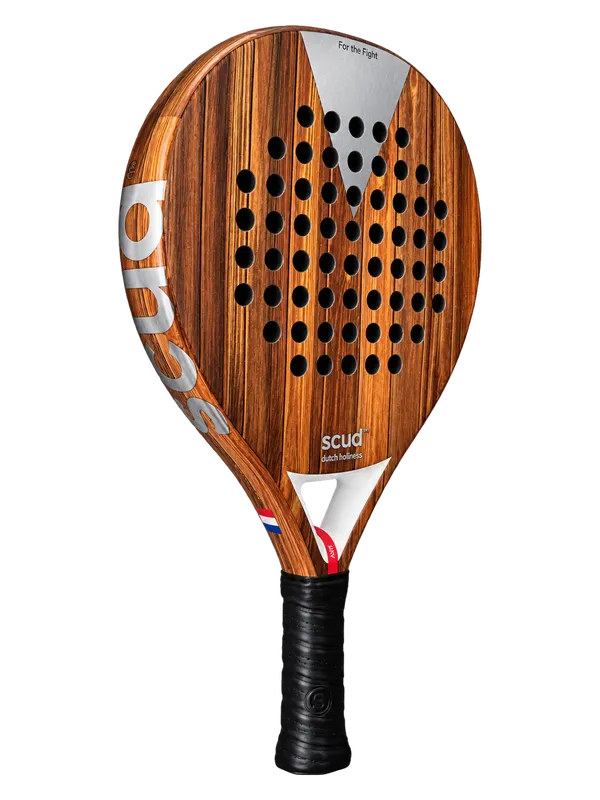
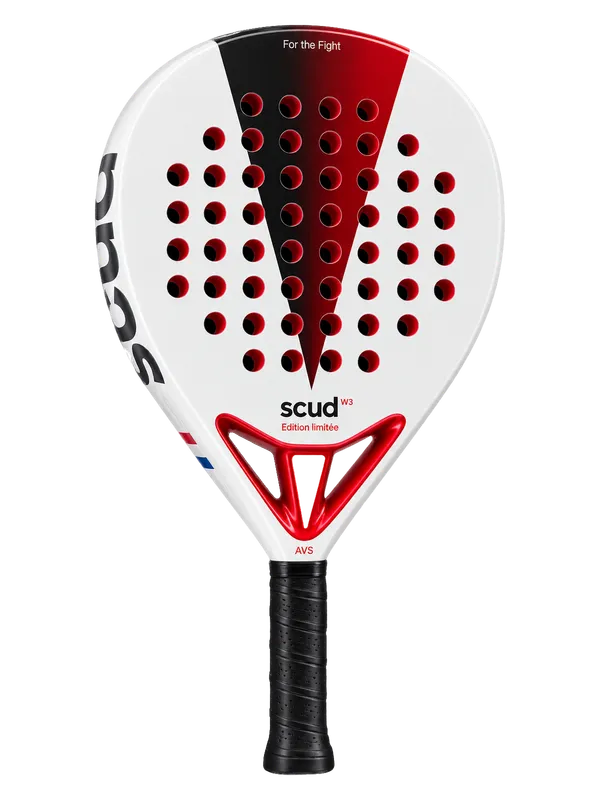
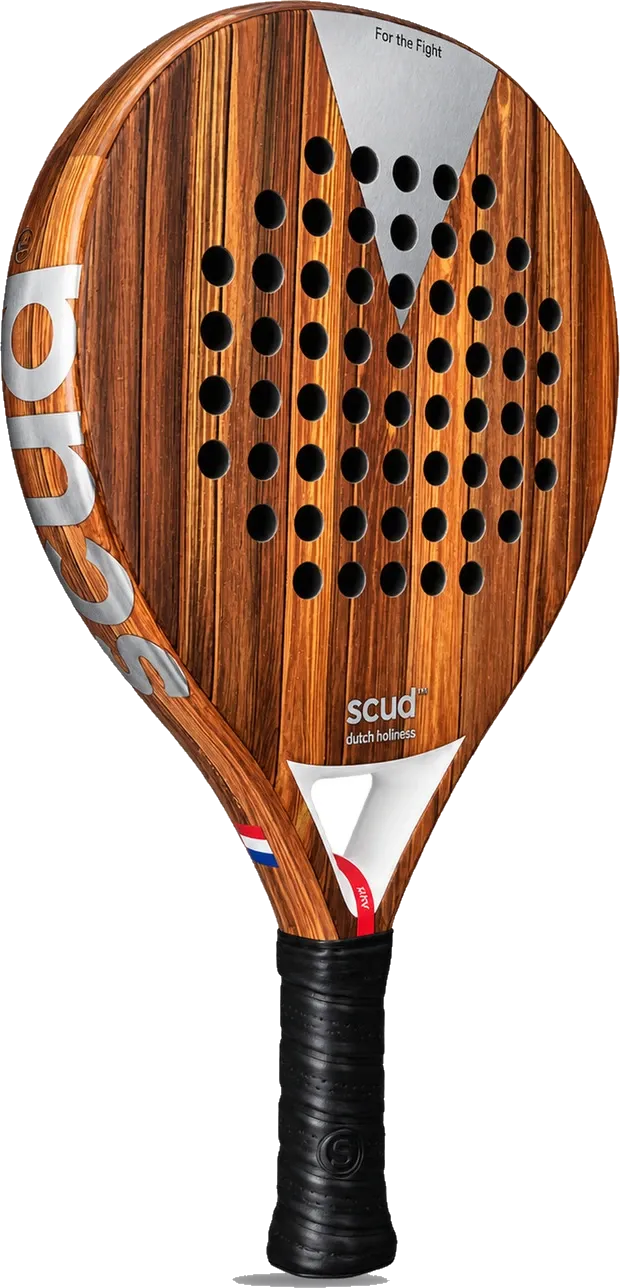
For the racket, we advise tennis players to start with a forgiving model with soft foam while they learn to control their power: a stiff racket turns high arm speed into balls flying long and vibrations in the elbow. In our range, the SCUD Wood W1, 12K carbon and fibreglass over soft EVA foam in a teardrop shape, is the best entry point; the SCUD White S3, a diamond shape over EVA Hard, is the next step, once you have mastered playing off the glass. Our guide to the best padel racket for beginners details these criteria.
The other way round, a padel player taking up tennis will have to learn the overhead serve and longer strokes, on a court where the ball does not come back. Their net play, on the other hand, will be a real advantage in doubles.
Why not both?
That is what more and more players do, and the federation has clearly understood it. In France, the FFT issues “multi-racket” licences covering tennis, padel, beach tennis and pickleball: more than a million licence holders had one in 2025. Many tennis clubs have added padel courts, and French tennis has never had so many licence holders.
The two sports are not at war as much as people say: we checked the figures in will padel kill tennis?. And if you are wondering why your club is replacing a court with padel courts, the answer is economic; we explain it in why clubs are turning tennis courts into padel courts.
In summary
- Padel is played by four on 20 × 10 m enclosed by glass; tennis in singles or doubles on an open court of about 670 m² including run-off.
- The score is the same; in padel the serve is underarm, after a bounce, and the ball can be played off the glass.
- Padel is easier to start (simple serve, short racket, walls) and just as demanding afterwards; no study measures the learning curve.
- In Paris, an hour of padel costs €5 per player, against €6 for outdoor tennis in singles and €3 in doubles.
- Padel is more social and adult, tennis more individual and younger; the two complement each other, and the FFT offers a joint licence.
Frequently asked questions
Is padel easier than tennis?
To start with, yes: the underarm serve, the short stringless racket and the walls that send the ball back let you rally from the very first session. To progress, no: reading balls off the glass and mastering padel’s own shots take as much work as tennis.
What is the difference between padel and tennis?
Padel is played in doubles on a 20 × 10 m court enclosed by glass, with a solid perforated racket and an underarm serve, and the ball can be played after it bounces off the walls. Tennis is played on a larger open court, with a strung racket and an overhead serve. Scoring is the same.
Is a tennis player good at padel?
They progress quickly thanks to their volley, touch and reading of the ball, but must rein in too big a swing and learn to let the ball come back off the glass. A forgiving racket with soft foam helps them control their shots at first.
Does padel cost more than tennis?
Not necessarily. In Paris, a padel court costs €20 an hour, or €5 per player for four, against €6 per player for an outdoor tennis court in singles. Tennis tends to involve an annual club membership, padel booking by the session.
Can you play padel with a tennis racket?
No. A tennis racket is too long for an enclosed court, its strings do not comply with the padel rules, and it has no wrist strap. You need a padel racket, solid and perforated, no longer than 45.5 cm.
Sources
- Rules of Padel
- ITF Rules of Tennis
- Padel court dimensions and size
- Vive le padel au CS Ladoumègue
- Tennis Henry de Montherlant : tarifs
- Tarifs padel 2024
- Gilles Moretton : le tennis français va bien et nos pratiques se développent fortement
- FFT : plus de 1 200 000 licenciés (tennis, padel, beach, pickleball, fauteuil)
- Global Padel Report 2025
- Classement FFT padel : combien de joueuses et de joueurs classés
- Le padel, une discipline incontournable pour relancer les clubs de tennis