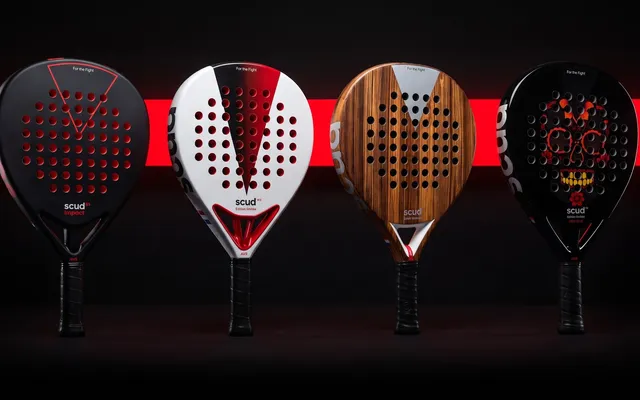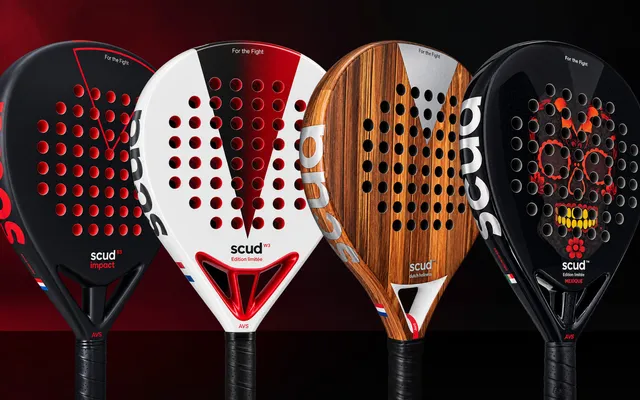
The shape of a padel racket describes how the material is distributed inside a template the rules cap at 45.5 cm long, 26 cm wide and 38 mm thick. A round shape keeps the mass and the sweet spot in the centre, a teardrop moves them slightly upwards, a diamond pushes them into the head. Shifting a few centimetres of material changes the leverage at impact, the tolerance on off-centre balls and how quickly the racket moves in the hand. Here is how to read the three silhouettes, and what each one changes shot by shot.
What shape actually moves
Manufacturers cannot enlarge the hitting surface: the International Padel Federation’s frame limits are the same for everyone. All they can do is move material around inside that envelope. A racket that widens at the top concentrates carbon, foam and resin far from the hand; a racket that rounds off keeps that material closer to the handle.
Two things follow mechanically. First, the centre of gravity moves: the higher the material, the more head-heavy the balance. Second, the sweet spot follows the material: the zone where the face responds best is where the structure is most stable, in other words at the heart of the mass. A shape is therefore not a cosmetic choice; it is a decision about which part of the racket is going to do the work.
To understand what a higher or lower mass changes in detail, we cover the mechanics in our article on padel racket weight and balance. Here we focus on the silhouette.
The round shape
The head is rounded and the widest point sits roughly in the middle of the face. The sweet spot is wide and central, the balance low or medium.
On court, a round racket gets out of the way. It turns quickly in the hand, which matters on fast volleys at the net and on reflex shots in defence. A ball taken two or three centimetres off centre still leaves the face properly, which forgives timing errors. In exchange, leverage is low: on a smash you have to generate all the speed yourself.
It is the shape of players who are starting out, of those who play rarely, and of a good number of experienced players who win through placement rather than hitting.
The teardrop shape
The widest point moves above the centre and the head widens gradually without becoming angular. The sweet spot rises by a few centimetres and stays fairly wide; the balance is medium, sometimes slightly high.
This is the most common compromise, and for good reason: the teardrop gives a little leverage to high shots — bandeja, vibora, smash — without sacrificing handling at the net or tolerance in defence. The intermediate player who is starting to come to the net and finish points finds a racket that works in both directions.
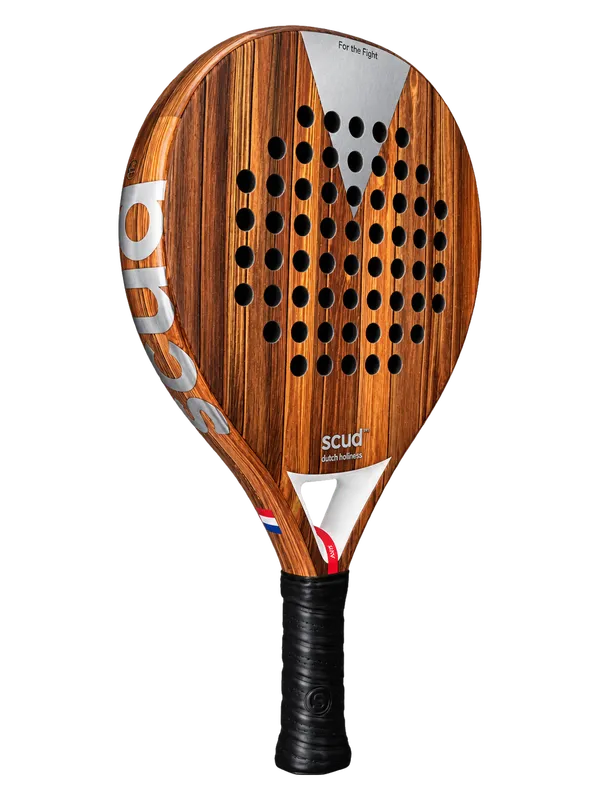
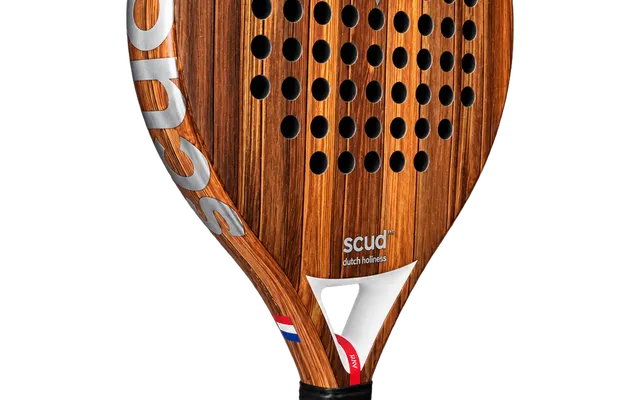
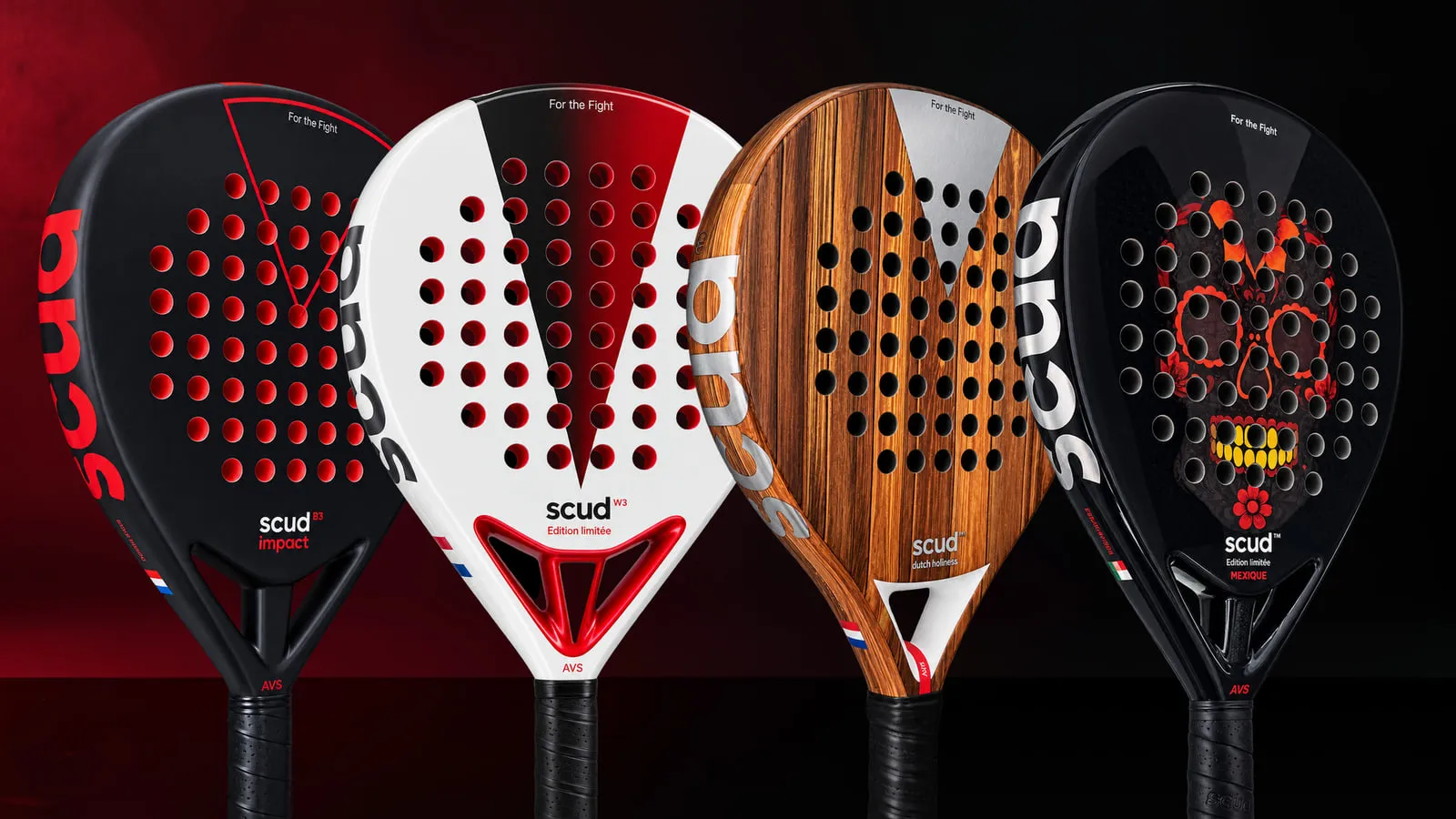
For us, it is the silhouette of the SCUD Wood S1: teardrop, 350 g, medium balance, soft EVA foam. The only racket in the range that is not a diamond.
The diamond shape
The widest point is at the very top of the face, the head forms sharp angles and the frame narrows towards the throat. The sweet spot is high and smaller, the balance head-heavy.
A diamond is a leverage machine. On a high ball, the mass arrives fast and far from the hand: the smash cracks, the vibora leaves with more speed, the attacking volley drives through the ball. The price is twofold. The racket moves more slowly, which you feel on reflex volleys and on fast balls at your feet. And the face forgives less: a ball taken below the sweet spot comes off dead and sends more vibration into the arm.
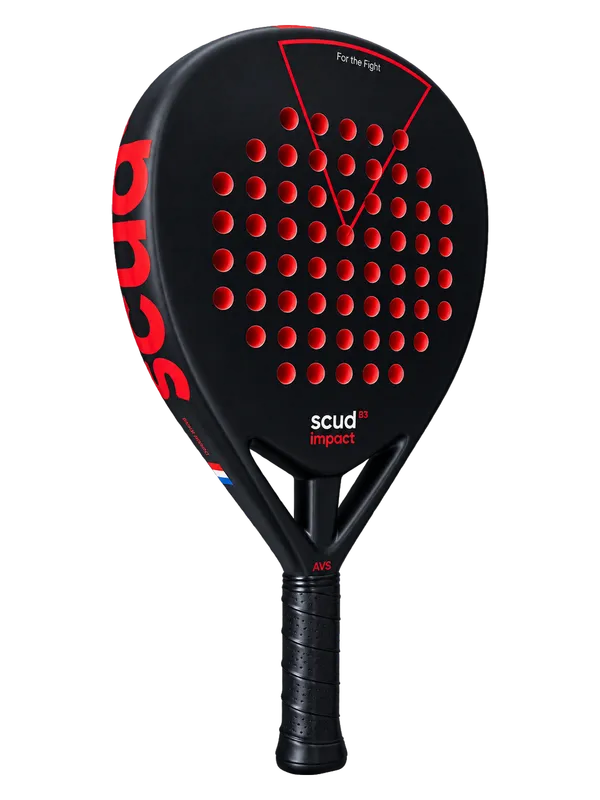
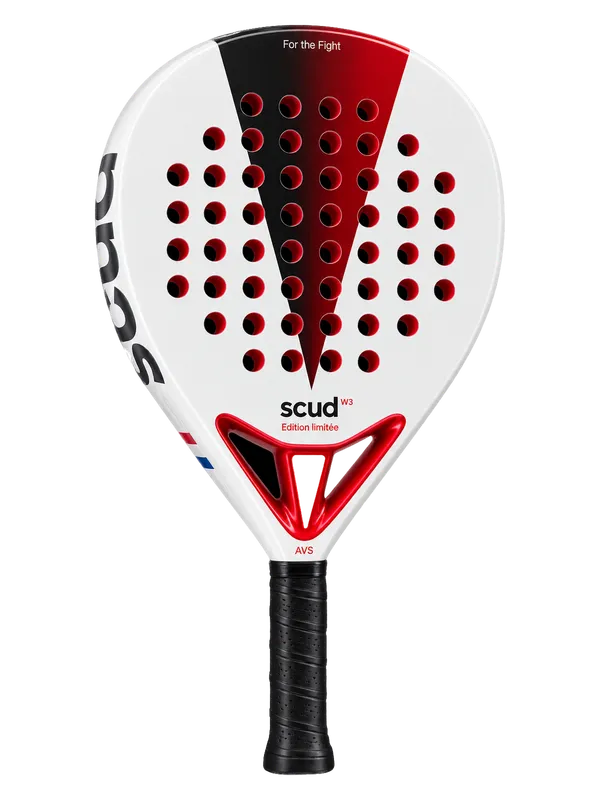
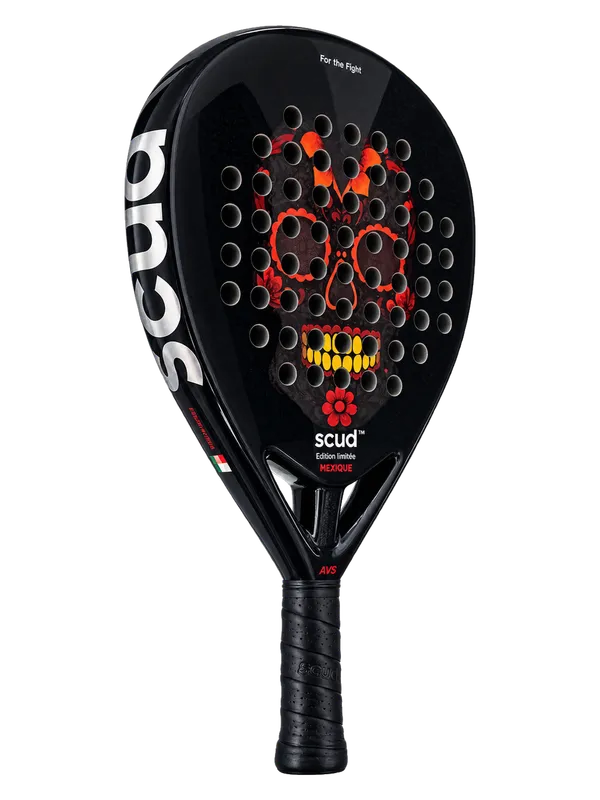
It is the shape of the attacking player who already has good arm speed and a clean strike. Our three head-heavy rackets — Black Impact B3, White S3 and Mexique M1 — are diamonds, which is why we recommend them from a solid intermediate level upwards.
Shot by shot: what shape changes
| Shot | Round | Teardrop | Diamond |
|---|---|---|---|
| Net volley | Very fast, forgiving | Fast | Slower, but more penetrating |
| Bandeja | Easy to place | Good compromise | Powerful, needs timing |
| Vibora | Little natural speed | Decent speed | Maximum speed |
| Smash off the glass | Big effort | Helped by leverage | Maximum leverage |
| Back-wall shot | Very comfortable | Comfortable | Needs precise centring |
| Defence against fast balls | The easiest | Easy | The most demanding |
The table shows something product sheets rarely say: no shape is better on every shot. The diamond wins points overhead and gives a little away everywhere else; the round does the opposite. The teardrop spreads the compromises out.
Recognising a shape on a product sheet or in hand
Some brands name the shape, others do not. Three markers let you find it without a label.
- The widest point. Lay the racket flat and find the widest part of the face. In the middle: round. Above the middle, with edges that curve: teardrop. At the very top, with sharp angles: diamond.
- The stated balance. A round shape almost always comes with a low or medium balance, a diamond with a high one. A sheet that reads “diamond, low balance” deserves a second look.
- The actual balance point. Laid across a finger, the racket tips at a point measured from the butt of the handle. The further that point is from the hand, the more material the shape concentrates in the head.
Our product sheets show the three figures side by side: shape, weight, balance. It is the set that describes behaviour, never a single figure.
One teardrop and three diamonds: the SCUD choice
We designed four rackets and only two silhouettes. That is not an oversight.
The Wood S1 is our control and comfort racket. Its teardrop shape, 350 g and soft EVA foam make it the most forgiving in the range: the one we recommend to the regular player who is making their stroke reliable, and to the advanced player who builds points from defence and at the net. It belongs to our control collection.
The three diamonds share the same geometry and the same 365 g, but not the same shell. The Black Impact B3 in 18K carbon is the driest leverage; the White S3 keeps the diamond but softens the response with a more forgiving 12K carbon; the Mexique M1, available in January 2027, pairs 12K carbon with a firm EVA foam. The diamond sets where the racket strikes; the weave and the foam set how it responds. We explain that second half in 12K or 18K carbon: what changes on court?.
On all of them, the AVS anti-vibration system and the honeycomb silicone handle are there precisely to make the diamond shape more liveable for the arm than it would be on its own.
In short
- Shape describes where the material sits inside a regulatory template that is identical for every racket.
- Round: wide, central sweet spot, low balance, maximum handling and tolerance.
- Teardrop: slightly raised sweet spot, medium balance, the most versatile compromise.
- Diamond: high, smaller sweet spot, head-heavy balance, maximum leverage on high shots, higher technical demand.
- Always read shape, weight and balance together: that trio describes real behaviour.
Frequently asked questions
Is a diamond racket necessarily more powerful?
It offers more leverage on high balls. If arm speed and centring do not follow, that leverage produces nothing more than a dead ball and vibrations. Power comes from the player; the shape amplifies it.
Can you start out with a teardrop?
Yes. It is even a good starting point if you play regularly: tolerance remains good and you will not need to change racket as soon as you start coming to the net. We go into this choice in our guide to choosing a padel racket as a beginner.
Is the round shape only for beginners?
No. Many experienced players, particularly left-side players who defend and build points, prefer a round shape for its hand speed and consistency.
Why does SCUD not offer a round racket?
We chose to cover control with a very forgiving teardrop, the Wood S1, rather than a round. It offers most of the tolerance of a round shape with a little more help on high shots.
Does shape change the size of the sweet spot?
Yes, and its position. The higher the material moves towards the head, the higher and tighter the sweet spot becomes. A round shape gives the widest zone, a diamond the highest.
If you are still hesitating between teardrop and diamond, download our free guide to choosing a racket or browse all our rackets directly: every product sheet shows shape, weight and balance side by side.