On a padel racket spec sheet, the line “12K carbon” or “18K carbon” almost always comes first. Many players read it as a simple scale: the bigger the number, the better the racket. It is a comfortable reading, but a wrong one. The number describes a characteristic of the fabric, not a level of quality — and two rackets showing the same “K” can behave very differently. Here is what these numbers actually mean and, above all, what they change ball after ball.
What “K” stands for
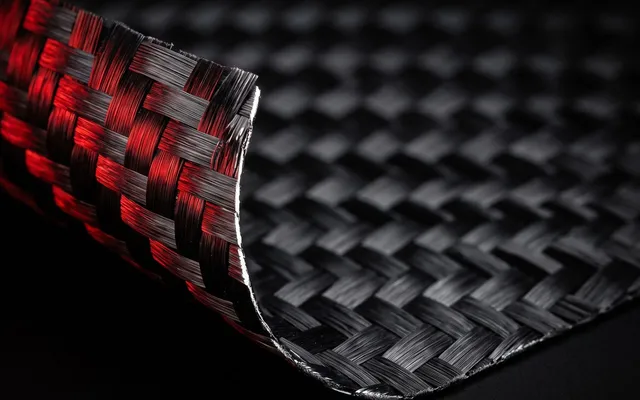
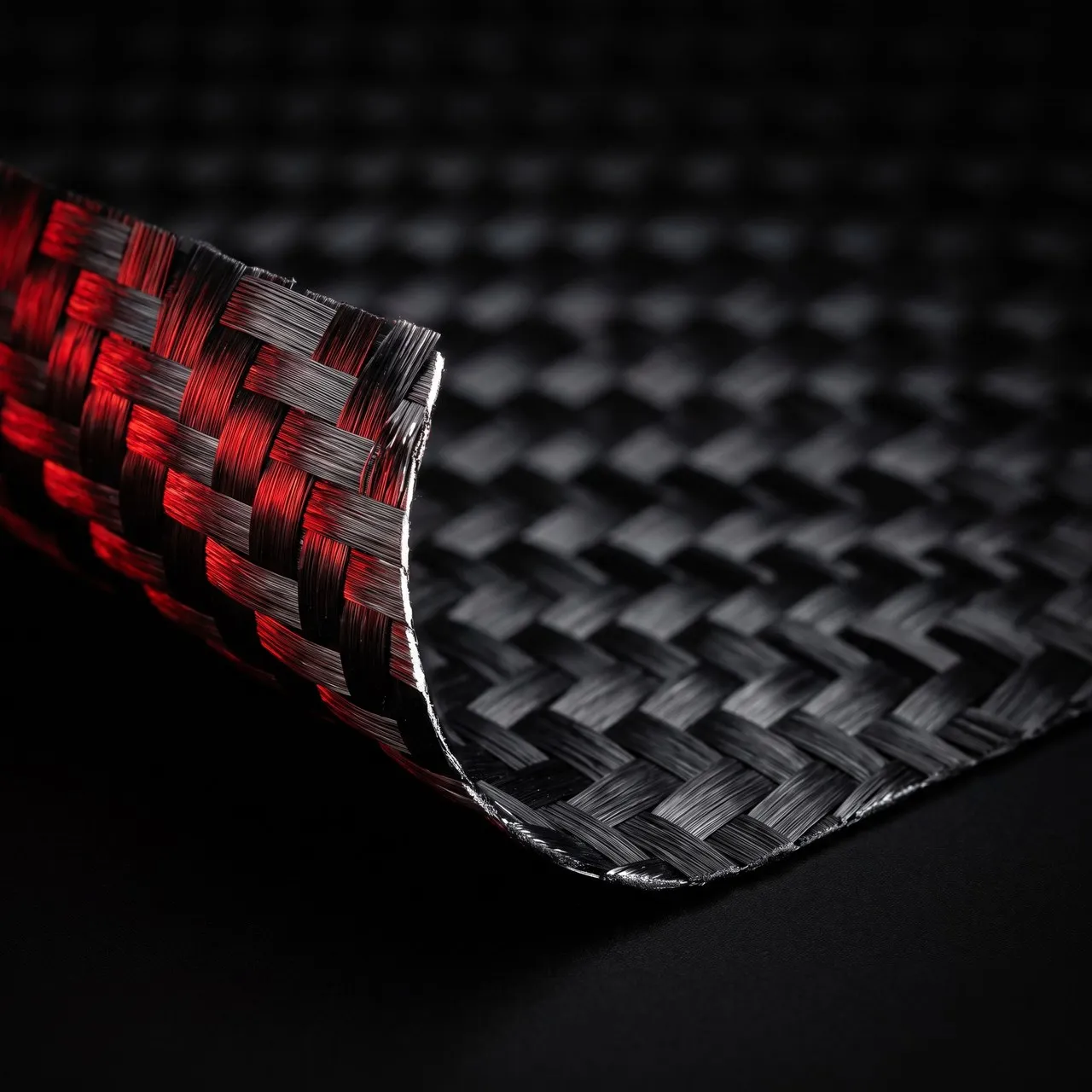
The carbon used in a racket does not arrive as a sheet but as a fabric. That fabric is made of tows, and each tow is a bundle of extremely fine carbon filaments — each just a few microns across.
The “K” stands for kilo, one thousand. A 12K tow therefore contains around 12,000 filaments, an 18K tow around 18,000. With the same weave pattern, an 18K tow is thicker and wider than a 12K tow: the weave looks visibly coarser, the checks are larger, and more material is laid down per layer.
So it is not an indicator of purity, range or price. It is a geometric fact about how the fibre is organised.
From fabric to face
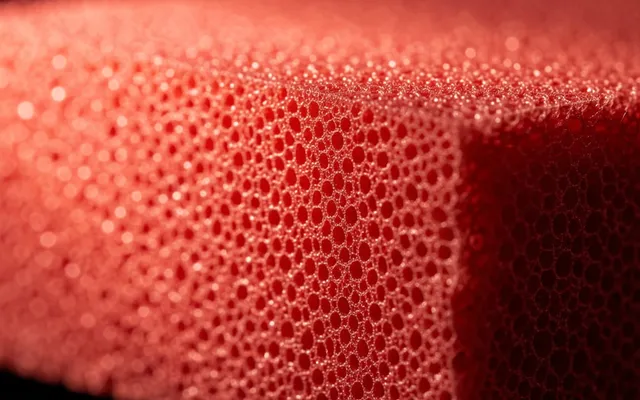
A padel racket frame is a stack. Several plies of fabric — carbon, sometimes fibreglass — are laid around the foam core, impregnated with resin, then cured under pressure in a mould. The final stiffness of the face depends on at least four things:
- the type of fabric (12K, 18K, fibreglass, blends);
- the number of plies stacked and their orientation;
- the resin and how it is cured;
- the foam core underneath.
The weave is therefore only one ingredient out of four. An 18K racket with few plies can easily be softer than a generously laminated 12K. That is why you should never compare two brands on the number alone: you would be comparing a quarter of the recipe.
What it changes at impact
Within the same range, however, the comparison is legitimate — because everything else is built the same way. And there, a clear difference appears.
A woven surface with more material in it deforms less at impact. The ball spends less time on the face, and the energy leaves faster and straighter. This is what players describe as a “crisp”, “direct” ball that “pops” off the racket. On a smash, that stiffness is a clear advantage: less energy is lost deforming the frame, more speed goes towards the floor.
A finer weave, by contrast, lets the face flex more. The ball sinks in, stays in contact a moment longer, and the player feels what we call touch. That softness is precious for the finesse shots: drop shots, off-the-glass shots, placed bandejas, counter-attacks from defence. It makes the racket more forgiving when the ball is struck slightly off-centre.
Stiff does not mean better
A stiff racket does not automatically make anyone more powerful. It returns more of the energy you give it. If your arm speed is modest or your smash technique is not yet stable, a very stiff frame will mostly give you two things: balls flying long and vibrations travelling up your forearm.
A softer frame works the other way round: it adds a little of its own rebound to yours and is more forgiving of impacts outside the sweet spot. Many intermediate players progress faster with a soft frame than with a stiff “top-of-the-range” frame they cannot load properly.
In short
| 12K carbon | 18K carbon | |
|---|---|---|
| Tows | ~12,000 filaments | ~18,000 filaments |
| Look of the weave | Fine pattern | Wide, more visible pattern |
| Deformation at impact | Greater | Smaller |
| Feel | Touch, “carried” ball | Crisp, direct rebound |
| Strength | Control, forgiveness, drop shots | Hitting power, smash |
| Requires | Little arm speed | A clean, committed strike |
The core matters as much as the fibre
A common mistake is to look only at the shell. Beneath the fabric sits the foam, and its density weighs at least as much in the final feel. 18K carbon laid over a soft foam will give a less brittle racket than 12K carbon over a very hard foam.
That is why we always state both pieces of information on our product pages, rather than pushing the weave number alone.
How this plays out in the SCUD range
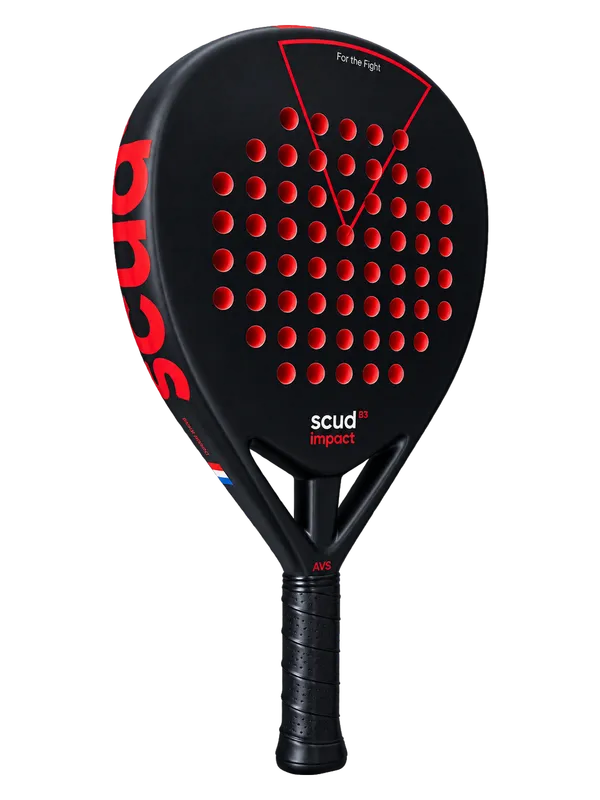
The SCUD Black Impact B3 is our 18K carbon model. It is a deliberate choice: it is designed for attacking players looking for the most direct rebound possible. Its EVA Hard Power foam and AVS anti-vibration system work with that stiffness — one to return the energy of the strike, the other to filter the jolts that travel up the arm. It is designed in France and finished with hand-applied sanding.
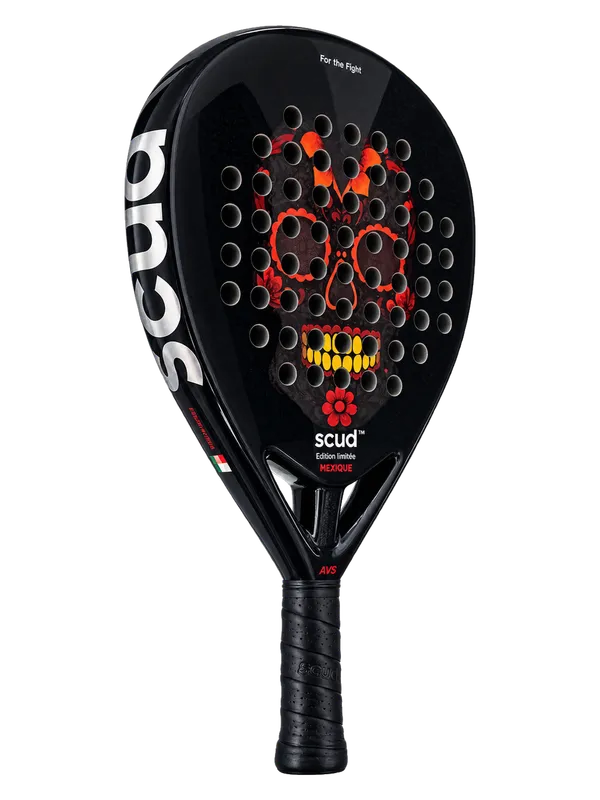
The SCUD Mexique M1 illustrates the other approach. 12K carbon, firm EVA foam, AVS system, hand-applied sanding and a Día de los Muertos artwork that does not go unnoticed: same diamond shape and same weight as the B3, but a more forgiving weave, for a firm touch that keeps command of the ball. It is the racket of impact and reactivity, without the crispness of 18K. It will be available in January 2027.
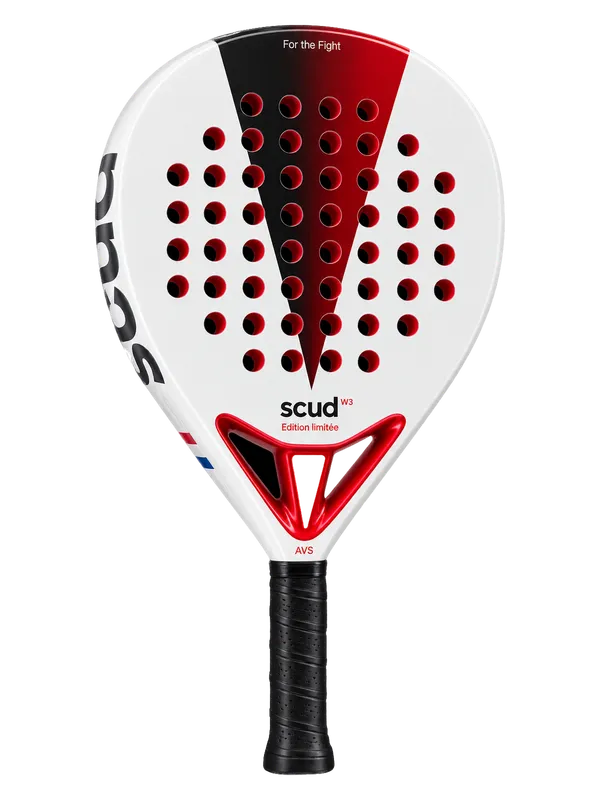
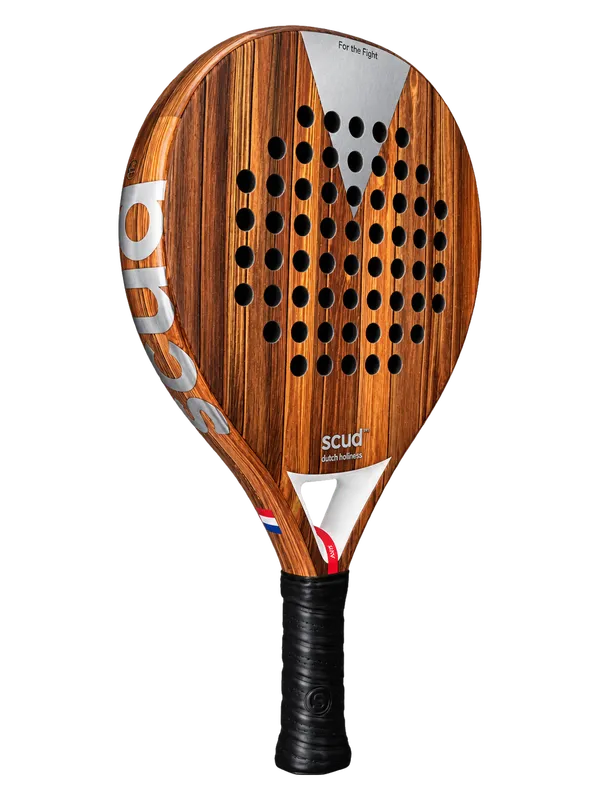
The White S3 and the Wood S1 are also in 12K carbon, each with its own stance: the same EVA Hard Power foam as the B3 for the former, a carbon and fibreglass shell over soft EVA for the latter. The full comparison is on the all rackets page, and you can filter directly by playing intent with the power and control collections.
Three myths to put away
“18K is better-quality carbon.” No. It is a different weave, not a superior fibre. Both fabrics come out of the same spinnerets.
“The stiffer it is, the faster it goes.” Only if you supply the energy. On a soft strike, a stiff frame compensates for nothing.
“The number is enough to compare two brands.” The number of plies, the resin, the mould and the core almost never appear on spec sheets. Two 18K rackets from different brands can behave in opposite ways.
So the right question is not “12K or 18K?” but “what feel do I want at impact, and how much arm speed can I actually supply today?”. Answer that one, and the weave number goes back to being what it should always have been: one technical detail among others.