A lightweight padel racket generally weighs between 340 and 355 g, against 360 to 375 g for most models. It swings faster, tires the shoulder and wrist less, and suits anyone who plays a lot at the net, is coming back from an arm niggle, or simply prefers hand speed to hitting mass. It is neither “a women’s racket” nor a lesser racket: it is a setting like any other, with its strengths and its limits. Here is how to read it without letting the labels do the choosing.
The “women’s racket” label describes nothing
Many brands sell a “women’s” range: pastel colours, reduced weight, sometimes a different price. We do not, for a simple reason: gender is not a technical parameter. What determines the weight that suits you is your build, your arm speed, how often you play and the condition of your joints. A woman who trains three times a week with a committed swing will often be better off playing heavier than an occasional male player who has just arrived from football.
Filing lightweight rackets in a separate aisle has two unfortunate effects: women who would need 365 g end up with a model too light for their swing, and men who would benefit from 345 g do not dare pick a model that is “obviously” not meant for them. We prefer to talk about weight, balance and playing style. This article is therefore written for anyone who wants less mass in hand, whatever the reason.
Three myths, and what they are worth
“A light racket is less powerful”
True at equal balance, false in practice. The power of a shot depends on the speed of the racket head and the mass behind the ball. A light racket loses a little of the second but gains on the first: a well-timed smash with 350 g often leaves faster than a smash slowed down by 375 g the player cannot quite handle. Balance does the rest, as we explain in padel racket weight and balance.
“A light racket is for beginners”
No. Many experienced players choose less weight because their game is built on hand speed, volleys and counter-attacks. A light racket actually demands something beginners do not always have: a complete swing that draws power from the legs and the rotation rather than from the mass of the tool.
“A light racket is fragile”
False. A 350 g model built with 12K carbon, fibreglass and a properly laminated frame withstands impacts just like a 370 g one. What breaks a racket is contact with the glass and the floor, not fifteen grams less; our guide to looking after your padel racket explains how to avoid them.
The real differences on court
What a lightweight racket actually changes, you feel from the first rally.
At the net. The racket reaches the ball sooner. On a reflex volley, a block or a counter-attack, those few hundredths of a second separate a ball returned from a ball endured.
Over time. The shoulder and wrist carry every gram hundreds of times per match. After an hour and a half, the difference between 350 and 370 g shows in the precision of the last games.
In defence. A lob or a shot off the glass needs a wide, relaxed swing. A light racket makes that relaxation easier and forgives an imperfect body position more readily.
Against heavy balls. This is the limit. Facing an opponent who hits hard, a light racket gets pushed around more at impact: the face twists a little more in the hand on an off-centre ball. A heavier model “absorbs” without effort where the light one asks for a well-angled block.
Who it suits
A few profiles gain a clear advantage, without the list being closed:
- women and men of lighter build, for whom 370 g represents proportionally more effort;
- seniors and anyone who wants to protect their joints over the long run;
- players returning from an elbow, shoulder or wrist niggle who are easing back in;
- volley specialists and fast net players;
- players who string several matches together each week and want to reduce fatigue.
Conversely, an attacking player with good arm speed, whose game is built on the smash, will usually find a light racket a little “short” on finishing shots: staying around 365 g with a diamond shape is then the better call, as we explain in rackets for advanced and competitive players.
Light, standard or heavy: the comparison
| Light | Standard | Heavy | |
|---|---|---|---|
| Indicative weight | 340-355 g | 360-370 g | 375-385 g |
| Manoeuvrability at the net | Very high | Good | Moderate |
| Shoulder and wrist fatigue | Low | Moderate | More marked |
| Stability against heavy balls | Moderate | Good | Very good |
| “Free” power on the smash | Low | Medium | High |
| Demands on technique | Complete swing | Moderate | Solid arm |
| Typical profiles | Volley, defence, comeback | All-round | Attacker, solid build |
The weight ranges are indicative: manufacturers almost always state a tolerance of a few grams, and two examples of the same model can differ slightly.
How to make up for what the weight no longer does
Choosing light does not mean giving up on the strike. Three levers help keep consistency.
Balance. A light racket with a medium balance keeps a little mass in the head, and therefore a little leverage on the smash. A light racket with a very low balance becomes a pure volleying racket. If in doubt, medium is the most forgiving setting.
The core. A soft EVA compensates for the missing mass with a face that works harder: the ball sinks in, the sweet spot is wider, and the racket forgives the off-centre hits that weight no longer stabilises. We go into this in EVA soft, medium, hard or FOAM.
Technique. This is the main lever. With a light racket, power comes from the footwork, the rotation of the trunk and the final acceleration of the wrist. It is more demanding at first, and it is also what makes you improve: a player who has learnt to hit with 350 g hits very well with 365 g afterwards.
At SCUD
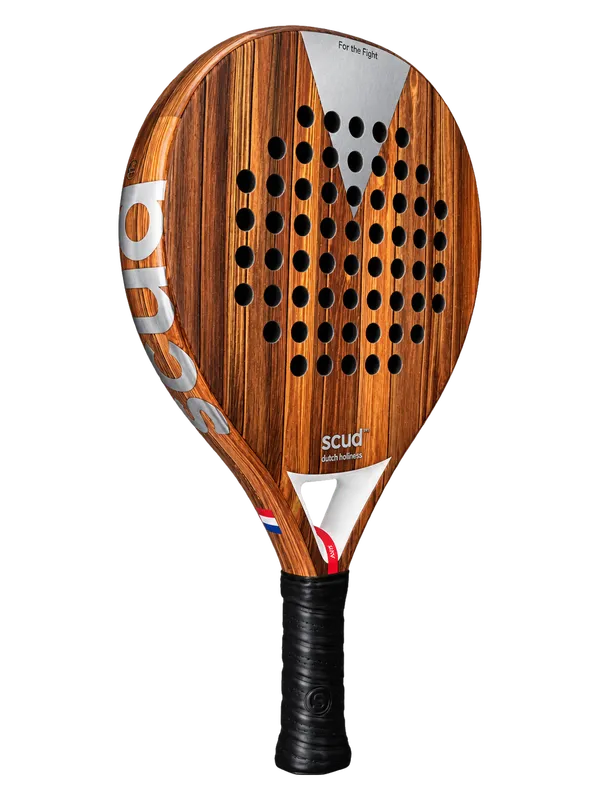
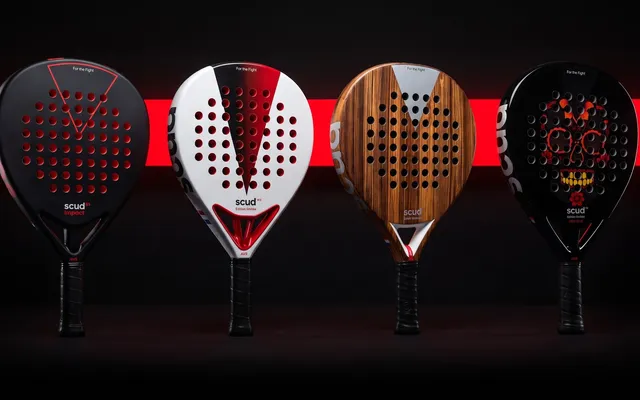
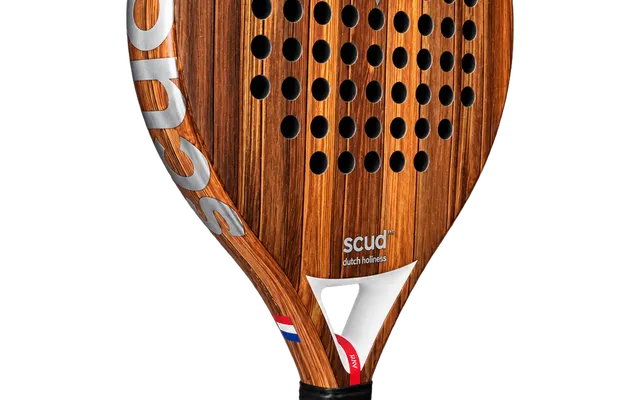
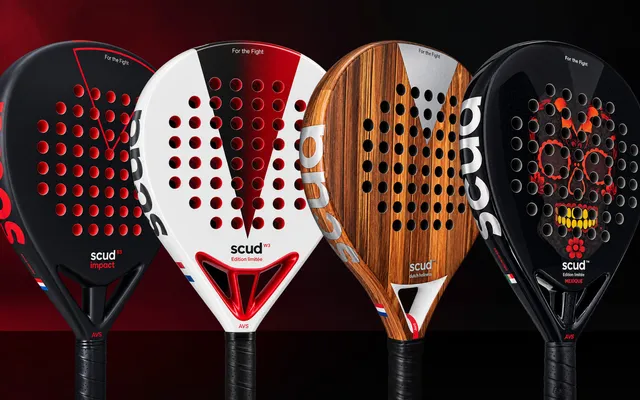
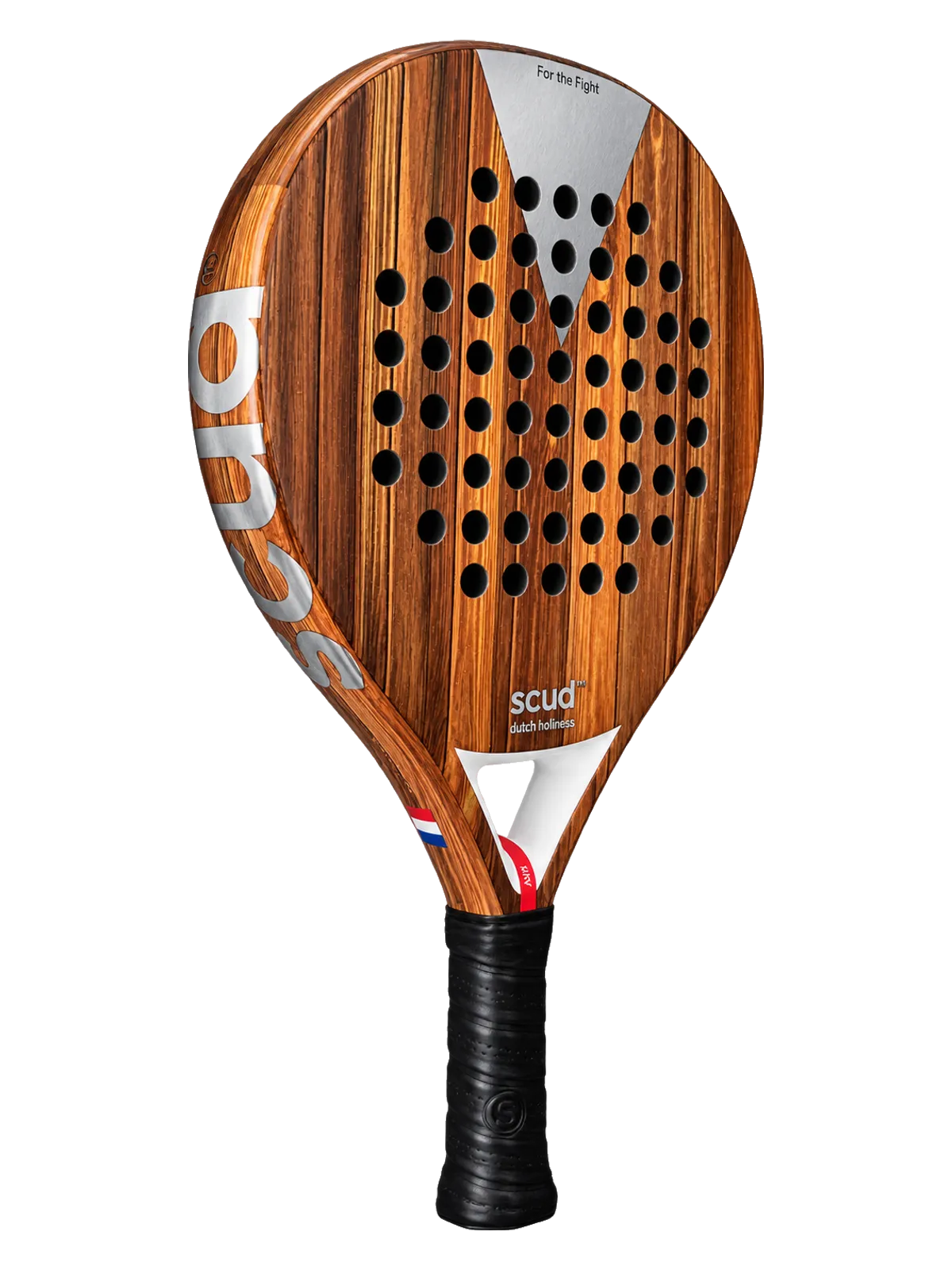
Our range comes down to four models, and only one is genuinely light. The SCUD Wood S1 weighs 350 g with a medium balance, a teardrop shape and a soft EVA core on a 12K carbon and fibreglass shell: it is the most manoeuvrable and the most forgiving of our rackets. Like the others, it carries the AVS anti-vibration system and a hand-applied sanded finish.
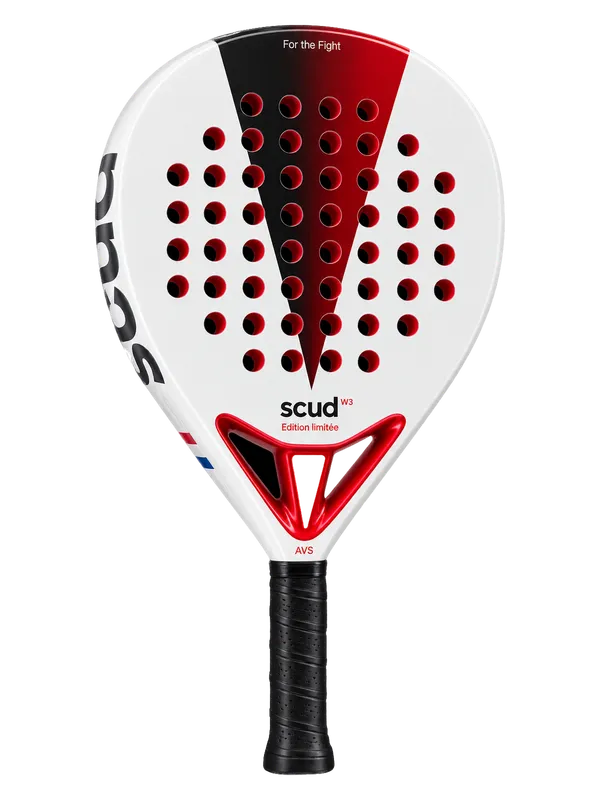
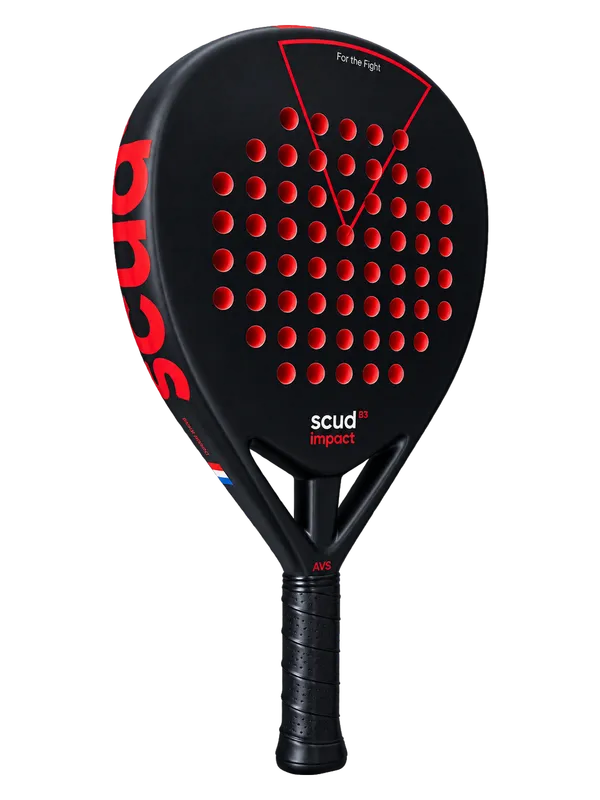
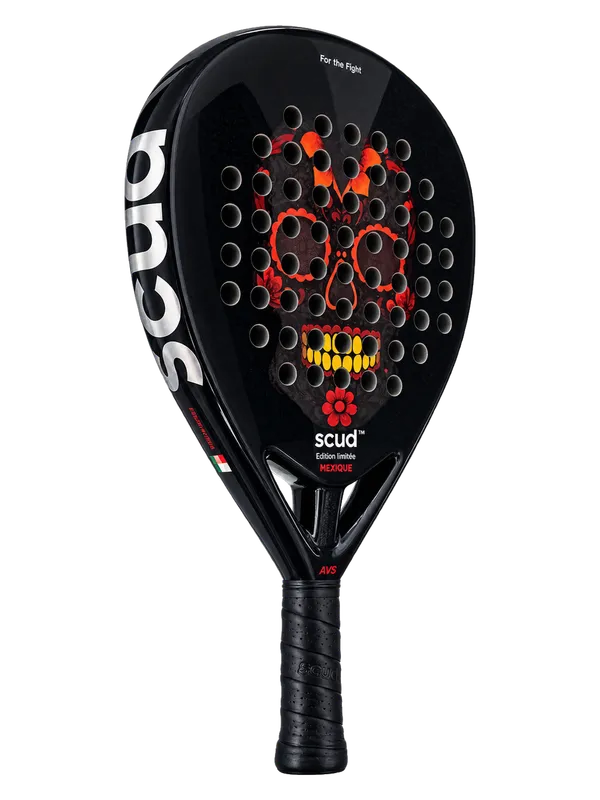
The other three — Black Impact B3, White S3 and Mexique M1 — sit at 365 g with a head-heavy balance and a diamond shape. The White S3, in 12K carbon, remains the most accessible of the three for anyone who wants some power without giving up control; our control collection gathers the two most forgiving models.
If you are still torn between two weights, our free guide to choosing a racket walks through these criteria step by step. And if you get it wrong anyway, you have 30 days to return it, under the conditions on our delivery and returns page.
In short
- A light racket weighs 340-355 g; gender plays no part in the choice, only build, arm speed, playing frequency and the state of your arm.
- It gains in manoeuvrability and comfort, and loses a little stability against heavy balls and “free” power on the smash.
- A medium balance and a soft EVA core partly compensate for the missing mass; technique does the rest.
- It is neither reserved for beginners nor more fragile than a standard racket.
- At SCUD, the Wood S1 (350 g, medium, teardrop) is our lightweight model.
Frequently asked questions
What weight for a woman who is just starting?
The same as for a man who is just starting: the bottom of the range, between 345 and 360 g, with a low or medium balance. Build and playing frequency refine the choice afterwards, not gender.
Does a light racket hurt the arm less?
It reduces the load on the shoulder and wrist, which helps over time. But vibrations at impact depend mostly on the stiffness of the shell and the core: a very stiff light racket can be less comfortable than a soft standard-weight one.
Can you make a light racket heavier?
Yes, with lead tape stuck to the frame or an extra overgrip. A few grams are enough to change the balance noticeably; work in small steps and test between each addition.
Does the Wood S1 suit an experienced player?
Yes, if their game is built on control, volleys and point construction. An experienced player who is chasing the smash above all will prefer a 365 g head-heavy model.
Whether you are after 350 or 365 g, every one of our padel rackets is listed with its weight, balance and core, so you can compare without surprises.