A padel racket is not indestructible. It takes knocks against the glass, impacts against the fence, heat in car boots and sand in every perforation of the face. Most rackets that die early do not die of a defect: they die of an accumulation of small oversights that are very easy to avoid. This guide walks through those habits, from day one to the moment when it is really time to change.
How long a racket lasts
There is no universal figure, because lifespan depends above all on how much you play. A racket used once a week by a player who strikes cleanly will last several seasons. The same racket played four times a week in competition, with knocks against the glass and smash after smash, will age much faster.
What wears out is almost never the carbon itself. It is:
- the foam core, which gradually compacts and loses its rebound;
- the hitting surface, whose texture erodes and grips the ball less;
- the bonding between the layers, which can give way after a violent impact or prolonged exposure to heat.
A racket that has “gone soft” without showing any visible damage is a classic case: the core has done its time.
The first reflex: the frame protector
It is the best-value accessory in padel. A protector is a strip of soft, adhesive plastic that you stick along the upper edge of the frame, the one that touches the floor and the glass.
Without it, every contact with the fence or the concrete cuts straight into the resin and the fibres. Once the shell is opened, moisture seeps in, the bonding works loose, and the crack spreads. With it, the same knock only damages the protector, which costs a few euros and takes five minutes to replace.
Fit it as soon as the racket comes out of the box, on a clean, dry surface, working from the centre of the frame out to both sides to avoid bubbles. Replace it as soon as it is pierced or peeling.
The overgrip: comfort, hygiene and control
The original grip is not made to last the racket’s whole life. You add an overgrip, which you replace regularly — every ten to fifteen sessions for a regular player, more often if you sweat a lot.
A worn overgrip becomes slippery. The natural reflex is then to squeeze the handle harder, which sends more vibration into the forearm and tires the elbow. Many aches blamed on the racket actually come from an overgrip that should have been changed three weeks earlier.
Two details that matter: stacking several overgrips increases the diameter of the handle and changes your grip, which is not neutral for your wrist; and the wrist strap must stay attached at all times, in competition and in training alike.
Cleaning without damaging
Cleaning takes a minute at the end of each session.
The face is wiped with a slightly damp microfibre cloth, to remove sand and felt dust. Left in place, that residue acts as an abrasive in the next match and smooths the surface prematurely — a point we cover in detail in our article on hand-applied sanding.
The perforations can be cleared dry, with a small soft brush. Never push anything metallic into them.
The frame is cleaned the same way, damp cloth and nothing else.
Strictly off-limits: solvents, acetone, harsh household cleaners and anything that attacks the varnish. The hitting surface is not designed for that, and once the varnish is gone, the grip does not come back.
Heat, enemy number one
If you remember only one rule, make it this one: never leave a racket in a car. A cabin exposed to the sun goes well beyond the temperatures the foam core and the frame resin can withstand. The foam deforms, the bonding works loose, and the racket permanently loses part of its rebound — with no visible damage on the outside.
The same reasoning applies to winter storage: avoid unheated garages and balconies. The ideal temperature is that of a living room.
A thermal cover is not a gimmick. It limits the temperature swings between the changing room and the court, and protects against knocks in transit.
What to watch for
A few signals announce end of life or structural damage.
A different sound. A racket that gives a dull or “hollow” sound where it used to pop often has an internal bonding problem.
A crack in the frame. Even a fine one will spread. Stop playing with it: a shell that gives way mid-smash can cause injury.
A face that “sinks”. If you feel a soft spot when pressing the surface with your thumb, the core has probably collapsed there.
Balls that consistently land short. After months of play, that is often the sign of a compacted foam rather than a dip in form.
The five most common mistakes
- Picking up balls by scraping the floor with the face. It is the gesture that wears the hitting surface fastest. Use your foot or the protected frame.
- Hitting the racket against the fence or the floor after a lost point. A single time is sometimes enough to open the shell.
- Leaving the racket in the bag with damp kit. Prolonged moisture attacks the grip and the bonding.
- Playing with a dead overgrip while waiting for “next time”.
- Lending your racket without a protector to a beginner who will hit the floor regularly.
What we guarantee on our side
Our rackets are produced in small series and finished by hand, which makes looking after them all the more worthwhile: a sold-out series does not come back in identical form.
On the ordering side, we ship within 48 hours. Delivery is €15 in France and €20 in the rest of the European Union, free from €300. The prices shown are net: VAT is not applicable on our sales. You have a legal 14-day withdrawal period, which we voluntarily extend to 30 days; return costs remain at your expense. Full details are on the shipping and returns page, and the recurring questions are gathered in the FAQ.
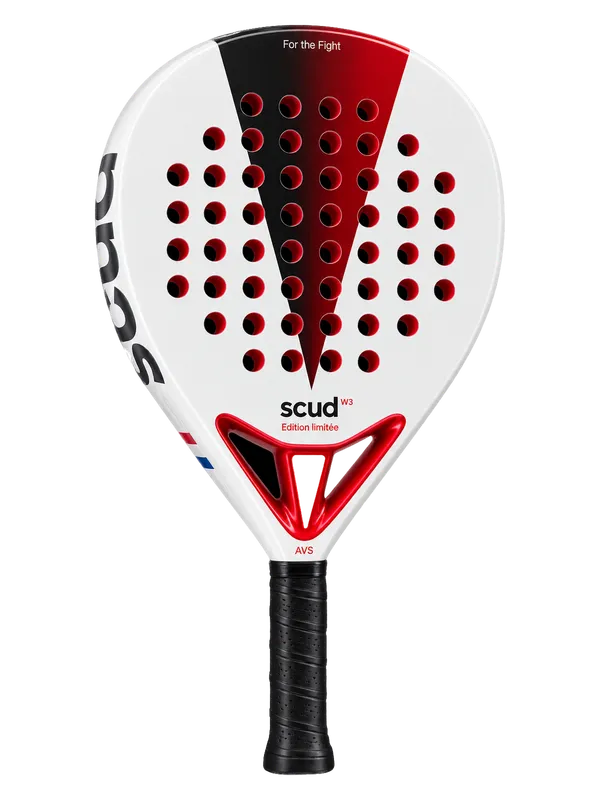
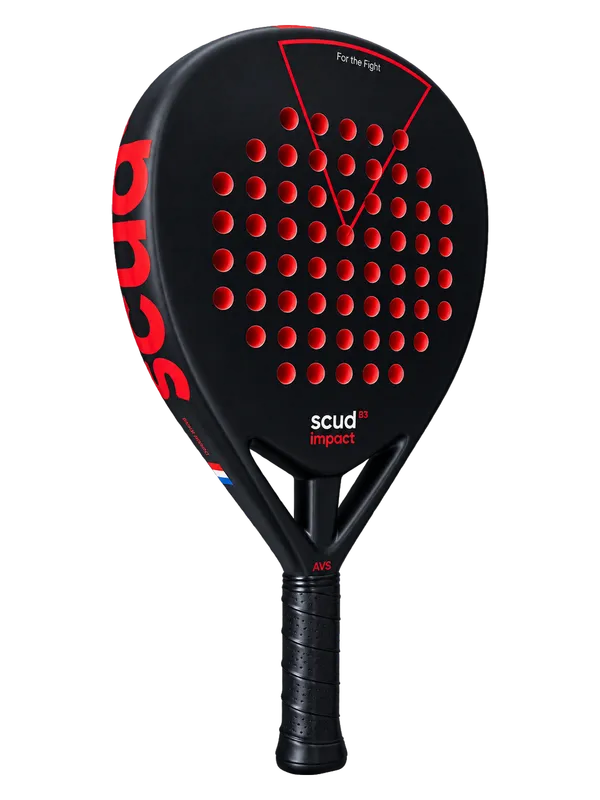
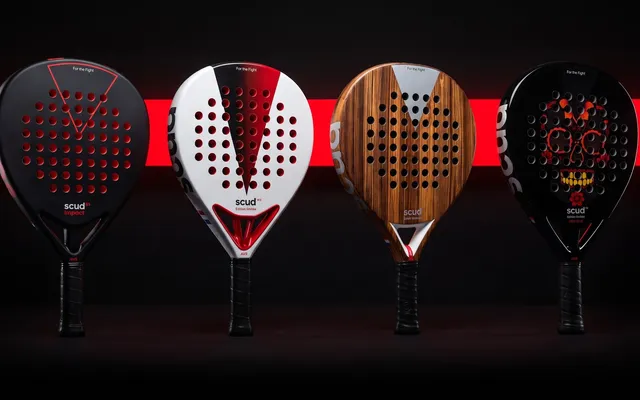
If you are still hesitating over which model to look after for as long as possible, the SCUD White S3 — 12K carbon, EVA Hard Power foam, hand-applied sanding, designed in Paris — remains our control reference, while the SCUD Black Impact B3 in 18K carbon with the AVS system is aimed at the most attacking games. All the current models are gathered on the rackets page.
A protector, a fresh overgrip and a minute with a cloth after each session: that is all that separates a racket that lasts from a racket you replace after one season.