An adult padel racket weighs between roughly 340 and 385 g, and its balance — where its centre of gravity sits — is described as low, medium or high. The two figures are read together: at equal weight, a head-heavy racket hits harder and moves more slowly than one balanced towards the handle. It is the weight-balance pair, more than weight alone, that decides what your arm will feel after two hours on court. Here is how it works, how to measure it, and how to adjust it.
Weight: a narrow range you feel immediately
Forty-five grams separate the lightest rackets from the heaviest. On a kitchen scale, that is almost nothing. At the end of an outstretched arm, late in a third set, it is a clear difference.
A heavier racket has more inertia: it drives through the ball better, absorbs a hard opposing strike better and gives power without the player having to force. In exchange it needs more effort to be accelerated, positioned and stopped. A lighter racket starts and stops faster, which helps at the net and in defence, but it passes a little more shock to the wrist on heavy balls, lacking the inertia to absorb them.
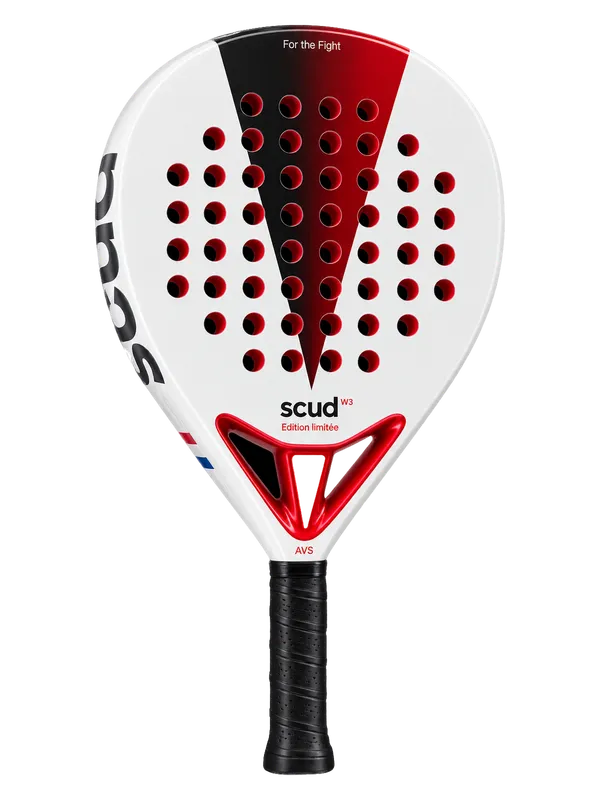
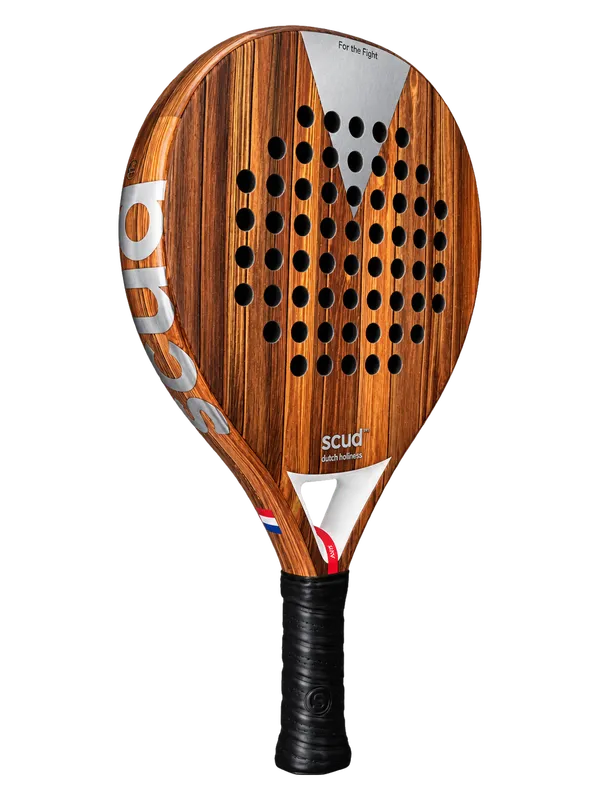
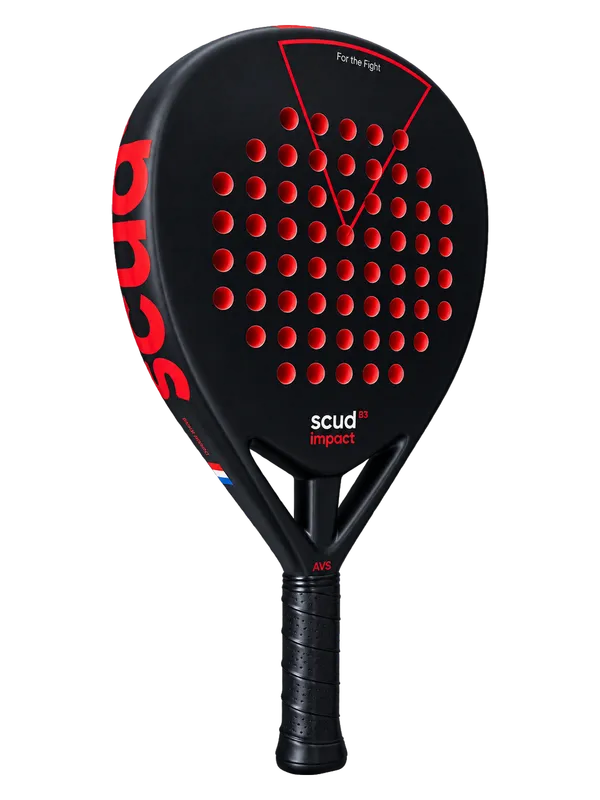
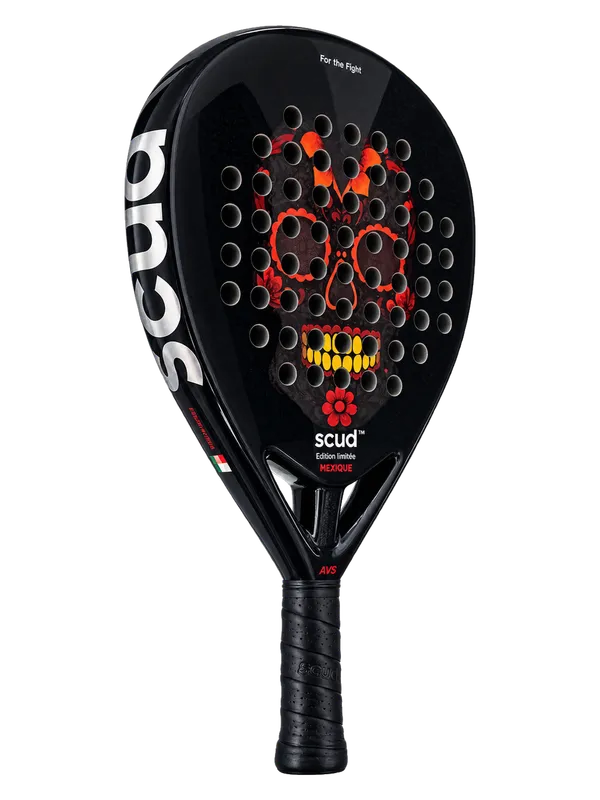
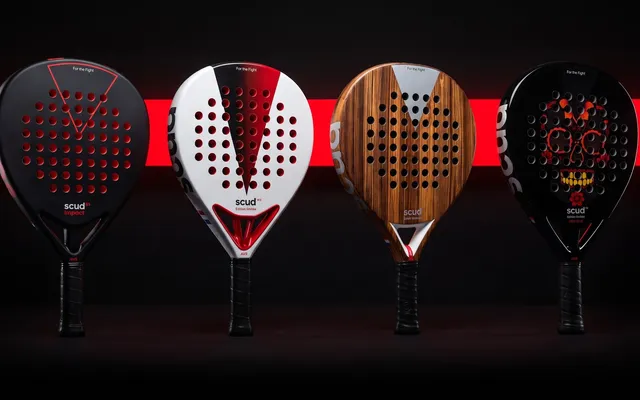
By convention, a racket is called light below 360 g, standard between 360 and 375 g, heavy above that. Our four models sit in the standard zone: 350 g for the Wood S1, 365 g for the other three.
Balance: where the mass sits
Balance is measured from the butt of the handle to the point where the racket balances on an edge. The further that point is from the hand, the more “head-heavy” the racket is said to be.
- Low balance. The balance point is close to the throat. Mass stays near the hand, the racket turns quickly, the wrist does little work. A feeling of lightness, even at equal weight.
- Medium balance. The balance point is halfway. The neutral setting, the most common, which suits the majority of players.
- High balance. The balance point is towards the head. Maximum leverage on high balls, more power for the same swing, but a racket that moves more slowly and asks more of the elbow and shoulder.
Manufacturers do not all use the same scale, and many settle for the three words. Where a value in centimetres is given, a medium balance commonly sits around 26 to 27 cm from the butt of the handle; below that is low, above it high. These markers vary from brand to brand: compare rackets with each other, not isolated numbers.
Static weight and felt weight
The figure on the product sheet is static weight: what the racket weighs sitting on a scale. What the arm feels in play is something else. A mass placed far from the hand takes more effort to set in motion than a mass placed close to it: this is what tennis players call swingweight, the weight in motion.
Two 365 g rackets can therefore feel very different. The head-heavy one will feel heavier to swing and heavier at impact; the one balanced towards the handle will feel lively, almost light. That is why “I want a light racket” is often a badly worded request: what the player is usually after is a racket that moves quickly — something a low balance sometimes delivers better than ten grams less.
The combinations table
| Low balance | Medium balance | High balance | |
|---|---|---|---|
| Light (340-360 g) | The most manoeuvrable: reflexes, volleys, fragile arms | Versatile and gentle on the arm | Lively on the smash, little stability against heavy balls |
| Standard (360-375 g) | Manoeuvrable and stable, a good defensive compromise | The most common setting | Attacking power, needs a conditioned arm |
| Heavy (375-385 g) | Maximum stability, little leverage | Heavy strike, less hand speed | For powerful, well-trained players |
Read the table diagonally: the further down and to the right you go, the more the racket demands of the arm and rewards swing speed. The top-left corner forgives everything and finishes nothing; the bottom-right corner finishes points and forgives nothing.
Measuring balance at home
No specialised tool is needed.
- Lay the racket across a thin, rigid edge: the back of a ruler, the edge of a table, the handle of a wooden spoon.
- Slide it until it holds horizontal without falling.
- Measure the distance from the butt of the handle to the edge. That is your balance point.
Take the measurement with the overgrip and the frame protector in place if you play with them: each accessory adds a few grams in a specific spot and moves the point. A kitchen scale gives the real weight in the same way — you will often find that a “365 g” racket weighs a few grams more or less, which is normal for a moulded object, foam and resin included.
Adjusting balance without changing racket
Two consumables are enough to shift the centre of gravity by several millimetres.
An overgrip adds roughly five to eight grams to the handle, which lowers the balance point and makes a head-heavy racket a little livelier. Two overgrips increase the effect, at the cost of a thicker handle — which some players want for exactly that reason, as we explain in our article on grip, overgrip and handle size.
Lead tape stuck to the frame raises the balance point when placed at the head, and stabilises the racket without raising it when spread along the sides at sweet-spot height. A few grams are enough; beyond that the racket changes character and the arm notices. Work in small steps, one strip at a time, and play again before adding more.
A frame protector also adds a few grams at the very top. Many players fit one without realising it makes their racket slightly more head-heavy.
What we chose for the range
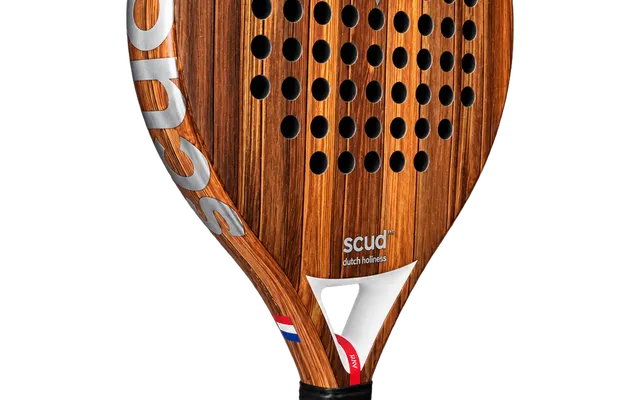
We did not try to cover the whole table. The SCUD Wood S1 occupies the “light, medium” cell: 350 g, teardrop shape, soft EVA foam. It is the most manoeuvrable and gentlest racket in the range, the one we recommend when the arm is the first concern.
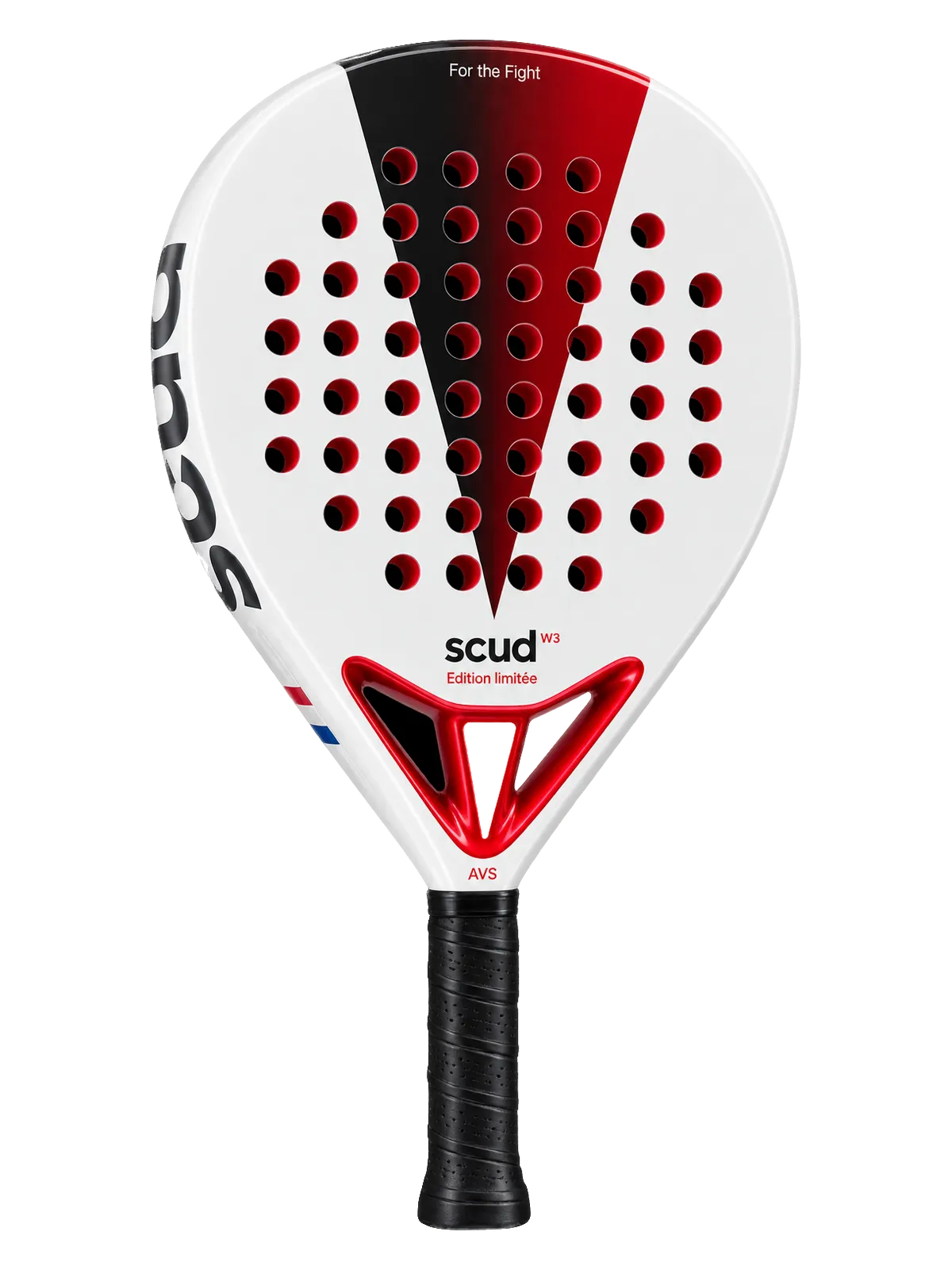
The other three — White S3, Black Impact B3 and Mexique M1 — weigh 365 g with a high balance. A standard weight, then, not a heavy one: the power comes from where the mass is placed and from the diamond shape, not from extra grams. The AVS anti-vibration system and the honeycomb silicone of the handle are there to absorb what a high balance usually sends into the forearm. We go into this in our article on tennis elbow in padel.
In short
- A padel racket weighs between 340 and 385 g; the range is narrow but the arm feels it immediately.
- Balance says where the mass sits: low for handling, high for leverage, medium in between.
- Felt weight depends on the weight-balance pair, not the figure alone: a head-heavy 365 g racket feels heavier than a 370 g racket balanced low.
- Balance is measured on an edge, from the butt of the handle, with overgrip and protector in place.
- Overgrips and lead tape let you adjust the balance point by a few millimetres without changing racket.
Frequently asked questions
What weight should a beginner choose?
Stay between 350 and 365 g with a low or medium balance. The priority is to repeat the stroke without fatigue or pain; weight and leverage come later. Our guide to choosing a padel racket as a beginner sets out the criteria.
Is a heavy racket more powerful?
It drives through the ball better, but only if the arm can accelerate it. A racket that is too heavy slows the swing and loses the power it promised. The leverage of a high balance is often a more efficient route than extra grams.
Is the weight on the product sheet exact?
To within a few grams. A racket is a moulded object, with foam and resin whose quantity varies slightly from one unit to the next. A tolerance of a few grams is normal.
Should I count the overgrip in the weight?
Yes, especially if you stack two. Each overgrip adds a few grams to the handle and lowers the balance point, which changes the feel more than the total weight suggests.
Where do I find weight and balance on your product sheets?
Every sheet shows shape, weight and balance side by side, along with the carbon weave and the foam. The comparison of the four models is also included in our free guide to choosing a racket.
To compare the four combinations we offer, head to the padel rackets page: the sheets read side by side.