The core of a padel racket is a foam, almost always EVA or FOAM, sandwiched between the two faces of the hitting surface. It decides how the racket feels at impact: a soft EVA absorbs and forgives, a hard EVA returns the ball fast and dry, a FOAM offers the plushest touch but ages faster. Carbon gets most of the attention, but it is often the core that decides whether a racket suits you. Here is how to read that line of the spec sheet.
What sits under the face
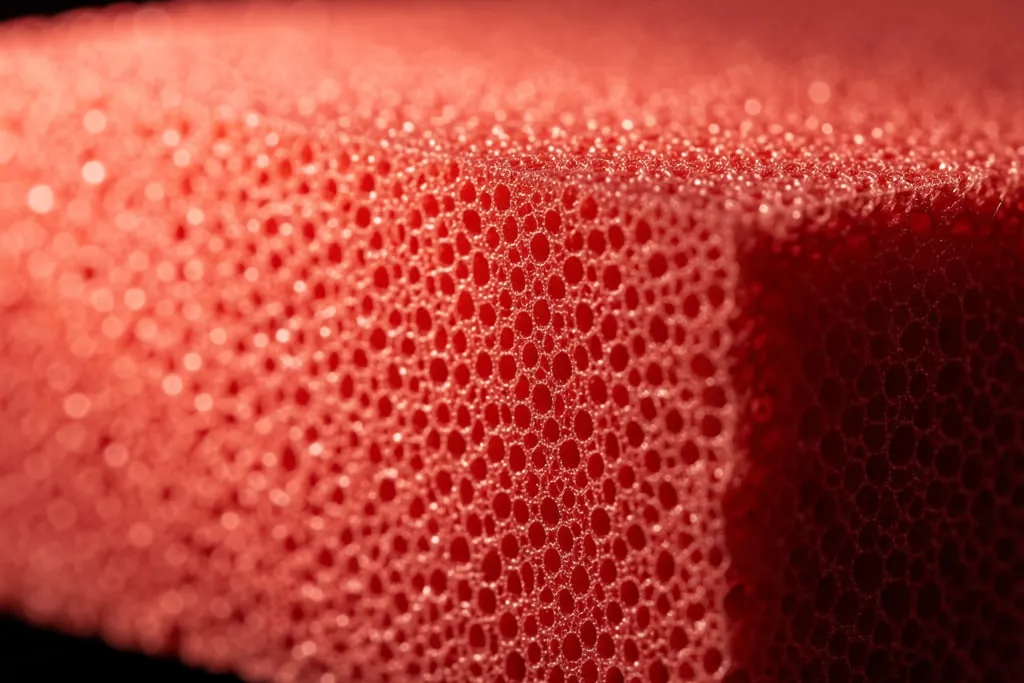
A padel racket is not a solid slab. The fibre frame surrounds a block of foam about 38 mm thick — the maximum allowed by the International Padel Federation rules — drilled right through and covered on each side with a skin of carbon or fibreglass. When the ball hits the face, that skin flexes and compresses the foam; the foam springs back and returns the energy. How much energy comes back, how fast it comes back and how long the ball stays in contact all depend on the density and the nature of that foam.
Two families share the market.
EVA (ethylene-vinyl acetate) is a closed-cell foam offered in several densities that manufacturers usually call soft, medium and hard. It is the most common material today, and the one used across our whole range.
FOAM refers to a more open, softer polyethylene foam. It is found on control and comfort rackets, and on some entry-level models.
EVA soft, medium, hard: three densities, three rackets
With an identical shell, changing the density of the foam is enough to change a racket’s character.
EVA soft
The foam deforms noticeably at impact. The ball sinks in, stays a moment longer on the face, and leaves on a trajectory that is easy to read. The sweet spot widens, off-centre hits are forgiven, vibrations are damped before they reach the hand. The trade-off is a slower ball exit: you have to bring the speed yourself on finishing shots. This is the foam of control, comfort and tolerance.
EVA medium
The compromise. The foam gives enough to keep some touch, and resists enough to return a fair share of the energy. It is the density that suits most intermediate players, and the one to start with when you do not yet know which way you lean.
EVA hard
The foam barely deforms. The ball leaves quickly and dry, with a direct response that shows most on the smash and the attacking volley. The sweet spot is smaller and the racket passes on more information — including the vibrations of a badly centred hit. This is the foam of power, reserved for a clean swing and a prepared arm.
FOAM: touch, at the cost of lifespan
FOAM behaves like a very soft EVA, only more so. The ball is literally carried by the face, drop shots and glass play become very natural, vibrations are almost absent. For someone discovering padel or with a sensitive arm, the feel is reassuring.
Its limit is structural: a more open foam packs down faster. After a few months of regular play, a FOAM core loses part of its spring; the face goes “dead” and the racket stops forgiving as much. An EVA, closed-cell and denser, keeps its properties far longer. It is one of the reasons we only use EVA.
The comparison
| EVA soft | EVA medium | EVA hard | FOAM | |
|---|---|---|---|---|
| Deformation at impact | Significant | Moderate | Low | Very significant |
| Ball exit | Slow, carried | Balanced | Fast, dry | Slow, very carried |
| Sweet spot | Wide | Medium | Small | Very wide |
| Vibrations transmitted | Low | Moderate | Marked | Very low |
| Strength | Control, comfort | Versatility | Power, smash | Touch, beginners |
| Durability | Good | Good | Good | Packs down faster |
| In cold weather | Stays playable | Stiffens slightly | Turns brittle | Stays soft |
We deliberately stay qualitative: exact densities vary from one supplier to another, and two “EVA soft” cores from different brands are not strictly identical.
What temperature changes
This is the point the spec sheets leave out. All foams harden as the temperature drops. A hard EVA that gives a lively, precise ball in July becomes, on an outdoor court in January, an almost inert foam: the ball cracks off the face, the sweet spot shrinks further, vibrations travel up the forearm. Many players who “cannot understand” why their racket became unpleasant in winter do not have a faulty racket — they have a foam that is too hard for the season.
A soft or medium EVA copes far better with the cold: it stiffens a little, but keeps working. If you mostly play outdoors in a region with real winters, that is a genuine argument for a softer foam.
The ball matters too: new and well-pressurised, it compresses less and works the foam harder; worn, it squashes more and makes the racket feel softer than it is. Finally, humidity: the foam, being closed-cell, does not absorb water, but a wet face slides and the bite of the sanded finish changes, as our article on hand-applied sanding explains.
Reading our spec sheets
On our product pages, the “Core” line uses three labels.
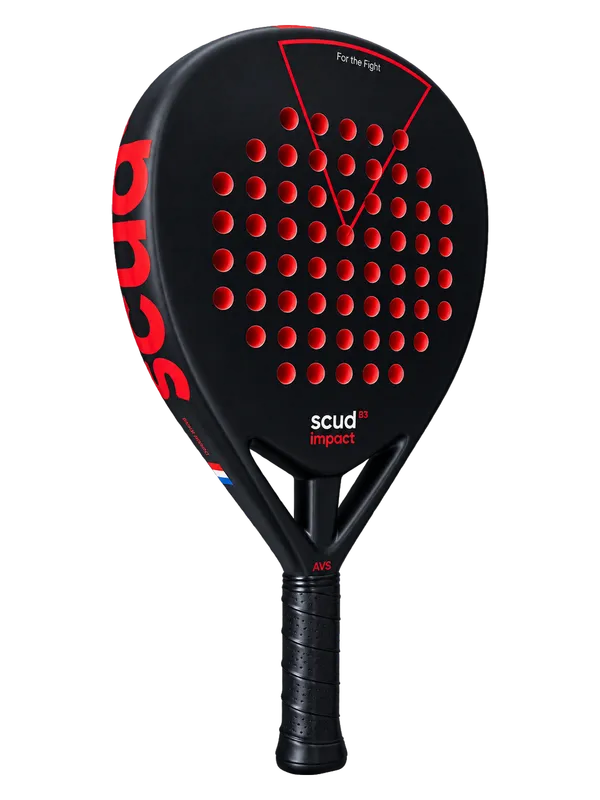
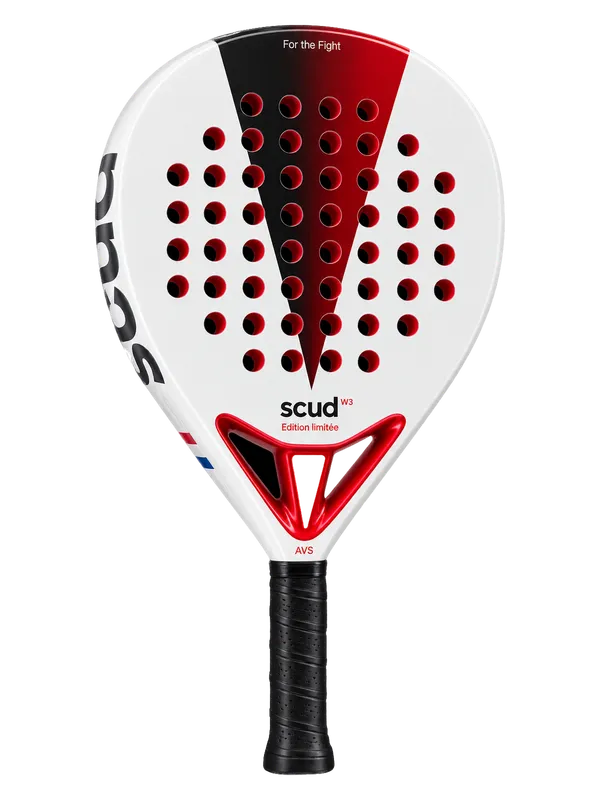
EVA Hard Power equips the SCUD Black Impact B3 and the SCUD White S3. It is our firmest foam, chosen for a fast response and an explosive strike. On the Black Impact B3 it is paired with 18K carbon: the most direct combination in the range. On the White S3, the more forgiving 12K carbon tempers that firmness and keeps some touch — which is what makes it our control reference despite an identical core.
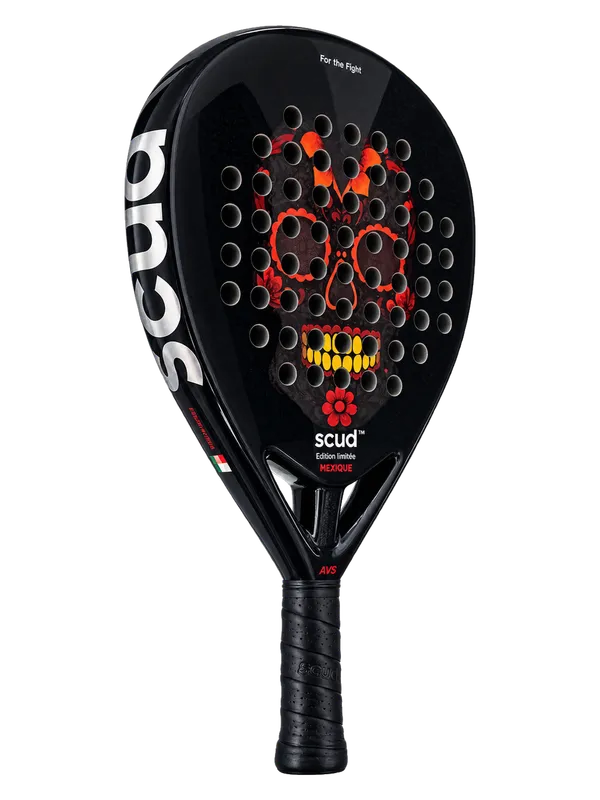
Firm EVA is the core of the Mexique M1 (available January 2027): a frank response, slightly less dry than the Hard Power, for a more versatile impact game.
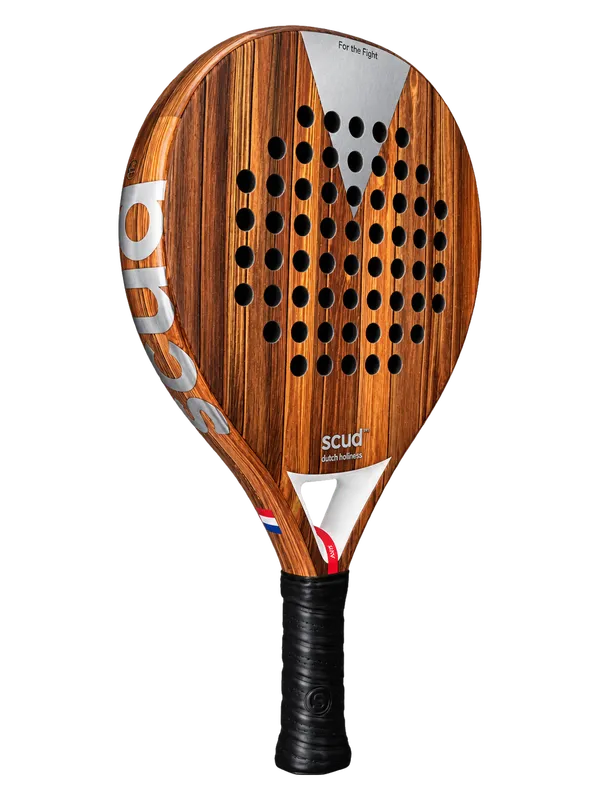
EVA soft is the core of the SCUD Wood S1: combined with a 12K carbon and fibreglass shell, a teardrop shape and 350 g, it makes it the most forgiving and most comfortable racket we build — the one that stays pleasant in winter.
In all four cases, the AVS anti-vibration system filters part of the jolts the foam lets through, which makes the Hard Power more liveable than a bare hard EVA. The full logic of the foam-carbon pairing is explained in 12K or 18K carbon: what changes on court?.
Choosing without getting it wrong
The safest rule: the foam follows your swing, not your ambition. A hard EVA rewards a stable strike and punishes a hesitant one; a soft EVA does the opposite. If you play once a week, if you are coming back, or if your arm has already called you to order, stay with soft or medium. If your points are won at the net, with a smash already in place and regular practice, a firm or hard EVA will give back what you put in.
For a complete choice that crosses core, shape, weight and carbon, our free guide to choosing a racket covers all the criteria, and how to choose a padel racket sets out the grammar.
In short
- The core foam determines the feel at impact as much as, if not more than, the carbon of the shell.
- EVA soft = tolerance and comfort, EVA hard = power and a dry response, EVA medium in between.
- FOAM offers the softest touch but packs down faster; EVA holds up better over time.
- All foams harden in the cold; a hard EVA turns brittle in winter, a soft one stays playable.
- At SCUD: EVA Hard Power on the B3 and S3, firm EVA on the M1, EVA soft on the Wood S1.
Frequently asked questions
EVA or FOAM to start with?
Both are forgiving. FOAM gives a plusher touch, soft EVA lasts longer. For a first racket meant to last two seasons, a soft or medium EVA is the more sensible choice.
Does a hard foam hurt the arm?
It transmits more vibration, especially on off-centre hits and in cold weather. With clean technique and an anti-vibration system it remains comfortable; for a sensitive arm, prefer a softer foam.
Does a racket’s foam wear out?
Yes, gradually. A FOAM packs down within a few months of regular play; an EVA keeps its properties far longer, but also ends up losing spring after many hours.
Can you play an EVA Hard Power in winter?
Yes, but the racket will feel drier and less forgiving than in summer. Warm the arm up for longer, and if you mostly play outdoors in winter, a soft EVA like the Wood S1’s is more pleasant.
The four cores of our range are listed on every product page: compare them on our padel rackets page before choosing.