“Power” or “control”: it is the first filter offered by just about every padel shop, ours included. It is a useful shortcut, but it is often misunderstood. Many players read it as a scale of ability — control to start with, power as you improve. It is nothing of the sort. They are two different ways of winning points, and the best racket is the one that matches yours, not the one you would like to have in two years’ time.
What “power” means on a product page
A so-called power racket combines three design choices.
First, the mass is placed high, in the upper part of the face, often with a diamond or a pronounced teardrop shape. That creates leverage: at equal arm speed, the head reaches the ball faster.
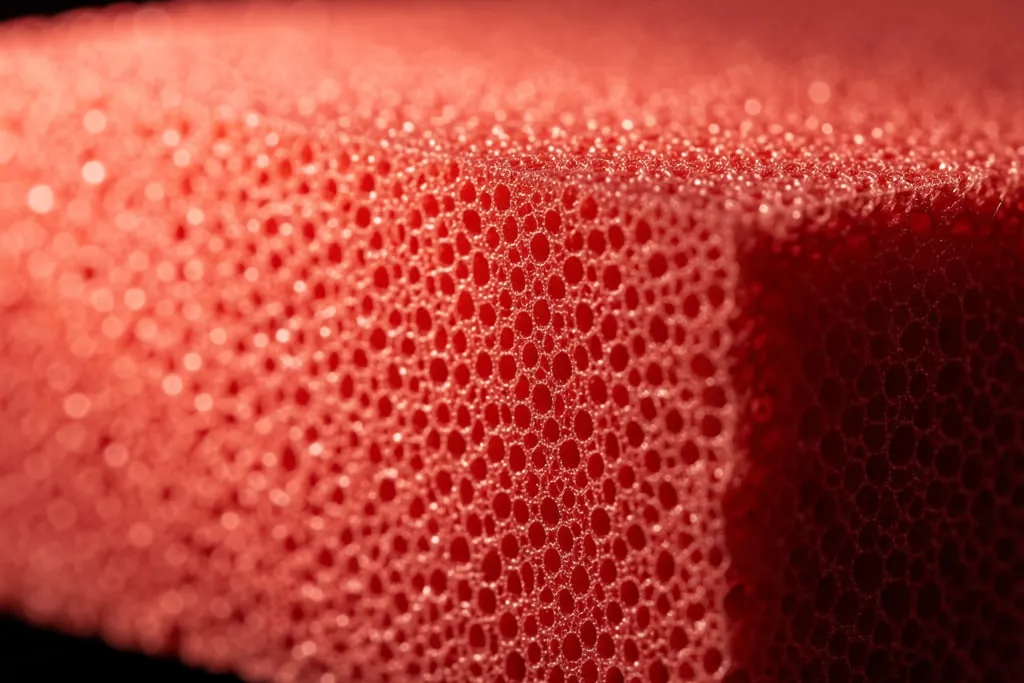
Second, the frame is stiffer. It barely deforms at impact, returns the energy without dissipating it and sends back a crisp, fast ball.
Finally, the sweet spot is higher and smaller. Well-centred balls fly off very hard; the others, noticeably less well.
The result: a racket that finishes points. On a smash, a por tres exit or an attacking volley, the difference is immediate. On a baseline rally in cold weather, it is far less forgiving.
What “control” means
A control racket reverses each of these choices.
The mass is spread lower, usually with a round or soft teardrop shape. The racket is quicker to handle, which matters at the net and in defence.
The frame works more. It flexes a little more at impact, the ball stays on the face a fraction of a second longer and the player feels where it is. That is the famous touch, essential for drop shots, off-the-glass shots and placed bandejas.
The sweet spot is wide and central. A ball struck three centimetres from the centre still comes off cleanly.
The result: a racket that builds points. It will not hand you a free smash, but it will let you return one more ball, place a lob deep and keep hold of the rally.
Quick comparison
| Power-oriented | Control-oriented | |
|---|---|---|
| Typical shape | Diamond, pronounced teardrop | Round, soft teardrop |
| Mass distribution | High | Low to medium |
| Frame stiffness | High | Moderate |
| Sweet spot | High, smaller | Wide, central |
| Strength | Smash, attacking volley | Drop shot, glass, defence |
| Technical demand | High | Moderate |
| Strain on the arm | Greater | Lower |
How to identify your profile, honestly
The best diagnosis is not made in front of a catalogue but on the court. Three questions are enough.
Where do you finish your points?
Think back to your last three matches. If most of your winners come from smashes, por tres exits or clean volleys, you have an attacking profile: a power-oriented racket will amplify what already works. If your points come rather from opponents’ errors, lobs that push them back or drop shots, you win through construction — a control racket will make you more consistent.
How many times a week do you play?
A stiff frame, played two hours a week by an unprepared arm, is paid for in tennis elbow. Playing frequency and physical conditioning count as much as technical level. If you play once a week, stay on the control side, even with a good level.
How does your ball behave when you force it?
If your smashes regularly fly long, your problem is not a lack of power: it is an excess. A more powerful racket will make the error worse. If, on the contrary, you feel you are “pushing” the ball without ever driving through it, a little more mass in the head may unlock something.
The myth of the racket that makes you improve
You often hear that you should “buy a racket above your level to progress”. The opposite happens. A racket that is too demanding pushes you to compensate: you shorten the swing to rescue off-centre balls, you squeeze the hand to absorb vibrations, you abandon the finesse shots because they come off badly. The bad habits picked up that way take months to correct.
Progress comes from strokes repeated cleanly. A forgiving racket allows those repetitions. The move towards more power happens naturally, when the strike is stable and you begin to feel that the racket is “holding back” your game.
The two poles of the SCUD range
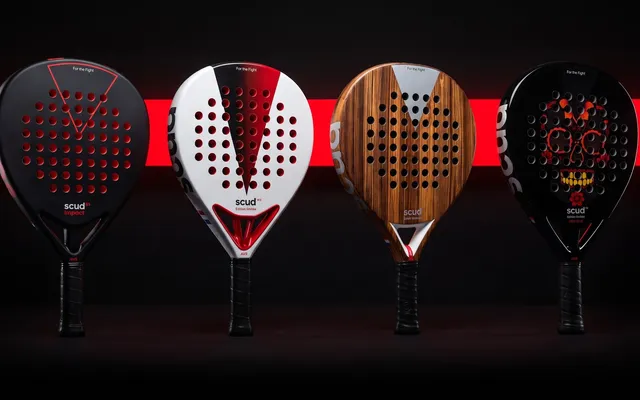
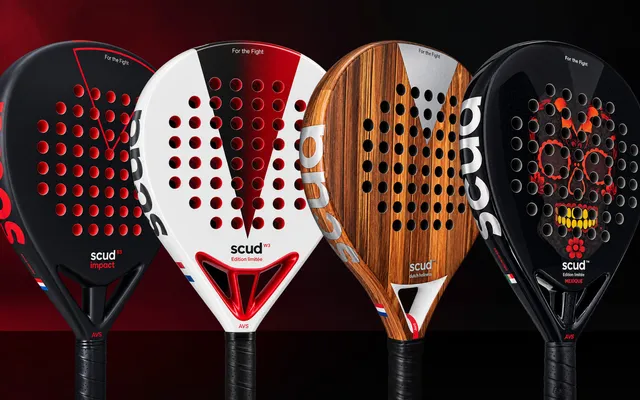
Our models are limited editions finished by hand, but they do not occupy the same place on this axis.
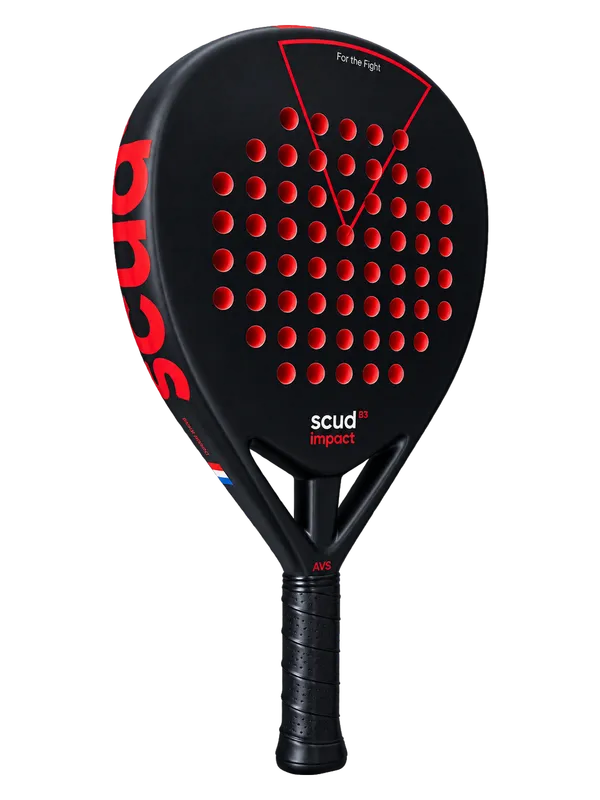
The SCUD Black Impact B3 is our power pole. 18K carbon shell — the stiffest weave in the range —, EVA Hard Power foam that returns the energy of the strike, diamond shape and head-heavy balance, AVS anti-vibration system to filter the jolts, hand-applied sanding, designed in France. It is the racket of the player who comes to the net to finish and wants the smash to pop.
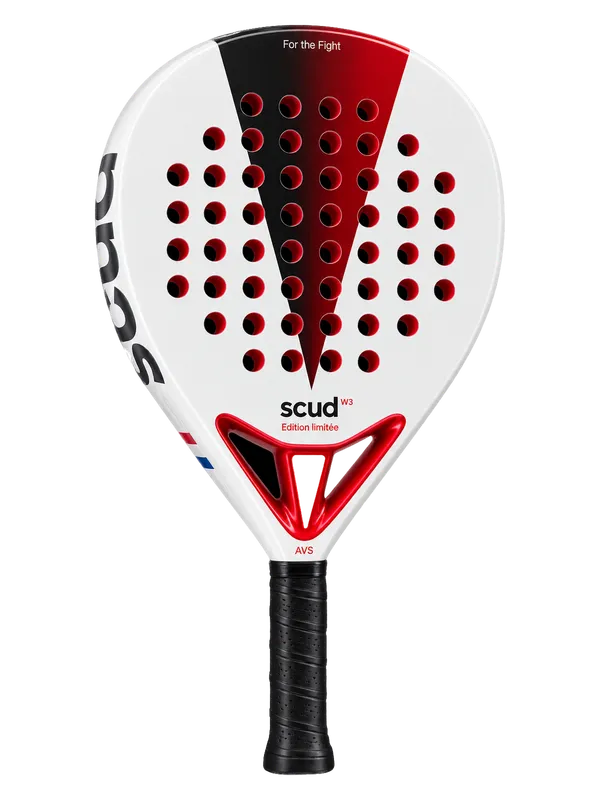
The SCUD White S3 holds the other end. 12K carbon, more forgiving under the hand, the same EVA Hard Power foam to keep a clean rebound when you need to accelerate, hand-applied sanding, designed in Paris. It is made to dominate through consistency and placement, with power available but never imposed.
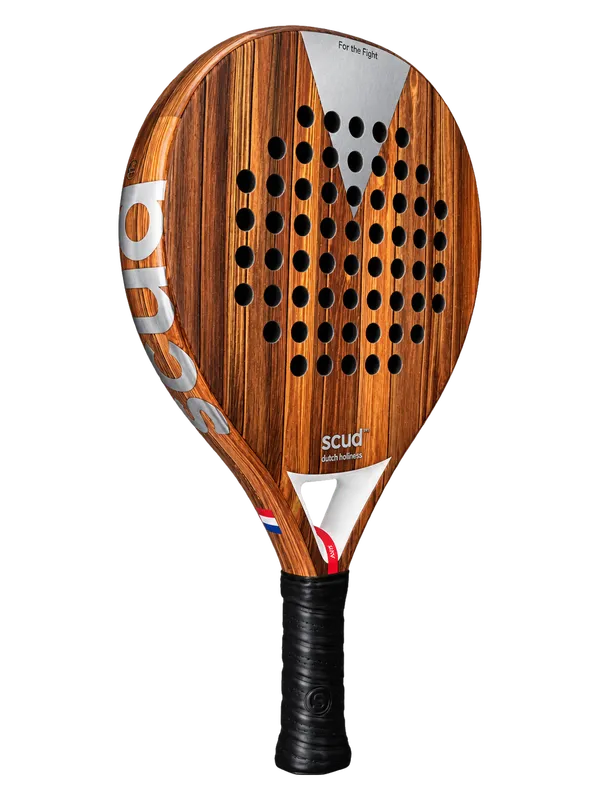
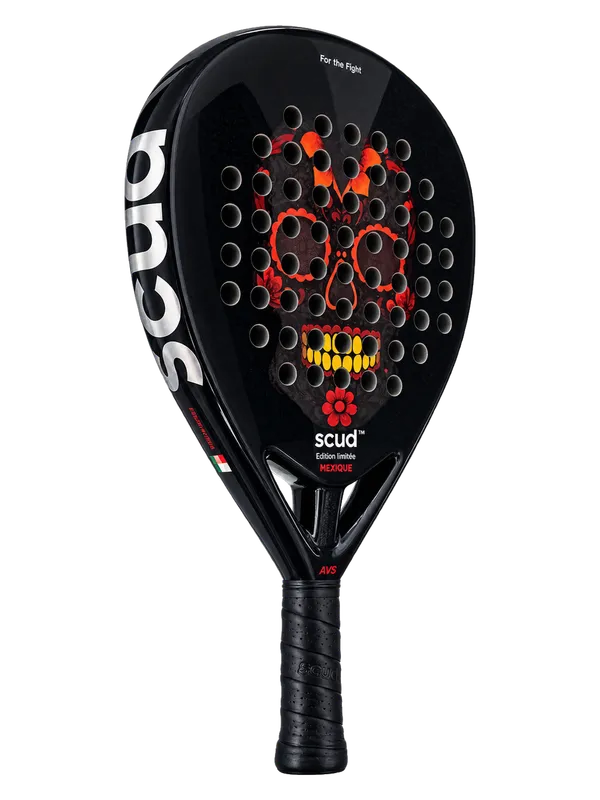
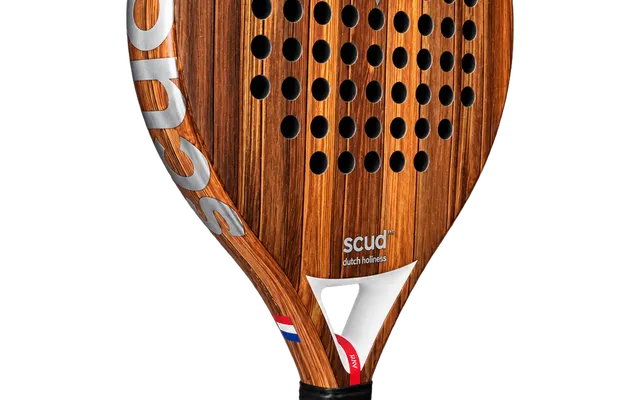
In between, the Mexique M1 (firm EVA, diamond, available in January 2027) and the Wood S1 (carbon and fibreglass, soft EVA, 350 g teardrop) offer more personal readings of 12K carbon. You can browse all our rackets or go straight in through the power and control collections.
And if you are somewhere in between?
That is the most common case, and it is not a problem. Most players sit somewhere in the middle: able to attack, but winning mostly through consistency. In that case, choose the compromise and let the model’s style settle it — this is a racket you will have in your hand several hours a week for two years.
One last marker: if you are still hesitating after reading the product pages, take the less demanding of the two. You rarely regret a racket that is too forgiving; you often regret a racket that hurts your arm. And if the doubt persists, write to us from the contact page — we answer ourselves, and we know our rackets.