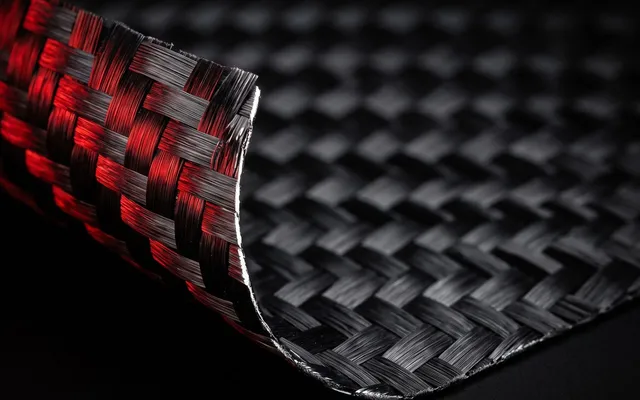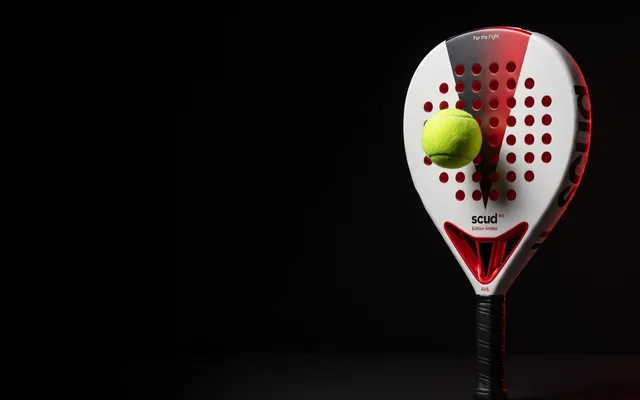
Fibreglass or carbon: it is the first line you read on a padel racket spec sheet, and often the only one you remember. The short version: fibreglass gives a softer, more forgiving and cheaper shell; carbon gives a stiffer, more responsive and more expensive one. Neither is “better” in absolute terms. The right material depends on your arm speed, how often you play and what you expect to feel at impact. Here is what you need to decide without relying on the prestige of the word “carbon”.
Two fibres, one construction
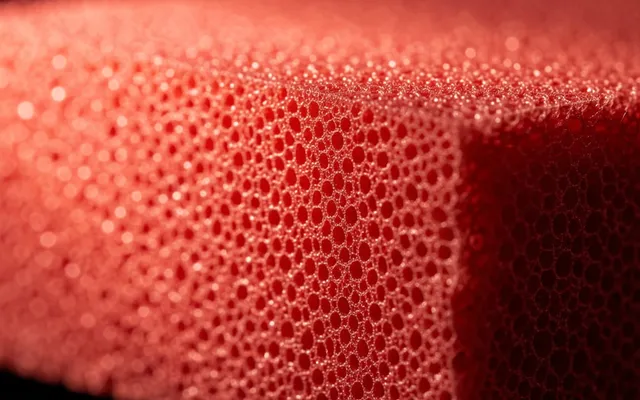
A padel racket is a sandwich: an EVA foam core surrounded by two faces and a frame made of composite material. That composite is fibre impregnated with resin, cured under pressure in a mould. Whether the fibre is glass or carbon, the manufacturing principle is the same, and we describe it in detail in our article on how a padel racket is made.
So the difference lies in the fibre itself, and in three of its properties: stiffness, density and cost. Everything else, feel included, follows from those three.
Stiffness: the modulus changes everything at impact
A fibre’s stiffness is measured by its elastic modulus. The orders of magnitude are well known to composite engineers: a standard glass fibre (so-called E-glass) sits around 70 GPa, a standard carbon fibre around 230 GPa. With the same number of plies, a carbon shell is therefore roughly three times stiffer than a glass shell.
| Fibreglass | Carbon fibre | |
|---|---|---|
| Elastic modulus (order of magnitude) | ~70 GPa | ~230 GPa |
| Density | ~2.5 g/cm³ | ~1.8 g/cm³ |
| Deformation at impact | Significant | Low |
| Feel | Ball “carried”, long touch | Dry, direct rebound |
| Forgiveness off the sweet spot | High | Lower |
| Raw material cost | Low | High |
On court, this stiffness translates into the time the ball spends on the face. A glass shell flexes, the ball sinks in, stays in contact a moment longer and leaves with part of the energy returned by the shell itself. A carbon shell barely flexes: the ball leaves faster, straighter, and with exactly the energy you gave it. That is what players call a “dry” ball exit.
Forgiveness and comfort: where glass wins
The softness of fibreglass has a consequence that is often underestimated: it widens the useful hitting zone. A ball taken slightly off-centre on a soft shell still leaves properly, because the face deforms and follows the ball. On a very stiff shell, the same off-centre ball produces a weak shot and a sharp vibration in the forearm.
This is why fibreglass remains the reference material for players who are starting out, who play once a week, or who are coming back from elbow pain. It demands less precision and sends back fewer shocks. Carbon combined with a hard foam can become genuinely uncomfortable for a player whose stroke is not yet stable, as we explain in power or control: which one for your game?.
Price: where the gap comes from
Carbon costs significantly more than glass to produce: the fibre is obtained by carbonising a precursor at very high temperature, a long and energy-hungry process. Glass fibre is spun from molten silica, in very large volumes, and has been for decades.
That gap shows up on price tags. A fibreglass racket is commonly found at entry level, a 100% carbon racket at the top of the range. It is not only a question of quality: it is first and foremost the cost of raw material and manufacturing time.
Durability: a myth worth qualifying
You often read that “carbon lasts longer”. That is both true and false.
True, because carbon keeps its stiffness better over time: a carbon shell holds its feel longer than a glass shell, which can “soften” over the seasons.
False, because what wears out a padel racket is almost never the fibre. It is the core foam that compacts, the surface varnish that erodes, and the bonding that gives way after a knock or a heat spike. On those three points, glass and carbon are in the same boat. A carbon racket left in a car in midsummer ages just as fast as a glass one. We cover this in a full guide: how long a padel racket lasts.
One point in favour of glass: its flexibility absorbs sharp knocks against the glass wall or the floor better. A very stiff carbon shell can crack where a glass shell would simply have flexed.
Mixed shells: the best of both
Many manufacturers, ourselves included, do not choose. A shell can stack carbon plies and glass plies, each in its place: carbon for responsiveness and frame stability, glass to soften the touch and widen forgiveness.
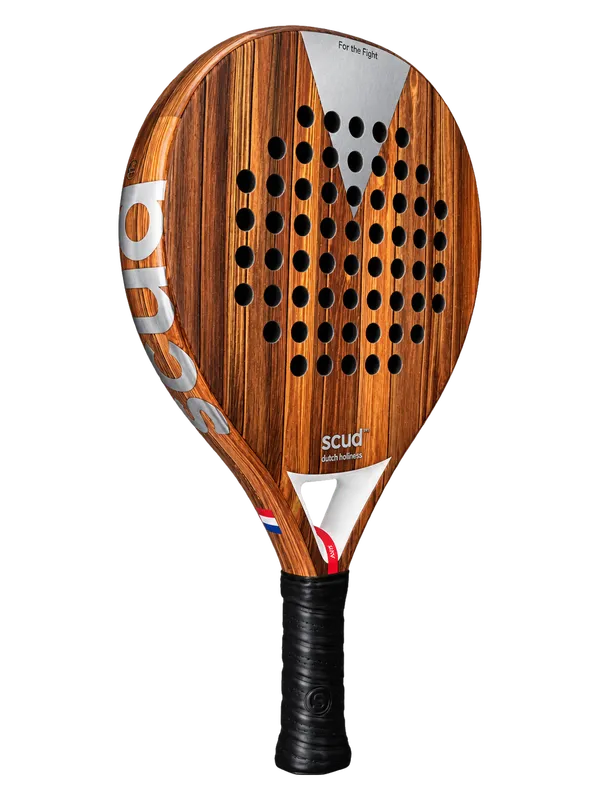
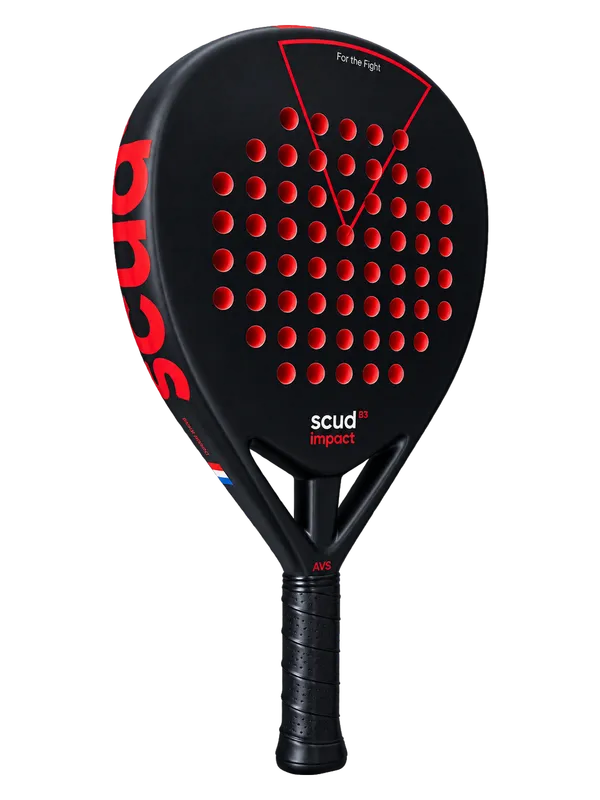
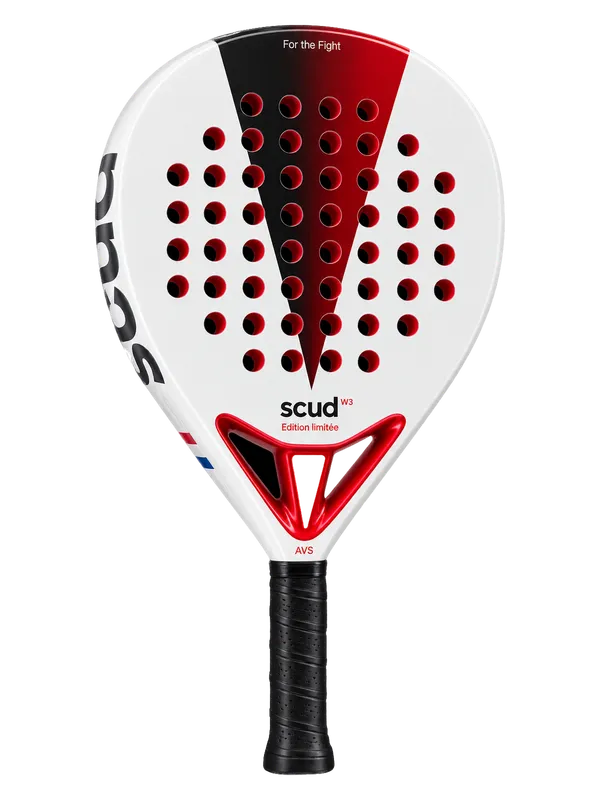
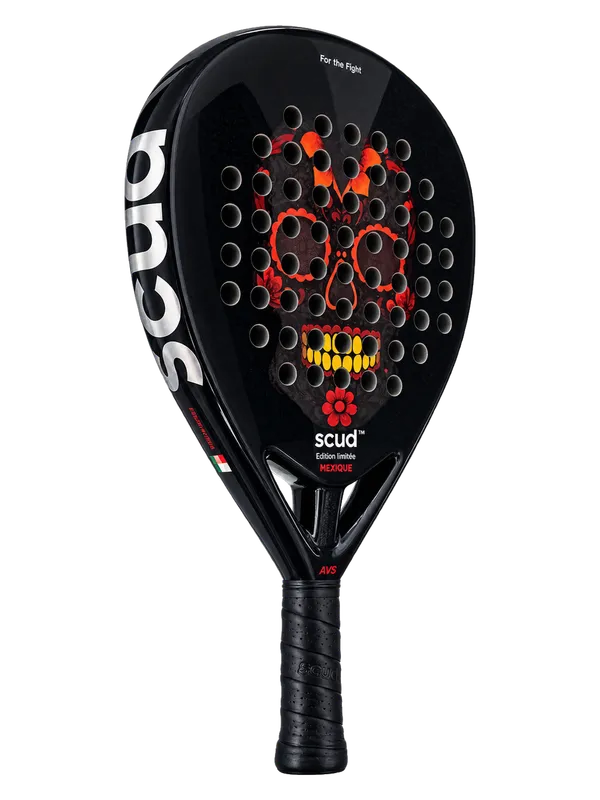
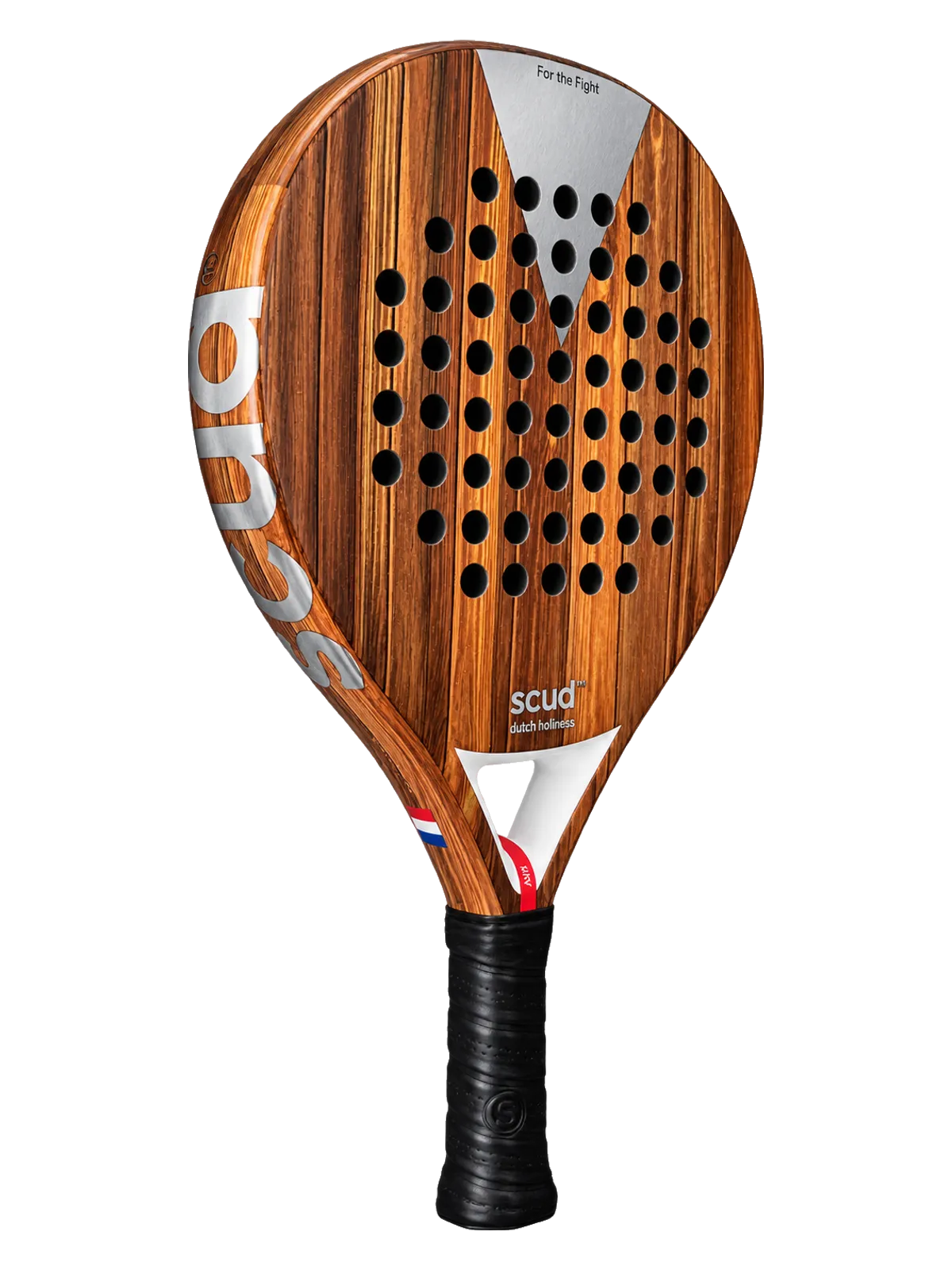
That is exactly how our SCUD Wood S1 is built: 12K carbon and fibreglass, on a soft EVA foam, in a teardrop shape at 350 g. It is the most manoeuvrable and most forgiving racket in the range, and it is no coincidence that it is also the one containing fibreglass. At the other end, the SCUD Black Impact B3 is 18K carbon on a Hard Power EVA foam: the most direct rebound we offer, for players with the arm to use it. In between, the White S3 and the Mexique M1 are 12K carbon, a finer weave whose effects we detail in 12K or 18K carbon.
Who should choose what
- Fibreglass (or mixed shell): beginner or occasional player, player who prioritises control and comfort, player prone to elbow pain, player who defends a lot and hits little.
- 12K carbon: intermediate to advanced player who wants responsiveness without losing touch, all-round game, competitor who builds the point.
- 18K carbon: attacking player with established arm speed, smash and volley as main weapons, technique already stable.
The classic trap is buying “the stiffest possible” in the hope of progressing faster. The opposite happens: an overly demanding frame multiplies errors and tires the arm before delivering any power.
In short
- Fibreglass is soft, forgiving and inexpensive; carbon is stiff, responsive and pricier.
- Stiffness comes from the fibre’s modulus: roughly three times higher for carbon.
- Durability depends mainly on the foam, the varnish and how you look after the racket, not on the fibre.
- A mixed carbon + glass shell combines responsiveness and forgiveness: that is the choice behind our Wood S1.
- Choose for the arm speed you have today, not the one you hope to have in two years.
Frequently asked questions
Is a fibreglass racket only for beginners?
No. It suits any player looking for comfort and forgiveness, including advanced players who defend a lot or who are protecting their elbow. Level does not dictate the material; playing style does.
Does carbon give more power?
It returns the energy you give it more efficiently. If your stroke is committed and clean, yes, the ball leaves faster. If your arm speed is modest, a soft shell will give some energy back to you and will often be more effective.
Is a mixed carbon and glass shell a cut-price compromise?
No, it is a design choice: each fibre is placed where it is useful. Carbon holds the frame, glass softens the hitting face. It is a common construction on all-round rackets.
Does fibreglass break more easily?
Rather the opposite on sharp knocks: its flexibility absorbs the impact where a very stiff shell can crack. In any case, a frame protector remains the first thing to fit.
To go further, our free guide to choosing your racket walks through these criteria step by step, and you can compare the shells of all our rackets model by model.