A padel racket is born in a mould: plies of carbon or fibreglass fabric, impregnated with resin, are draped around a foam core, and the whole is cured under pressure until it hardens into a single piece. Everything that follows, drilling, sanding, painting, sandblasting, fitting the grip, is finishing. This article describes the process as practised across the industry, step by step, then explains what we do differently at SCUD on the points we know from the inside.
Step 1: the mould
Everything starts with a two-part mould, generally machined from a block of aluminium from the racket’s drawing. Its two half-shells define the shape of the face (round, teardrop or diamond), the thickness, the frame profile and the handle. Part of the surface finish is also decided in the mould: a texture engraved into the aluminium comes out in relief on the shell, as we explain in our article on surface roughness.
A mould is costly, durable tooling. It is what guarantees that two rackets of the same model have exactly the same dimensions, and what keeps the racket within the regulation template of 45.5 cm by 26 cm and 38 mm thick.
Step 2: cutting the fabrics and the core
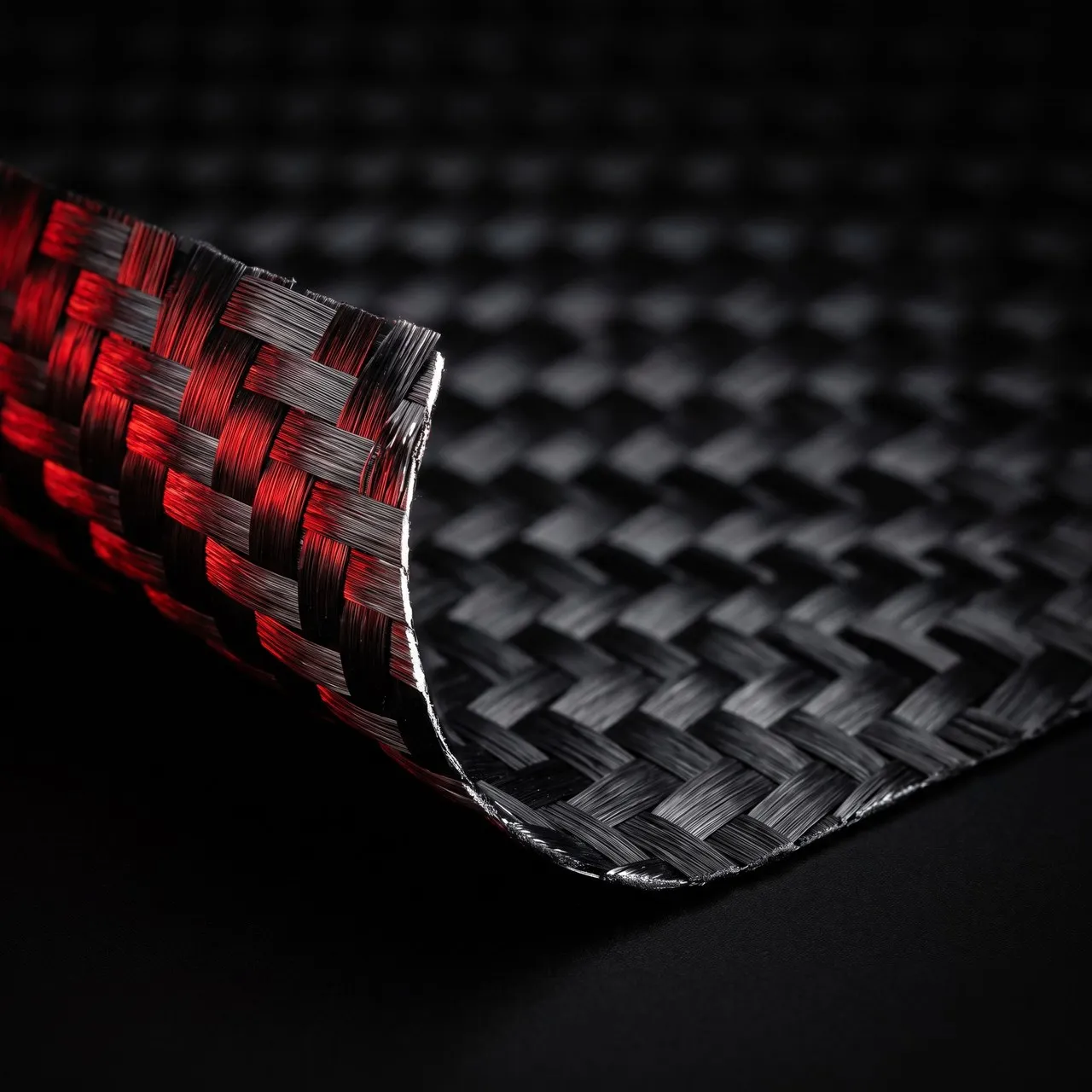
Carbon and fibreglass arrive as rolls of fabric. Each ply is cut to the shape of the face, often with a precise fibre orientation, because a fabric is not equally stiff in every direction. The number of plies and their stacking are part of each model’s recipe, together with the weave type, 12K or 18K, whose effects we detail in 12K or 18K carbon.
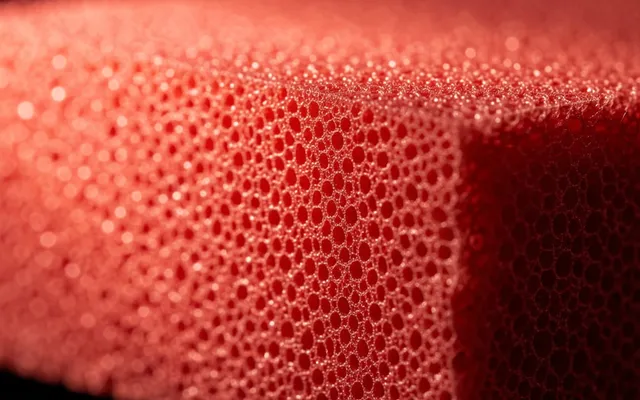
The EVA foam core is cut to the shape of the face, at the desired thickness. Its density, soft, medium or hard, is chosen at this stage and will never change. On many rackets, a tubular carbon frame surrounds the foam before layup, to stiffen the outline and protect the edges.
Step 3: the layup
This is the heart of the process. In the first half-shell of the mould, the operator lays the plies of the lower face, then the foam core with its frame, then the plies of the upper face. Each ply is impregnated with resin, most often epoxy, either by hand as it is laid, or because the fabric is supplied pre-impregnated.
The order, orientation and number of plies, as well as the amount of resin, decide the final stiffness, weight and balance. Two rackets with the same carbon and the same foam can behave very differently depending on the layup. This is also when the elements built into the structure are integrated: heart reinforcements, handle inserts, anti-vibration systems.
Step 4: curing
The mould is closed and placed in a heated press. Under pressure and at a temperature of roughly 80 to 150 °C depending on the resin used, the resin polymerises and bonds the plies to each other and to the core. The duration depends on the resin and the thickness, from a few tens of minutes to several hours.
The pressure squeezes out excess resin and air bubbles, which determines the strength and weight of the piece. Poorly controlled curing gives rackets that are heavy, porous or that delaminate at the first knock. This is the step where the consistency of a series is decided.
| Step | What gets decided |
|---|---|
| Mould | Shape, dimensions, profile, moulded texture |
| Cutting | Fibre type, foam density, ply orientation |
| Layup | Stiffness, weight, balance, integrated elements |
| Curing | Strength, homogeneity, final weight |
| Finishing | Perforations, surface, appearance, feel in hand |
| Control | Compliance with the template, weight, absence of defects |
Step 5: demoulding and finishing
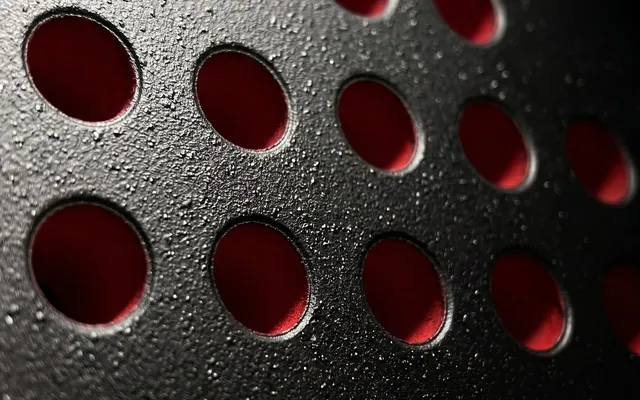
Out of the mould, the racket is raw: resin flash on the edges, matt surface. It is deflashed, sanded, then drilled if the holes were not moulded: the regulation perforations, 9 to 13 mm in the central zone, are made at this stage according to the model’s design.
Then comes the dressing: paint or varnish, screen-printed markings, surface treatment. This is where the roughness of the face is decided: textured paint, or sandblasting, by spraying an abrasive grain onto the varnish. Then the fitted parts go on: frame protector, butt cap, grip, safety cord.
Step 6: quality control
Every racket is weighed, because weight can vary by a few grams from one piece to the next depending on how much resin is retained, and its balance is checked. A visual inspection looks for surface defects and bubbles; a sound check, tapping the face, reveals internal delamination. Dimensions are compared with the regulation template. A racket out of tolerance is rejected.
What we do at SCUD
We do not claim to reinvent this process: a SCUD is a carbon, EVA foam and resin sandwich cured in a mould, like the others. What we can say, because we decide it ourselves, comes down to four points.
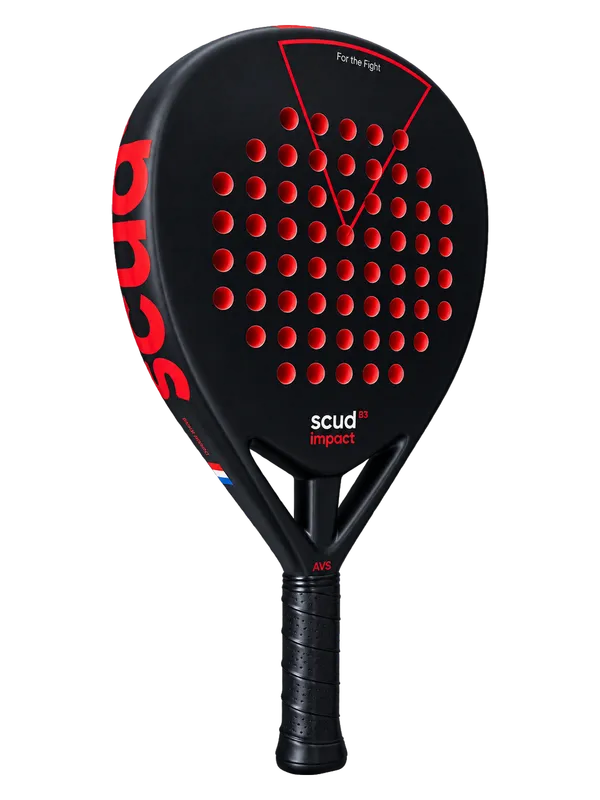
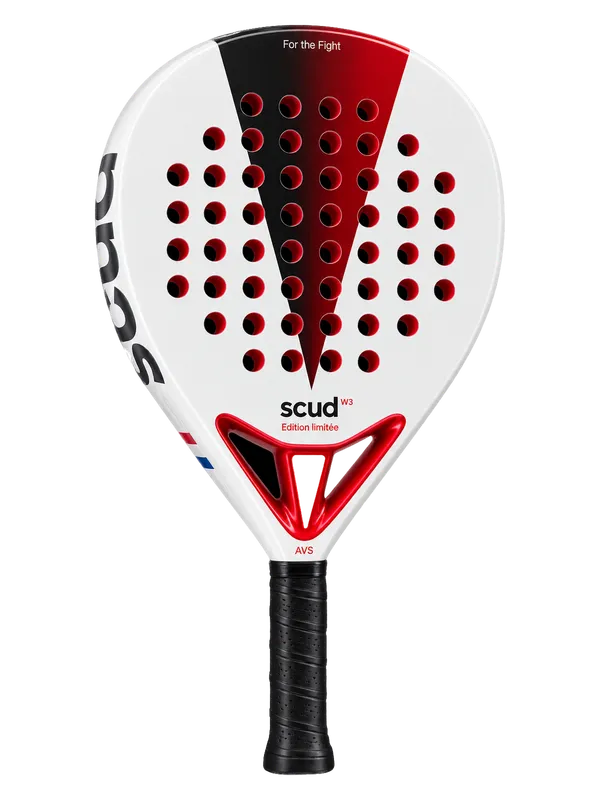
The design. Our rackets are designed in France: the Black Impact B3 is designed in France, the White S3 designed in Paris. The mould, the shape and the placement of the perforations come from that drawing.
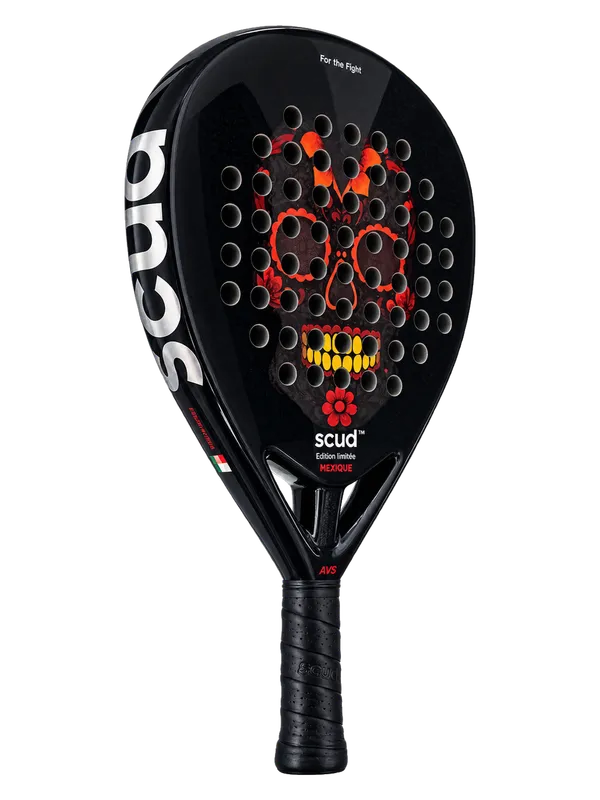
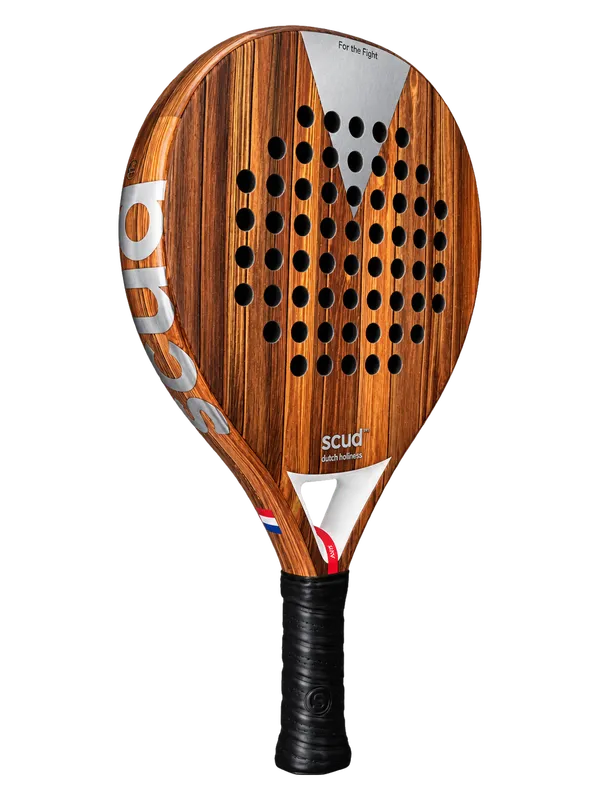
The shell. It is the only element that changes from one model to the next: 18K carbon on the SCUD Black Impact B3, for a dry, direct rebound; 12K carbon on the SCUD Mexique M1, the White S3 and the Wood S1, the latter doubled with fibreglass. The EVA foam, Hard Power, firm or soft, completes each model’s recipe.
The AVS system. Our anti-vibration device is built into the structure at layup, not added afterwards in the handle. It filters the shocks before they reach the elbow.
Hand finishing. The sandblast on every face is applied piece by piece, the silica crystals spread by hand rather than sprayed by a machine set once and for all. Under the grip, the handle is a silicone moulded in stars and diamonds. This manual sandblasting cannot be industrialised: that is why our series are limited and why no two rackets are perfectly identical. We say more about it in hand sandblasting: why the surface changes your spin.
In short
- A padel racket is a composite, EVA foam and resin sandwich, cured under pressure in a mould.
- The mould sets the shape and dimensions; the layup sets stiffness, weight and balance.
- Curing decides the strength and consistency of a series.
- Drilling, painting, sandblasting, grip and cord are finishing operations.
- At SCUD: designed in France, 12K or 18K shell, AVS system integrated at layup, hand-applied sandblast.
Frequently asked questions
Are the holes moulded or drilled?
Both exist. Pins in the mould can form the holes during curing; otherwise they are drilled after demoulding. Either way, the result must respect the regulation diameters.
Why do two rackets of the same model not weigh exactly the same?
The amount of resin retained during curing varies slightly from one piece to the next, as does the finishing. Manufacturers state a nominal weight or a range, and sort pieces at weighing.
Is a “handmade” racket entirely artisanal?
Rarely. Layup is often manual across the whole industry; what sets an artisanal finish apart is what happens after curing: sandblasting, inspection, fitting of parts. At SCUD, it is the sandblasting that is done by hand.
How long does it take to make a racket?
From cutting the fabrics to final inspection, several days, curing being only one step among others. Manual finishing lengthens that lead time further, which explains the small series.
To choose, among these shells and foams, the racket that matches your game, our free guide to choosing your racket walks you through it step by step, and the padel rackets page gathers the spec sheets for the whole range.